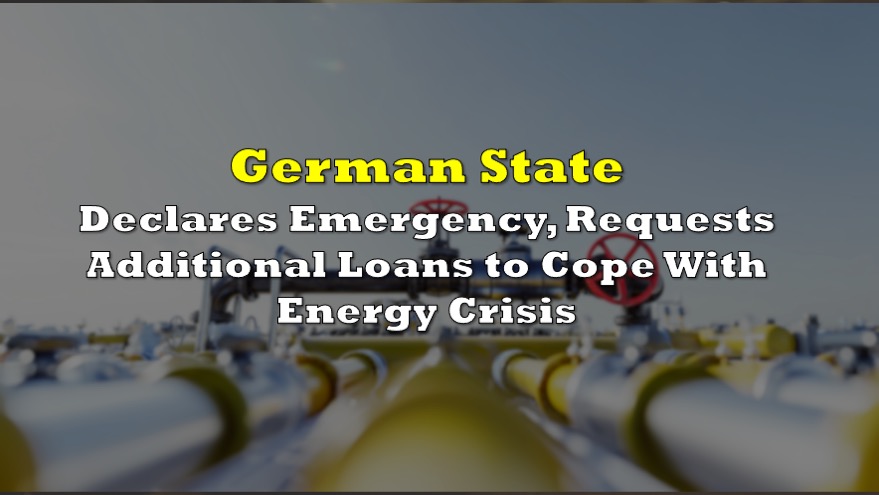

Germany’s largest state is declaring a financial emergency thanks to skyrocketing energy prices, in an effort to get access to much-needed debt.
North Rhine-Westphalia (NRW), where 20 of Germany’s 50 largest companies are located, proclaimed an “extraordinary emergency situation” earlier this week, in order to receive additional loans from the government, circumventing a law restricting how much debt a state is allowed to take on. The state requested another $5.2 billion in funding to help ease woes stemming from the energy crisis, and is in the midst of redoing its 2023 budget to redirect $3.6 billion in unused Covid-19 relief loans towards energy relief measures.
NRW is home to over 700,000 companies of various sizes, but saw its GDP levels fall 2.8% in the third quarter thanks to skyrocketing electricity and fuel prices. For the time being, only the Bremen and Saxony-Anhalt states have declared states of emergencies warranting a restructuring in their 2023 budgets.
Germany has thus far refrained from declaring a state of emergency, but left the door open to such a scenario should its gas storage facilities dip below 40% capacity come February 1. The country is currently sitting at a level two alert, but could go into a level three emergency, warned head of German Federal Network Agency Klaus Müller, prompting gas rationing among households, businesses, and industries.
Information for this briefing was found via WDR. The author has no securities or affiliations related to this organization. Not a recommendation to buy or sell. Always do additional research and consult a professional before purchasing a security. The author holds no licenses.