
House Republicans’ challenge to Spain over Ceuta and Melilla was part of a wider appropriations squeeze on Madrid, not a legal transfer of Spanish territory to Morocco.
The $47.32 billion fiscal 2027 State Department spending package was accompanied by language favoring negotiations over the two Spanish-administered cities. The same report separately criticized Spain over NATO spending and condemned Madrid’s refusal to allow Iran-related US military operations through Spanish bases and airspace.
That broader pressure campaign has gained new attention following the mass movement of migrants from Morocco into Ceuta, which President Donald Trump and conservative media figures described as an “invasion.”
 Sponsored · Selkirk Copper Mines
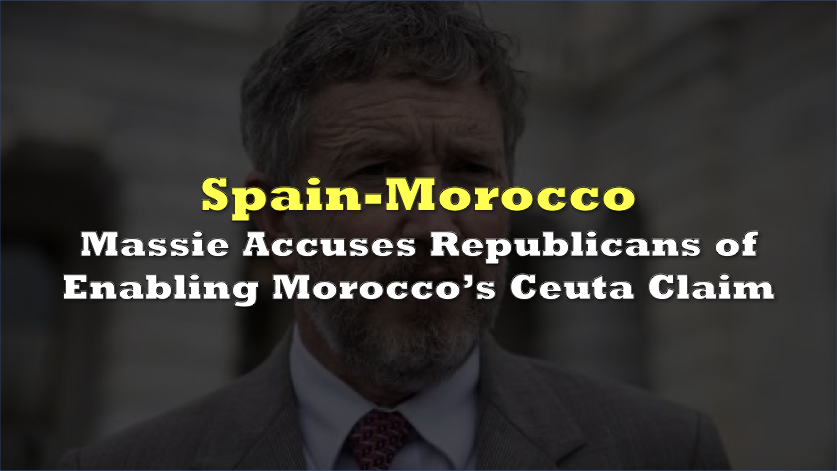
Rep. Thomas Massie, the only House Republican who voted against HR 8595, accused his party of manufacturing outrage after approving a bill that he said “greenlighted the transfer of Spanish territory to Morocco.”
The Morocco section of the House Report directs at least $20 million in National Security Investment Programs and at least $20 million in Foreign Military Financing for the country.
It then states that Ceuta and Melilla are “located in Moroccan territory” and remain subject to Morocco’s claim. The committee says it supports State Department efforts to encourage Spain and Morocco to discuss the cities’ “future status.”
The language is notably favorable to Rabat. It treats the cities’ sovereignty as open to diplomatic negotiation rather than simply recording that Morocco disputes Spanish control.
 Sponsored · Cambria Gold Mines
The report also contains a separate section accusing Spain of falling short on NATO defense spending and condemning its restrictions on US flights and base access connected to military operations against Iran.
Massie’s description overstates the provision’s legal effect. House Republicans approved a bill accompanied by committee language endorsing US-backed talks over the future status of Ceuta and Melilla. The language carries political weight, but it does not authorize a territorial transfer or recognize Moroccan sovereignty.
The Congressional Research Service says appropriations report language is generally not legally binding in the same manner as statutory language, although federal agencies treat it seriously as an expression of congressional intent.
HR 8595 does incorporate specific parts of the report through Section 7019, including certain funding tables and reporting or consultation requirements. The Ceuta paragraph, however, is not a funding table, required report, or mandatory consultation. It says the committee “supports” diplomatic engagement. On the face of the legislation, that makes it a policy signal rather than transfer authority.
The House Clerk recorded 215 Republican votes for the measure, one Republican vote against it, and two Republican non-votes. One Democrat and one independent also voted yes.
The report was published on April 30, almost three months before the border crisis. The House passed the bill on July 15. Tens of thousands of migrants crossed or attempted to cross into Ceuta from Morocco on July 30.
Reuters reported that Spain installed a 500-meter floating barrier after about 50,000 migrants entered the city, with more than 48,000 later returning to Morocco. The Associated Press placed the death toll at 67.
Trump subsequently used the crisis to warn about immigration ahead of the US midterm elections, describing the crossings as an invasion.
The available record does not show a Moroccan military incursion, a completed territorial transfer, or a causal relationship between the congressional language and the crossings.
The sharper contradiction is political. Republicans denouncing a breach of Spanish territory backed a spending measure whose accompanying report presented the territory’s status as negotiable. Congress did not cede Ceuta or Melilla, but it gave Morocco a congressional talking point while Spain was defending its claim to both cities.