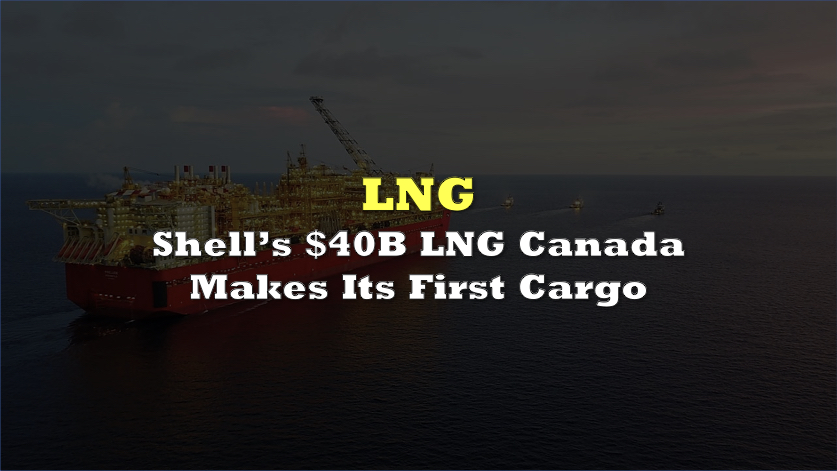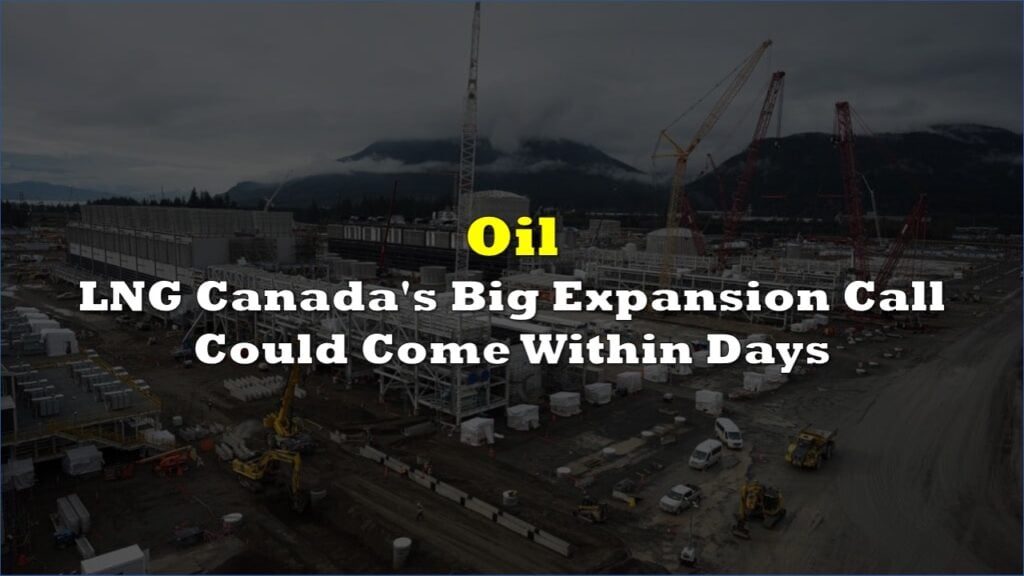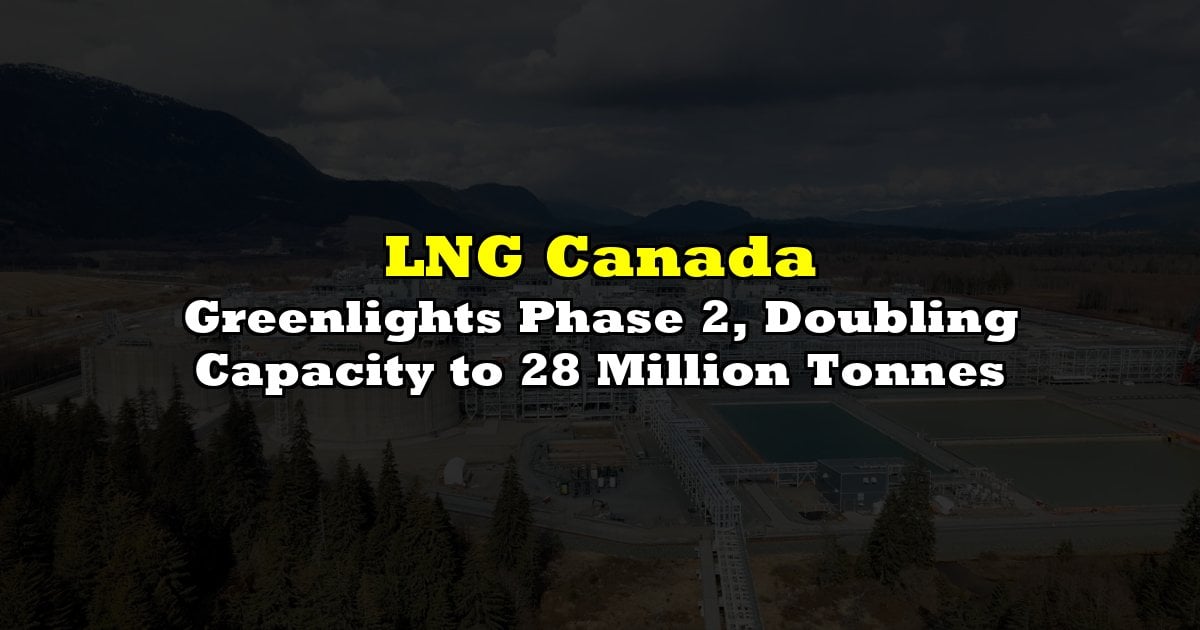

LNG Canada’s joint venture partners have made a final investment decision on the Phase 2 expansion of the liquefied natural gas export facility, a move that will double the plant’s production capacity.
Shell, PETRONAS, PetroChina, Mitsubishi Corporation and KOGAS approved the expansion, which adds two liquefaction units, known as trains, to the two already operating. Capacity climbs from 14 million to 28 million tonnes per annum.
The expansion stays within the existing site. Alongside the new trains, Phase 2 includes an additional LNG storage tank, a condensate tank, another loading berth, and expanded utility and process systems. Phase 1 was engineered from the outset to support a four-train facility.
 Sponsored · Altamira Gold Corp.
LNG Canada will also act as execution manager on an expansion of the 670-kilometre Coastal GasLink pipeline, which will see five new compressor stations built to move more Montney gas to the coast.
The partners did not disclose a capital cost, describing the project only as one of the largest private sector investments in Canada. LNG Canada and the provincial and federal governments estimate Phase 2 could generate more than $50 billion in government revenue over its life.
The decision also activates an equity option announced in July. MNT Investments LP, representing the Gitga’at, Gitxaała, Haisla, Kitselas and Kitsumkalum First Nations, will invest up to C$1 billion in a special purpose entity that will purchase the new storage tank.
Construction is expected to peak at up to 4,000 workers on site, with roughly 2,100 more building the compressor stations. Once complete, the expansion adds about 90 full time and 150 contractor positions to an operational workforce of more than 400.
President and CEO Chris Cooper said the expansion puts LNG Canada on course to become one of the largest LNG facilities in the world and should push Canada toward the ranks of the top five LNG exporters. He added that Phase 2 “is about much more than tonnes.”
Energy and Natural Resources Minister Tim Hodgson described the decision as a strong signal of confidence in Canada and evidence the country can get major projects built.