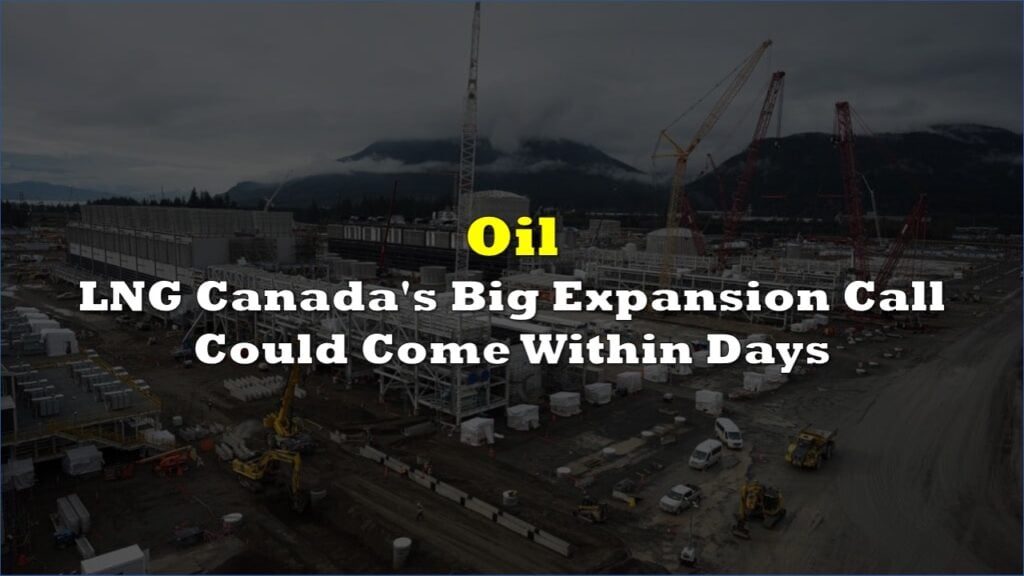

PetroChina’s reported effort to sell part of its LNG Canada stake would make the Chinese energy company the latest project owner seeking outside capital before committing to a $33 billion expansion of Canada’s largest operating LNG export facility.
PetroChina is exploring a sale of part of its 15% interest in the Kitimat, British Columbia, project, Bloomberg reported, citing people familiar with the discussions. The interest under consideration was valued at several billion dollars, with proceeds potentially helping finance LNG Canada’s second phase.
The potential divestment places PetroChina alongside three other major participants that have already sold or examined the sale of project exposure as the consortium prepares for another capital-intensive construction cycle.
 Sponsored · Selkirk Copper Mines
Petronas completed the first major sell-down in 2025 when MidOcean Energy acquired 20% of the Malaysian company’s Canadian business. The transaction included an indirect interest equivalent to 5% of LNG Canada and a corresponding share of upstream assets in the Montney formation.
The price was not disclosed. A person familiar with the transaction told Reuters that the combined investment was worth slightly more than $3 billion. Because the deal also included producing and development-stage gas assets, it cannot be used as a direct valuation for PetroChina’s LNG Canada interest.
Shell, which operates the project and owns 40%, and Mitsubishi, which holds 15%, were separately reported in January to be exploring partial stake sales.
By April, Apollo Global Management, Blackstone, and KKR had emerged as bidders for a significant portion of Shell’s interest, according to Reuters. The potential transaction was expected to exceed $10 billion and could reach $15 billion, including exposure to both the operating facility and its proposed expansion.
 Sponsored · Altamira Gold Corp.
Shell said at the time that it was comfortable with its ownership position, while describing opportunities to generate cash from assets where it was not necessarily the natural long-term owner.
Taken together, the sale processes indicate that LNG Canada’s owners are attempting to divide the project’s operating, financing, and expansion risks among a broader group of institutional and strategic investors.
The first phase cost approximately $40 billion and can produce about 14 million tonnes of LNG annually from two processing trains. It began production in June 2025, opening the first direct large-scale LNG export route from Canada’s Pacific coast to Asian markets.
Phase 2 would add two more trains and roughly double the facility’s production capacity. Canada’s Major Projects Office estimates that the expansion would attract $33 billion in private-sector capital.
The consortium has not made a final investment decision, but it has begun committing money. On May 1, the joint venture participants approved hundreds of millions of dollars in additional funding for engineering, long-lead equipment, First Nations agreements, pipeline arrangements, supply-chain work, and construction activity at the marine terminal. The federal government said the owners were targeting a potential final decision before the end of 2026.
Fluor and JGC subsequently received limited authorization to begin early planning and other work supporting the expansion. The authorization does not represent final approval to construct Phase 2.
LNG Canada has also offered five First Nations an option to invest up to $1 billion in a new 225,000-cubic-metre storage tank. A special-purpose entity would purchase the tank and lease it back to LNG Canada, creating another channel for moving part of the expansion’s capital requirements outside the existing ownership group.
PetroChina joined LNG Canada before the project’s 2018 final investment decision. Under the original structure, each participant was responsible for financing its share of construction and independently marketing LNG corresponding to its ownership interest.
The potential Canadian sale follows PetroChina’s recent decision to dispose of its 10.67% interest in Australia’s undeveloped Browse gas fields. Woodside Energy exercised a pre-emptive right in June to acquire the stake after PetroChina initially agreed to sell it to Japan’s Inpex.