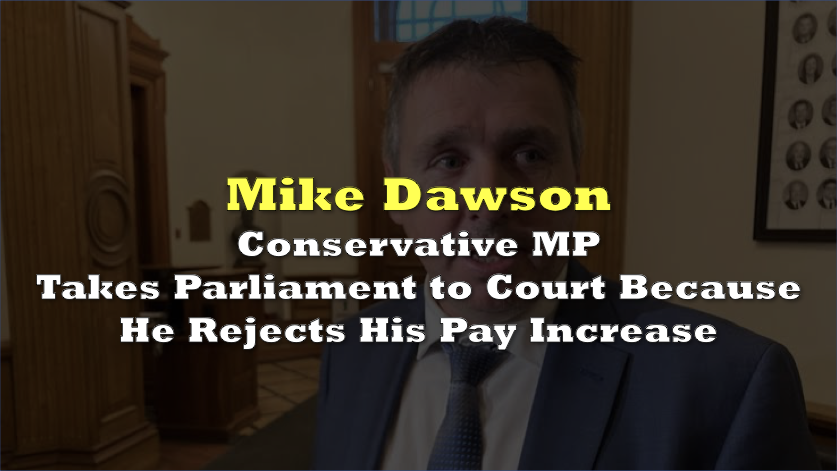

Conservative MP Mike Dawson’s attempt to reject his parliamentary pay increase has produced an unusual legal position from the House of Commons: paying an MP less than the amount set by federal law could itself be unlawful.
The Miramichi—Grand Lake MP is seeking judicial review in Federal Court after unsuccessfully trying to prevent this year’s automatic salary adjustment. CBC reported Tuesday that House of Commons Clerk Eric Janse has now filed an affidavit arguing the administration must pay MPs the compensation prescribed under the Parliament of Canada Act.
The law provides for MPs’ sessional allowances to be adjusted annually using an index tied to private-sector wage settlements. It states that the resulting allowance “shall be paid” to House members, with payments made in monthly instalments.
 Sponsored · Selkirk Copper Mines
The House’s current official figure puts a regular MP’s salary at $217,700, effective April 1, 2026. That compares with $209,800 in 2025.
Dawson first announced in February that he wanted his salary frozen, arguing that accepting another increase while Canadians faced affordability pressures would be inappropriate. He later escalated the dispute through the Board of Internal Economy before filing his Federal Court application in June.
According to CBC’s reporting on Janse’s affidavit, granting Dawson an exception would also require House payroll staff to maintain a separate salary calculation for him and continue adjusting it independently during his time in Parliament.
Dawson has instead been donating the additional money to charity while pursuing the case, CBC reported.
“We seem to be all right to put somebody on the moon, but we can’t stop a pay raise,” Dawson said.
Dawson has framed the fight as a matter of principle rather than personal finances. He said he did not believe MPs should automatically receive higher pay while Canadians were struggling with rising living costs, and has argued that lawmakers should be able to decline increases they consider inappropriate.
He has also said he did not enter politics for the money, turning what began as a protest against his own raise into a broader challenge to a system that gives MPs little control over their legislated compensation.