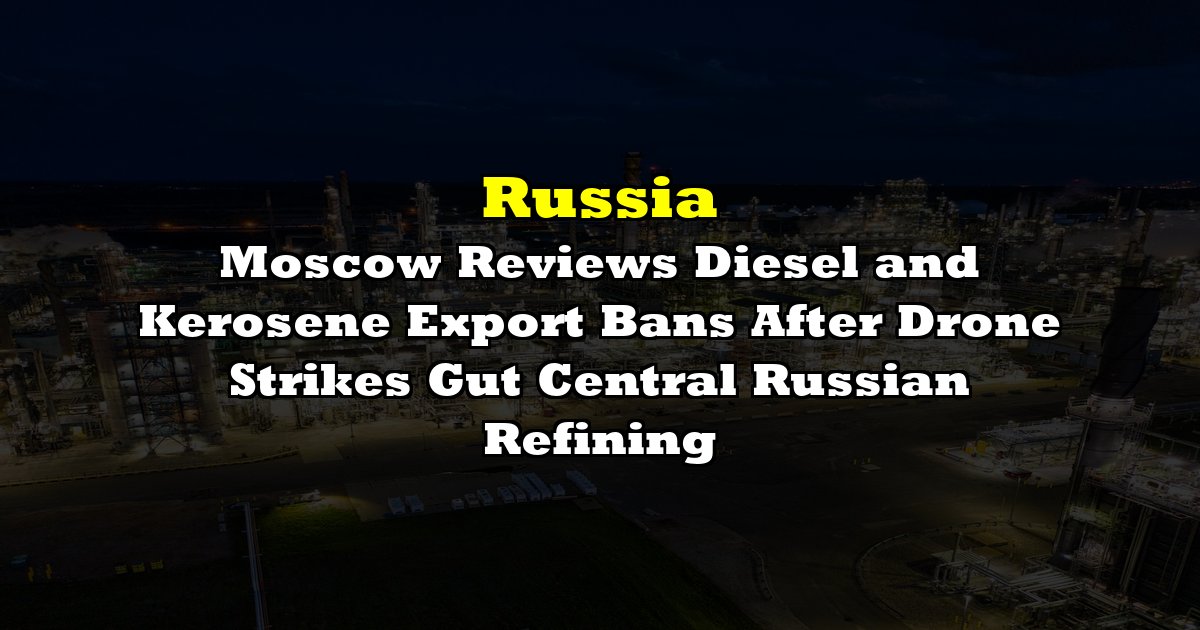

Ukrainian drones have knocked six major Russian oil refineries offline in a single month, pulling daily refinery output to an average of 4.69 million barrels. Refining output is at a low not seen since 2009, forcing Moscow to weigh export bans on diesel and kerosene, The Moscow Times reported.
The strikes gutted refining across central Russia, hitting facilities in Kirishi, Moscow, Nizhny Novgorod, Ryazan, and Yaroslavl. Among the plants sidelined are Lukoil’s Nizhny Novgorodnefteorgsintez, Russia’s fourth-largest refinery by production capacity, and Surgutneftegaz’s Kirishinefteorgsintez, the country’s second-largest.
The sixth plant to fall was Rosneft’s Syzran refinery, forced into a full operational halt after a drone strike wrecked its main crude distillation unit. Together, the downed facilities carried a combined daily processing capacity of 238,000 tons and accounted for more than 30% of Russia’s gasoline output and roughly 25% of its diesel production, stripping away about a quarter of the country’s total refining capacity.
The 4.69 million barrel daily average is worse than anything Russia recorded during its previous autumn fuel crisis, when output fell to 4.88 million barrels per day and the damage was already severe enough to trigger fuel deficits across multiple regions, force gas stations to sell on ration coupons, and drive wholesale gasoline prices to historic highs on the domestic exchange.
 Sponsored · Selkirk Copper Mines
Moscow has been moving fast to keep its fuel market from seizing up entirely. Since early May, the Ministry of Energy has signed binding agreements with 11 oil corporations, Rosneft, Gazprom Neft, Lukoil, and Surgutneftegaz among them, under which the ministry issues mandatory directives on production volumes, domestic deliveries, export allocations, and commodity exchange sales. Deputy Prime Minister Alexander Novak convened a meeting with oil company representatives and told producers to “restrain exports” of refined petroleum products.
Russia banned gasoline exports in late March. The cabinet is now reviewing whether to extend comparable restrictions to diesel and kerosene, a move that would represent the deepest tightening of Russia’s fuel trade yet, as oil companies absorb capacity losses they put at 25% of total fuel production.
Information for this story was found via the sources and companies mentioned. The author has no securities or affiliations related to the organizations discussed. Not a recommendation to buy or sell. Always do additional research and consult a professional before purchasing a security. The author holds no licenses.