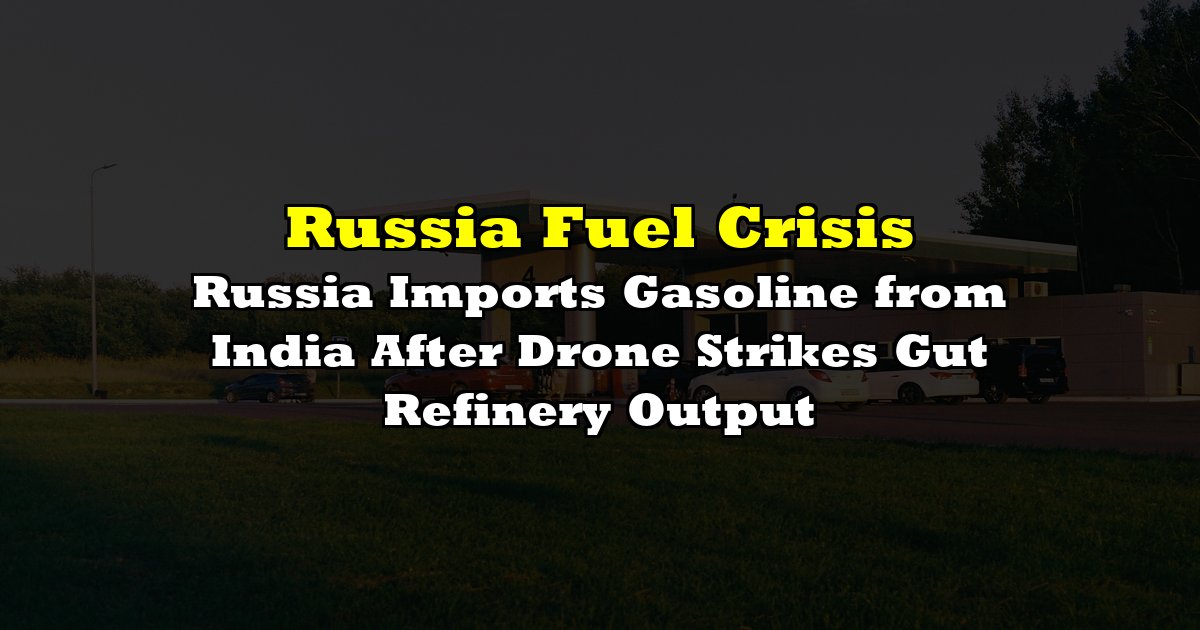

Russia, the world’s third largest oil exporter, has turned to overseas suppliers to plug a widening fuel gap after months of Ukrainian drone strikes drove domestic refining output down by roughly 25 percent, leaving the country unable to meet its own demand.
India has emerged as the first maritime source of that imported gasoline. Industry sources cited by Reuters say two tankers, each loaded with somewhere in the range of 30,000 to 40,000 metric tons, are currently in transit from Indian ports to Russia, with the total volume already dispatched from India exceeding 60,000 metric tons.
A third source told Reuters that Moscow is planning monthly imports of up to 400,000 metric tons, drawing on several foreign suppliers, with Belarus among those already shipping fuel to the Russian market.
 Sponsored · Cambria Gold Mines
The supply gap is substantial. Summer daily consumption runs to around 110,000 metric tons, yet operational refineries are producing only roughly 85,000 metric tons a day. That leaves a shortfall of about 25,000 metric tons every day, a hole that Belarusian imports alone have been unable to fill.
Since the start of 2026, Ukraine has conducted more than 20 strikes on Russian oil refineries, hitting eight of the country’s ten largest facilities. The Moscow refinery in the Kapotnya district was struck twice in June. Numerous other plants across the country have curtailed output or halted operations entirely.
The International Energy Agency described the cumulative disruption as “unprecedented” in the history of the war, noting that Russian oil production in May came in 10 percent below its monthly target.
The consequences at street level have been hard to miss. Fuel purchase caps have been imposed across dozens of regions, Crimea has declared a state of emergency over the shortage, and video shared widely on social media captured drivers coming to blows in station parking lots. Putin addressed the situation publicly on Sunday, calling the shortages non-critical, even as his government moved to ban gasoline and jet fuel exports and acknowledged it was in talks with foreign suppliers to bring in additional product.
To fund those imports, Russian authorities have drafted Tax Code amendments that would extend state subsidies to oil companies purchasing gasoline from abroad. Officials have declined to identify the countries involved in those negotiations beyond what has already been reported.
Information for this story was found via the sources and companies mentioned. The author has no securities or affiliations related to the organizations discussed. Not a recommendation to buy or sell. Always do additional research and consult a professional before purchasing a security. The author holds no licenses.