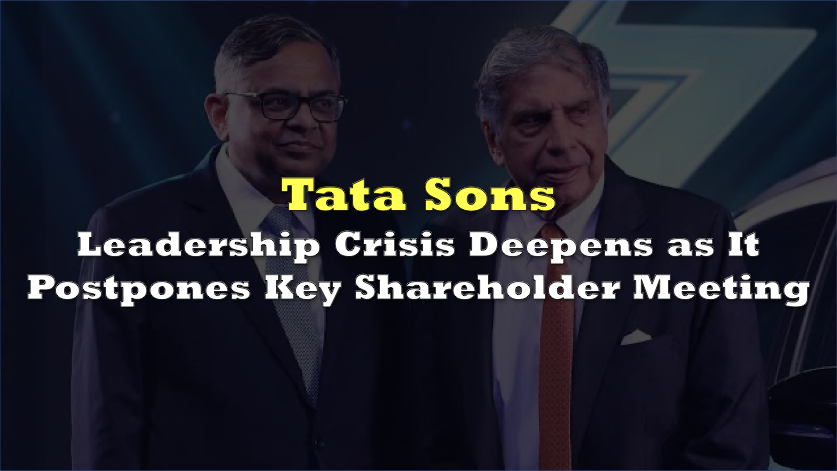

Tata Sons’ leadership dispute has moved beyond the question of who succeeds Chairman N. Chandrasekaran.
The holding company of India’s largest conglomerate was unable to proceed with its annual general meeting on Tuesday after a governance problem inside its controlling charitable trusts left it without the required quorum. The August 18 meeting was adjourned and deferred on the day, Reuters reported, citing an earlier CNBC-TV18 report based on unnamed sources.
The Economic Times separately reported that the meeting failed for lack of quorum, calling it the first such instance in Tata Sons’ history.
 Sponsored · Cambria Gold Mines
The procedural failure comes six days after Chandrasekaran told the board he would not seek another five-year term when his current tenure expires on February 20, 2027. His decision followed months of disagreements with Tata Trusts, which controls about 66% of privately held Tata Sons.
The annual meeting itself was caught in a separate regulatory problem. Under Article 86 of Tata Sons’ articles, the meeting requires a representative jointly nominated by the Sir Dorabji Tata Trust and Sir Ratan Tata Trust, provided their combined ownership remains above the required threshold. Sir Dorabji holds 27.98% of Tata Sons, while Sir Ratan holds 23.56%.
Sir Ratan Tata Trust has been unable to convene its trustees after Maharashtra’s Charity Commissioner restricted meetings while investigating alleged breaches of rules governing the number of lifetime trustees. Without a Sir Ratan meeting, the two trusts could not make the joint nomination needed for Tata Sons’ quorum.
That means a regulatory dispute involving a shareholder with a 23.56% stake has effectively interrupted decision-making at the apex holding company for more than 30 Tata businesses.
The timing raises the stakes. Chandrasekaran’s directorship was among the matters expected before shareholders, while Tata is simultaneously beginning its succession process and confronting whether Tata Sons may eventually be required to list publicly.
Investors have already reacted to the leadership instability. Tata companies lost a combined $4.6 billion in market value immediately following news of Chandrasekaran’s exit before recovering, according to Reuters. The group’s listed companies had a combined market capitalization of about $277 billion as of March 31.