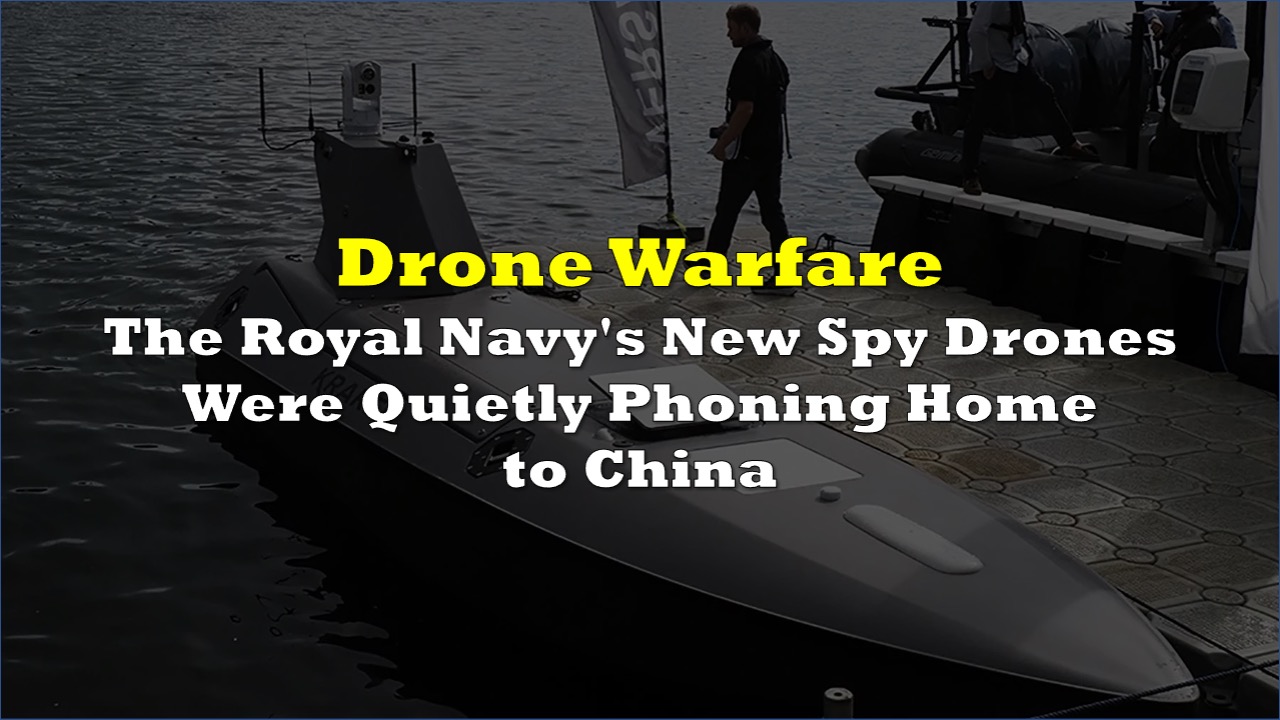

The Royal Navy has stripped internet connectivity from cameras on its new K3 Scout surveillance drones after discovering they were sending data to an address in China. The Telegraph reported the cameras on uncrewed vessels the Royal Marines have operated since March had been sending so-called “heartbeat communications,” periodic check-in signals that confirm a device is still connected, to a Chinese IP address since the drones entered service.
Kraken Technology Group, a British defence contractor based in Fareham, builds the K3 Scout under a Royal Navy program called Project Beehive, a £12 million push to add 20 uncrewed vessels to the fleet. The boats can carry a 600kg payload, operate for 30 days at sea, and support surveillance, force protection, and precision-strike missions as part of the Navy’s shift toward a “hybrid” fleet mixing crewed and uncrewed vessels.
The Ministry of Defence said in May the K3s could form part of a UK deployment to the Strait of Hormuz to protect commercial shipping, alongside anti-drone systems and Typhoon jets. A defence source told the Telegraph that officials had carried out planning for the Hormuz mission using the compromised drones and had lost confidence in the platform as a result.
 Sponsored · Altamira Gold Corp.
Kraken sourced the cameras from a third-party supplier that had given assurances about their security, assurances that turned out to be wrong. A Kraken spokesperson said the components originated outside the UK, but that a joint audit with the Royal Navy found “no sensitive information has ever been shared outside of intended channels.”
The Ministry of Defence echoed that, saying a “thorough investigation found no evidence of MoD data or systems being accessed, compromised or transmitted externally,” and that the issue surfaced during a routine cyber vulnerability assessment.
The information at risk, the Telegraph’s defence source said, could have included footage of British personnel’s faces along with details of their training and operations, a claim the Ministry of Defence directly denies. Neither side has published the underlying forensic findings, so the dispute currently rests on dueling characterizations rather than public evidence.
The breach has prompted opposition lawmakers to demand a wider audit of military hardware for hidden Chinese components, and it complicates a procurement push the government has branded “unashamedly pro-Britain.” US Special Operations Command has also bought the same K3 Scout model, and NATO has trialed it, meaning the same third-party camera components may sit on hardware well beyond the Royal Navy’s own fleet.