
An X post alleged that President Donald Trump has been exploring ways to force Vice President JD Vance out after the vice president supposedly leaked information Trump disliked. The post cited an unnamed person said to work at “JPM,” but provided no documents, named officials, White House confirmation, or corroborating reporting.
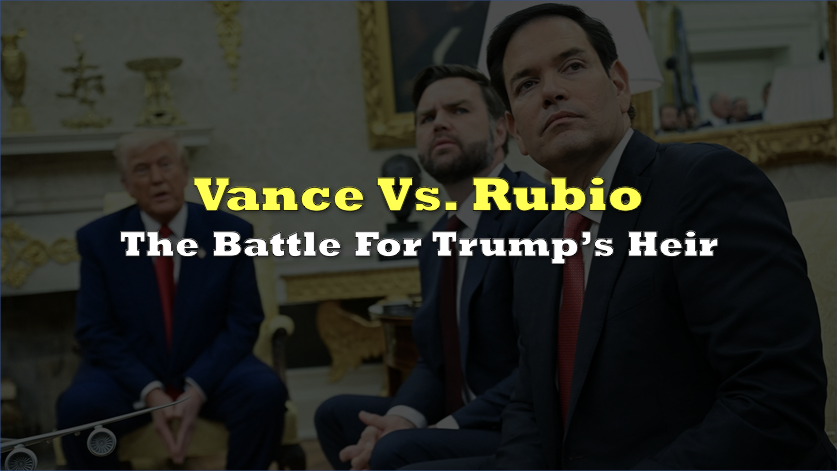
That matters because the public record points to a more complicated dynamic than a clean Trump-Vance rupture. Vance is still the vice president, still inside the administration’s public-facing machinery, and still one of the two most visible Republicans competing to inherit Trump’s movement. The risk for Vance is not formal removal. It is displacement in Trump’s favor economy.
Vance entered the second Trump term with the structural advantage every vice president wants: proximity. Trump has publicly described him as a likely heir, with Reuters reporting in August 2025 that Trump said Vance was “most likely” the Republican successor, partly because he was vice president.
 Sponsored · Selkirk Copper Mines
But Trump has not converted that into a locked endorsement. By February 2026, Reuters reported that Trump declined to choose between Vance and Secretary of State Marco Rubio when asked about the 2028 Republican succession fight. Vance, meanwhile, said he planned to discuss a possible 2028 run with Trump after the midterms.
That hesitation is the whole ballgame. In Trumpworld, “heir apparent” is not a job title. It is a lease, and Trump renews it whenever he feels like it.
Rubio’s position has strengthened because he has become more than a Cabinet secretary. Reuters has described the White House briefing room as an informal audition stage for the 2028 succession contest, with Vance appearing two weeks after Rubio and using the venue to appeal to Trump.
Axios also reported that Trump has been asking advisers and confidants a direct parlor-game question: JD or Marco?
 Sponsored · Altamira Gold Corp.
The rumor about Vance being pushed out also fits a broader pattern: Trump has avoided letting the post-Trump future become too settled.
In May, TIME reported that Trump discussed the possibility of a Vance-Rubio 2028 ticket, after months of third-term speculation. Newsweek separately reported that Trump called a possible Vance-Rubio pairing a “dream team,” while noting that Vance had said he expected to speak with Trump after the midterms about 2028.
However, the third-term talk complicates the same succession map. Trump has floated the idea of staying beyond two terms, while also saying he would “probably” not run again and later appearing to acknowledge that another run is barred, in a TIME report.
Even when the third-term idea functions more as political theater than executable plan, it delays the transfer of authority. Vance and Rubio are not simply competing against each other. They are competing under a president who benefits from keeping the throne symbolically occupied.
There is still no confirmed evidence that Trump is trying to remove Vance, nor that Vance leaked information to Trump’s detriment.
But the rumor’s traction reveals the weakness in Vance’s position. He may be vice president, but Trump has made clear that proximity does not equal succession. Rubio’s expanded role in foreign policy and national security has given him a parallel claim: not the MAGA son, but the governing executor.
That leaves Vance in an awkward political lane. His strongest asset is his closeness to Trump. His biggest liability is that Trump appears unwilling to let closeness become entitlement.
For now, the better read is not that Trump is moving to oust Vance. It is that Trump is keeping Vance auditioning.
Information for this story was found via the sources and companies mentioned. The author has no securities or affiliations related to the organizations discussed. Not a recommendation to buy or sell. Always do additional research and consult a professional before purchasing a security. The author holds no licenses.