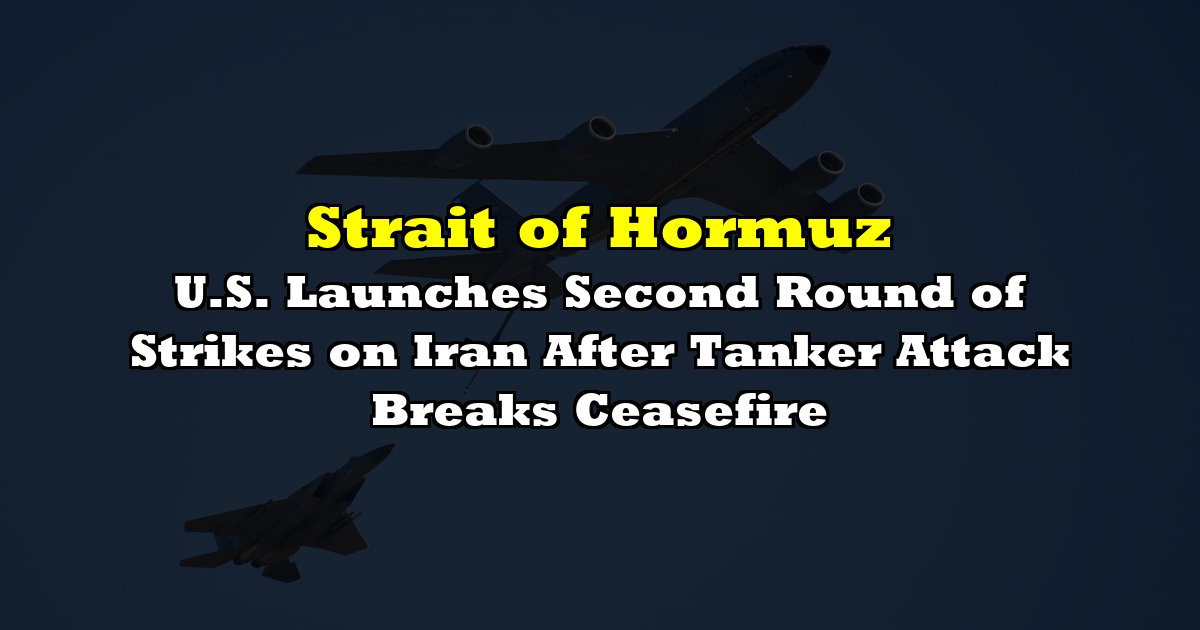

U.S. Central Command launched a second round of strikes against Iranian military targets on June 27 after a drone launched by Iranian forces struck a Panama-flagged crude tanker near the Strait of Hormuz. The strikes represent a second day in a row of ceasefire breaks for both parties.
The vessel hit was M/T Kiku, struck by a one-way attack drone at 4:30 a.m. ET while loaded with a cargo exceeding two million barrels of crude oil in transit near the strait.
According to CENTCOM, Iran had been given an opportunity to hold to the ceasefire following June 26 strikes tied to an Iranian drone attack on M/V Ever Lovely, a Singapore-flagged cargo ship, but chose to resume hostilities instead.
The follow-up strikes covered a notably wider range of targets than the previous round, which had concentrated on missile and drone storage sites and coastal radar installations. This time, CENTCOM said its aircraft hit a broad set of Iranian military assets, including radar and surveillance nodes, command and communications infrastructure, air defense positions, facilities used to store and launch drones, and equipment associated with minelaying operations.
Shortly after the strikes were confirmed, reports of multiple explosions emerged from Sirik, a coastal town in Iran situated near the Strait of Hormuz.
Flight tracking data on Flightradar24 pointed to sustained aerial operations rather than a limited one-off action, with at least four KC-135 Stratotankers and three KC-46A Pegasus refueling aircraft logged as active near the strait around the time of the strikes.
 Sponsored · Selkirk Copper Mines
CENTCOM confirmed that vessel traffic through the Strait of Hormuz is proceeding and that U.S. forces remain present in the region.
The consecutive rounds of military action signal a hardening U.S. posture over freedom of navigation, with Washington making clear it intends to respond each time Iran steps outside the terms of the ceasefire agreement.
Information for this story was found via the sources and companies mentioned. The author has no securities or affiliations related to the organizations discussed. Not a recommendation to buy or sell. Always do additional research and consult a professional before purchasing a security. The author holds no licenses.