
Canada’s oldest defense habit with Washington has become an early stress test for Prime Minister Mark Carney’s promise that Ottawa can spend more, rely less on the US, and still keep American confidence in continental security.
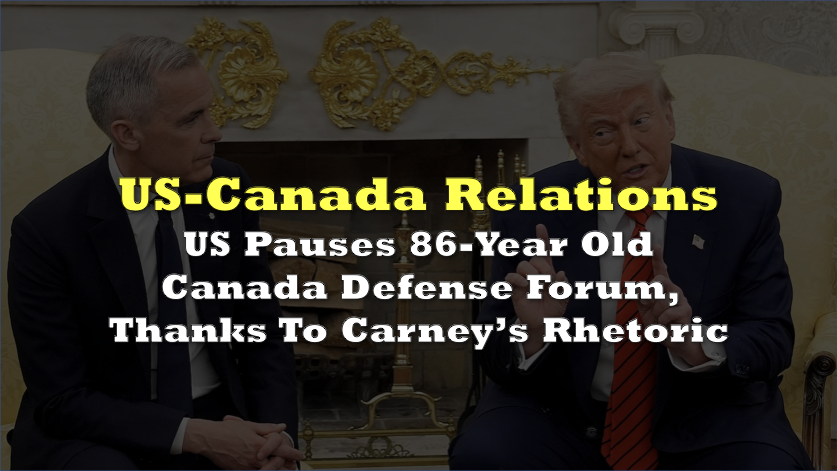
The Trump administration has paused the Permanent Joint Board on Defense, a Canada-US forum dating back to 1940, less than two months after Carney’s government declared it had achieved NATO’s 2% defense spending benchmark.
The decision was announced by US Undersecretary of Defense Elbridge Colby, who said Canada had not made “credible progress” on its defense commitments. Colby said the US was pausing the forum to review whether it still served shared North American defense interests.
That is the public rebuke. The deeper problem for Carney is that the US appears to be rejecting the idea that Canada’s NATO spending milestone, by itself, settles the burden-sharing dispute.
 Sponsored · Altamira Gold Corp.
Ottawa says it has moved quickly. On March 26, Carney said Canada had achieved the NATO 2% target after spending more than $63 billion across the Department of National Defence, the Canadian Armed Forces, and other federal departments and agencies. The government described it as the largest year-over-year increase in Canadian defense spending in generations.
Canada also tied the buildup to industrial policy. National Defence said the 2025-26 defense-related spending package included investments in personnel, readiness, equipment, infrastructure, the defense industrial base, and other NATO-eligible expenditures.
That last category is where the Carney-era problem begins. The US criticism is not only about the size of the budget. It is about whether the spending produces hard power fast enough, especially in a country where Carney himself has acknowledged deep capability gaps.
The paused board is symbolically useful precisely because it is not the machinery most likely to break first. The Permanent Joint Board on Defense was established under the Ogdensburg Declaration, when Canada and the US agreed to create a joint body to examine sea, land, and air defense problems affecting North America.
Suspending participation does not mean fighter patrols stop or NORAD vanishes. Reuters reported that Canada still considers NORAD critical, even as Ottawa expands defense cooperation with Denmark, Greenland, Finland, Iceland, Norway, and Sweden.
That makes the move less of an operational rupture than a political downgrade. Washington has found a way to penalize Canada without immediately damaging the systems both countries still need.
The pressure point is the North. Reuters reported that Canada is deepening Arctic defense ties with Nordic partners amid growing concern over Russia, China, and US pressure around Greenland. But the same regional pivot underscores Canada’s constraint: Ottawa can diversify partners, but it cannot quickly replace the US role in continental defense.
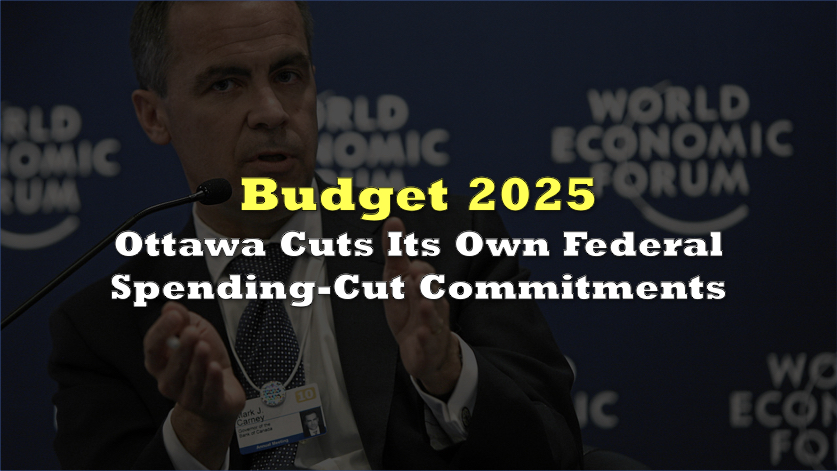
sCarney’s Davos message also sits in the background. In January, he told the World Economic Forum that the rules-based international order was undergoing a rupture and called for middle powers to work together in an era of great-power rivalry.
The prime minister has also increased the rhetoric against the US, with latest comments include describing the tariff deals countries made with Trump are not “really worth the paper they were written on” and saying that the international order will be “rebuilt out of Europe.”
Information for this story was found via the sources and companies mentioned. The author has no securities or affiliations related to the organizations discussed. Not a recommendation to buy or sell. Always do additional research and consult a professional before purchasing a security. The author holds no licenses.