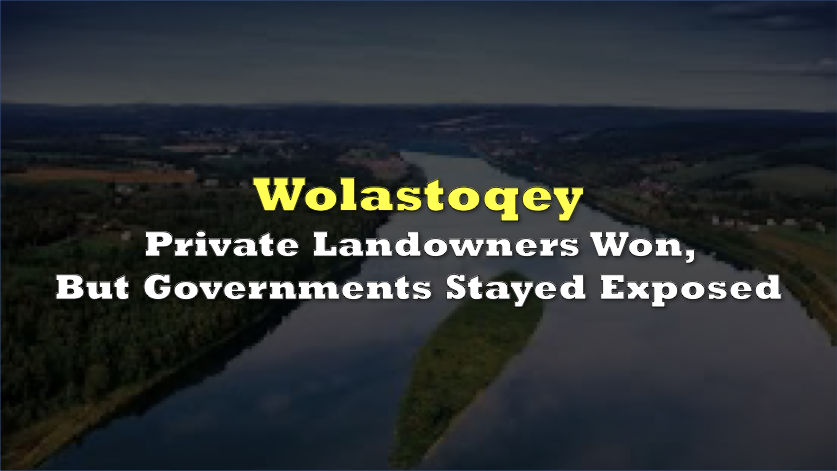

The Supreme Court of Canada’s refusal to hear the Wolastoqey appeal gives private landowners a stronger shield against Aboriginal title declarations, but it leaves governments facing the harder question of who pays when historical grants collide with Indigenous land rights.
The court declined leave in the Wolastoqey Nation case this week, meaning the New Brunswick Court of Appeal’s ruling remains in place, as per APTN News report.
Because the Supreme Court gave no full judgment, the result is legally important but narrower than many headlines suggest: Ottawa, provinces, landowners, and First Nations now have a live appellate precedent, not a final national doctrine.
 Sponsored · Silver47 Exploration Inc.
The practical effect is a remedy split. Privately owned fee-simple land is insulated from a court declaration of Aboriginal title under the New Brunswick ruling, while the Wolastoqey Nation can still seek a finding of title over the same lands if that finding is used to support a damages claim against the Crown.
The scale explains why the case moved from regional litigation to national property politics. Six Wolastoqey First Nations brought the claim over lands described in legal summaries as covering the western half of New Brunswick. The dispute involves 283,204 parcels and includes claims against the federal and provincial governments, NB Power, and industrial defendants tied to forestry and landholding interests.
The New Brunswick Court of Appeal narrowed the available remedy after private and industrial defendants challenged the claim. Legal analyses of the decision say the court removed privately held lands from the claim for a declaration, while preserving the possibility that title findings could be used to establish compensation liability against the Crown.
That makes the ruling more complicated than a simple landowner victory. It reduces the risk that a private owner wakes up to a judicial declaration displacing registered title, but it does not make the underlying constitutional claim disappear.
Ottawa immediately treated the leave denial as useful in other litigation. Per APTN News, a spokesperson for Crown-Indigenous Relations Minister Rebecca Alty said the New Brunswick decision would inform arguments in cases such as Cowichan in British Columbia, while saying Canada would protect private property rights and continue reconciliation work with Indigenous partners.
Cowichan is the case that could turn the New Brunswick logic into a national clash. In 2025, the BC Supreme Court recognized Aboriginal title connected to land in Richmond, including areas where Crown, municipal, and private interests overlap. The decision has been appealed by governments and other parties, and legal commentators have described the Cowichan and Wolastoqey rulings as divergent approaches to the same unresolved collision between Aboriginal title and fee-simple ownership.
The BC ruling has been especially sensitive because it placed Aboriginal title in an urban and industrial setting, not a remote resource area. Public debate has focused on homes, farms, municipal lands, and commercial property, but the legal contest is narrower: what remedy courts can grant when Aboriginal title is proven over land that governments later placed into the fee-simple system.
Nevertheless, the cleanest reading is also the least viral one: the Supreme Court did not decide that Aboriginal title can never touch private land. It left intact a New Brunswick rule limiting one remedy, while the larger national question now moves through Cowichan and future appeals with higher stakes and better records.
Information for this story was found via the sources and companies mentioned. The author has no securities or affiliations related to the organizations discussed. Not a recommendation to buy or sell. Always do additional research and consult a professional before purchasing a security. The author holds no licenses.