

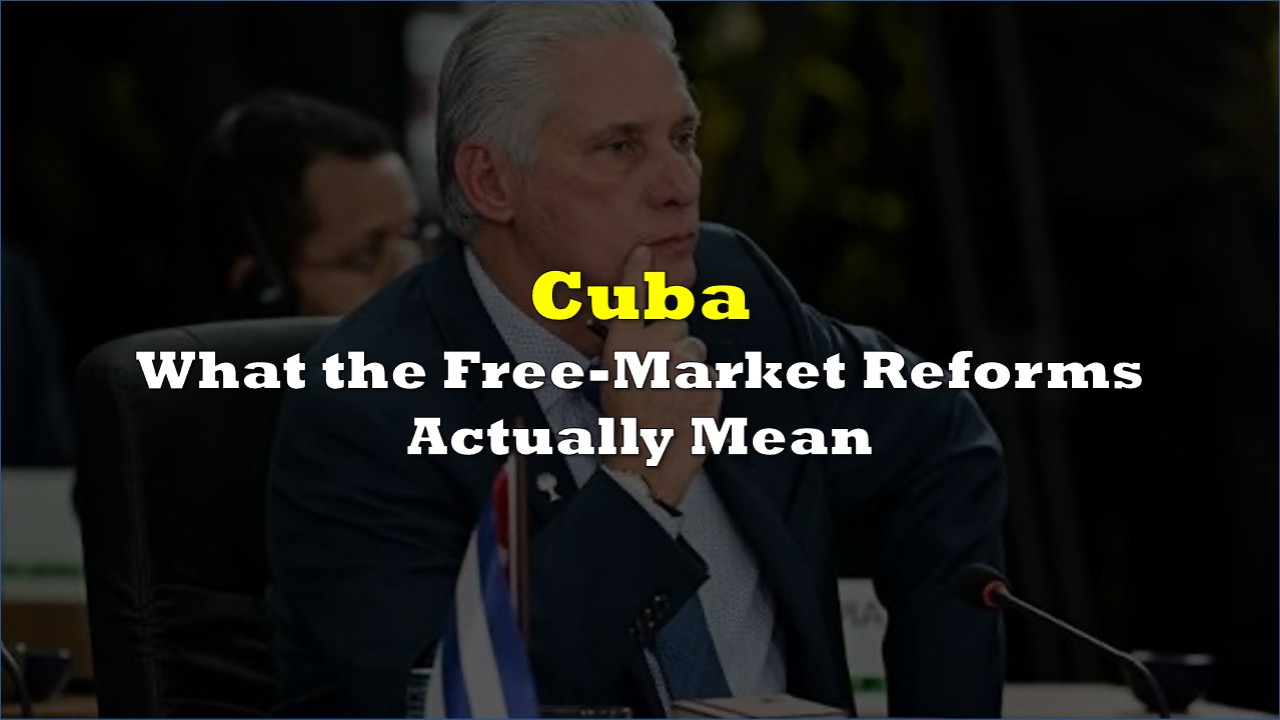

Cuba’s Communist Party just approved the most significant economic shift on the island since Fidel Castro took power in 1959. To understand why it matters — and why it might not work — you need to start with how bad things have actually gotten.
The country’s economy has contracted for three consecutive years. Nationwide blackouts have become routine — up to 20 hours a day in some provinces — and by 2025, the national electricity grid had failed at least four times in a single twelve-month stretch. Sugar once drove Cuba’s economy — the island produced more than 8 million tonnes in 1989. In 2025, output sat at an estimated 200,000 tonnes. Tourism fell nearly 50% from its 2017 peak. By 2023, an estimated 40% of Cubans consumed fewer than 2,100 calories a day — a threshold associated with undernourishment.
Between the end of 2021 and the end of 2023, Cuba’s official population count fell 10% — nearly entirely due to emigration. Studies estimate up to 1.7 million Cubans left between 2020 and 2024. March 2024 marked the first time the Cuban government applied to the UN World Food Program for financial assistance.
 Sponsored · Cambria Gold Mines
This is the context in which President Miguel Díaz-Canel told the Communist Party’s Central Committee that “the situation calls for urgent and necessary changes” — and that some of those changes could not wait for consensus.
The package aims to break state monopolies, expand private enterprise, give local governments and state companies more decision-making power, and attract foreign investment. Díaz-Canel has explicitly cited China and Vietnam as the models — both communist-governed states that opened their economies to market forces while keeping political control. The comparison is useful but imperfect.
China’s post-1978 reforms and Vietnam’s Đổi Mới in 1986 both succeeded in part because of large young populations, geographic positioning in global supply chains, and timing. Cuba starts from a different place — decades of brain drain, an aging infrastructure, a US embargo that blocks the world’s largest economy from investing, and a history of announcing reforms that bureaucracy then slowly suffocates.
The Trump administration has blocked fuel deliveries to Cuba since January 2026, deepening shortages that were already severe. Cuba has bent. The question now is whether the US responds with relief or keeps squeezing.
The Trump administration’s political base — particularly Cuban-Americans in Florida — has long pushed for maximum pressure and regime change, not incremental reform. A Cuba that opens its economy while keeping its one-party government is not what that base wants. Whether Washington treats Thursday’s announcement as a win worth rewarding or a half-measure worth pressuring further will shape whether foreign investment can actually flow.
Russia has been Cuba’s most important oil supplier, filling the gap left when Venezuela’s production collapsed. If Cuba successfully attracts foreign investment and secures fuel through new channels, Russia’s leverage over Havana diminishes. China is the most likely beneficiary, positioning itself as Cuba’s preferred economic partner, just as it has across much of Latin America and Africa.
Cuba has announced reform twice before — in 2011 and 2016 — and delivered less than promised both times. The full text of Thursday’s package is still not public, and the National Assembly session was called without notice. The only measure that matters is whether private businesses can actually operate under whatever emerges.
Information for this story was found via the sources and companies mentioned. The author has no securities or affiliations related to the organizations discussed. Not a recommendation to buy or sell. Always do additional research and consult a professional before purchasing a security. The author holds no licenses.

One Response
I can see countless people investing for the Cuban people, but will never happen as this type of regime is too corrupt