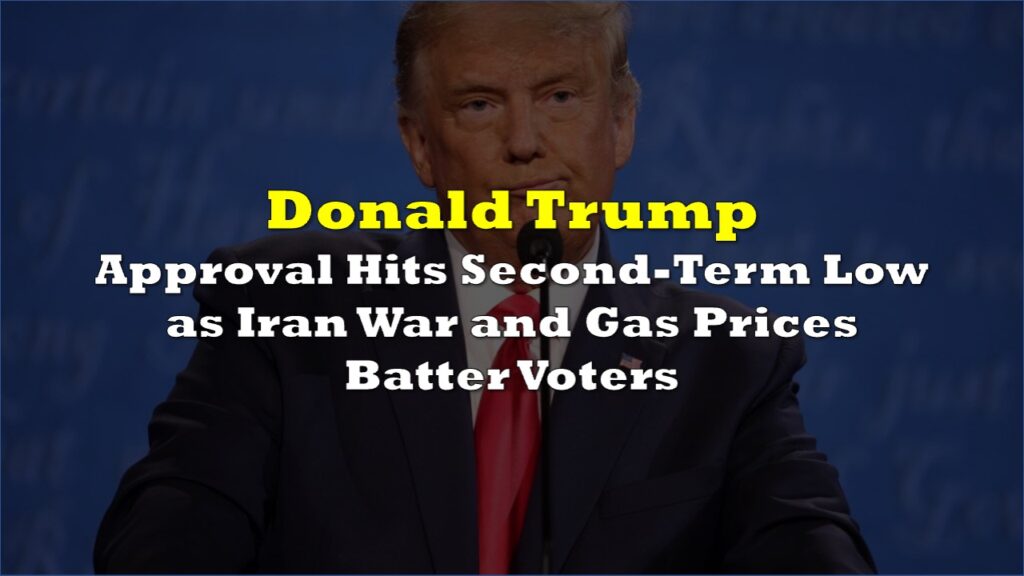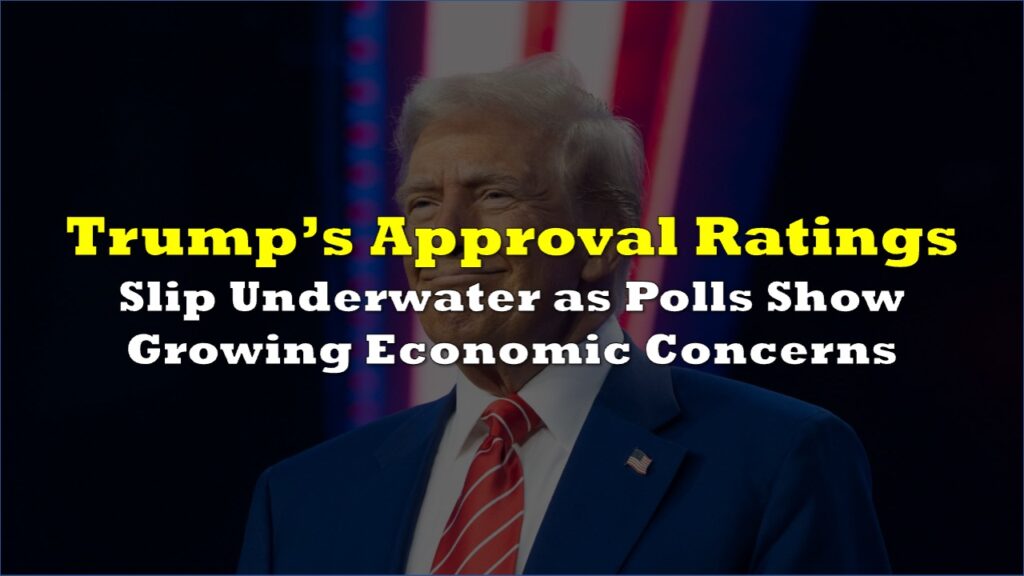

President Donald Trump’s approval rating fell to its lowest point of his second term just days before an armed man attempted to storm the White House Correspondents’ Dinner. It is yet to be seen whether surviving another assassination attempt can reverse a slide that months of economic anxiety and an unpopular war have driven.
A Reuters/Ipsos poll conducted April 24–27 put Trump’s overall approval at 34% among all adults and 37% among registered voters — both second-term lows.
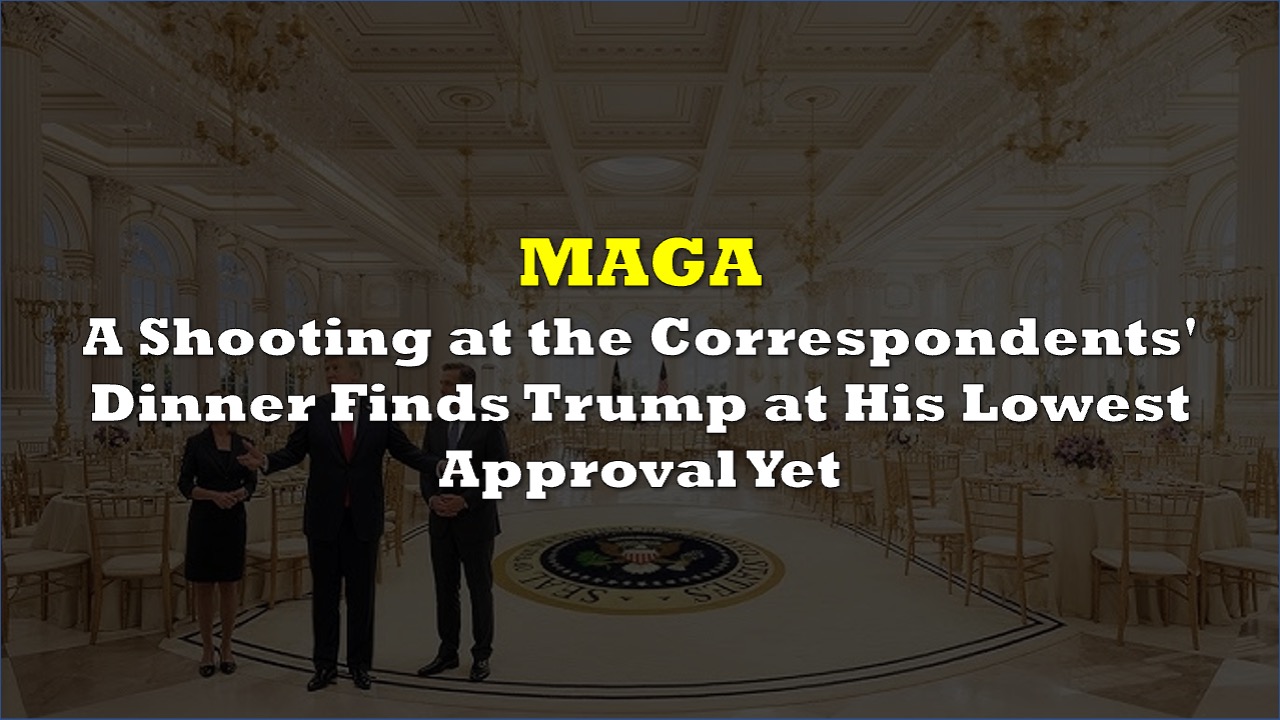
Ipsos noted that the vast majority of respondents completed the survey before the April 25 shooting at the Washington Hilton, where suspect Cole Tomas Allen, 31, ran through a security checkpoint armed with a shotgun, a handgun, and multiple knives, was subdued by Secret Service agents, and was charged with attempted assassination of the president. One Secret Service officer was shot but protected by a ballistic vest.
An AP-NORC poll released the same week put Trump at 33%. A CNN analysis found eight of nine quality polls over the past month placed him in the 30s. The Silver Bulletin aggregate sits higher at 39%, reflecting methodological differences rather than a divergent trend.
 Sponsored · Selkirk Copper Mines
The drivers are consistent across surveys: only 27% approve of Trump’s handling of the economy, and just 21% approve of his handling of inflation. Gas prices averaging $4.17 per gallon — up roughly 40% since Iran’s blockade of the Strait of Hormuz — have emerged as the most tangible source of voter frustration.
Two-thirds of Americans disapprove of Trump’s handling of the Iran war, a figure that barely moved even after a temporary ceasefire in early April. Republican support has softened to 83%, down 4 points from earlier this year.
The Reagan parallel is already in circulation. In 1981, Reagan was shot at the same Washington Hilton. His approval climbed in the aftermath, and while his party still suffered significant midterm losses, the incident built a narrative of resilience that helped carry him to a second term. Trump invoked a similar image after the 2024 Butler, Pennsylvania shooting, when a photograph of him raising his fist with blood on his face became one of the defining images of his campaign.
The Washington Hilton incident is Trump’s third assassination attempt. The first two produced measurable polling movement: after Butler, his favorability climbed to 40% in ABC News/Ipsos polling — a four-year high — and a second attempt in West Palm Beach pushed it higher still. Both came during the 2024 campaign, when Trump was a challenger rather than an incumbent, and before the Iran war and its economic consequences had set in.
The baseline now is 34%, not the low-to-mid 30s of his out-of-office years, and the issues dragging on his numbers — gas prices, inflation, a war two-thirds of Americans disapprove of — are structural rather than perceptual.
Writing in the New York Times, historians Matthew and Robert Dallek argued the effect is neither automatic nor durable — assassination attempts have more often deepened a sitting president’s political difficulties than reversed them, with Harry Truman and Gerald Ford as examples of presidents who survived attempts with composure and still saw no recovery in approval.
Trump moved quickly to tie the shooting to his proposal for a fortified White House ballroom, arguing the Washington Hilton attack validated the need for an on-grounds venue. The argument drew pushback from Democrats and has faced repeated legal challenges.
Read: DOJ argues White House ballroom would have prevented assassination attempt on Trump
At 34%, Trump’s approval matches the second-lowest reading of his first term, recorded six days after the January 6 Capitol riot. His all-time low in Reuters/Ipsos polling was 33%, in December 2017.
Information for this story was found via the sources and companies mentioned. The author has no securities or affiliations related to the organizations discussed. Not a recommendation to buy or sell. Always do additional research and consult a professional before purchasing a security. The author holds no licenses.