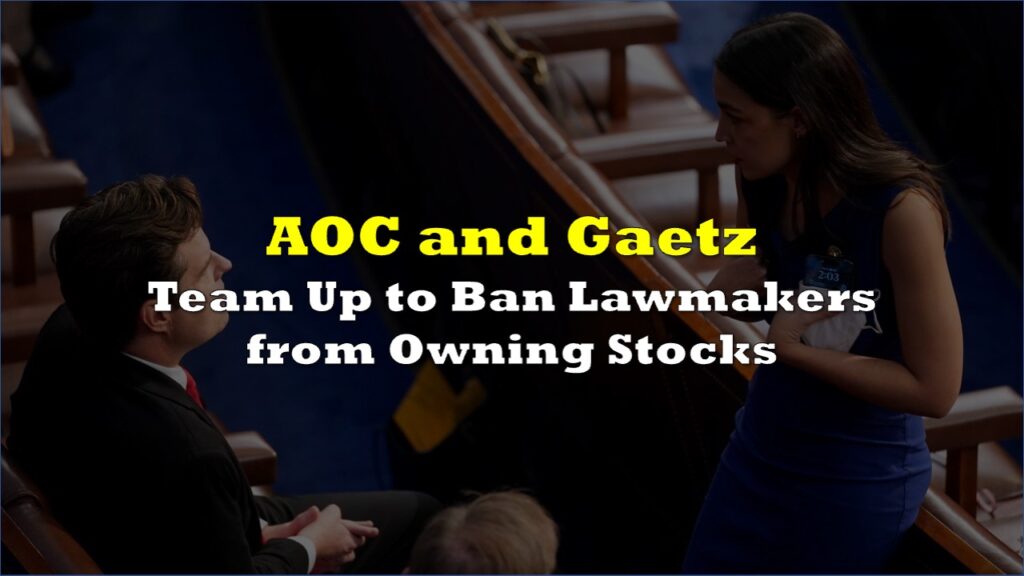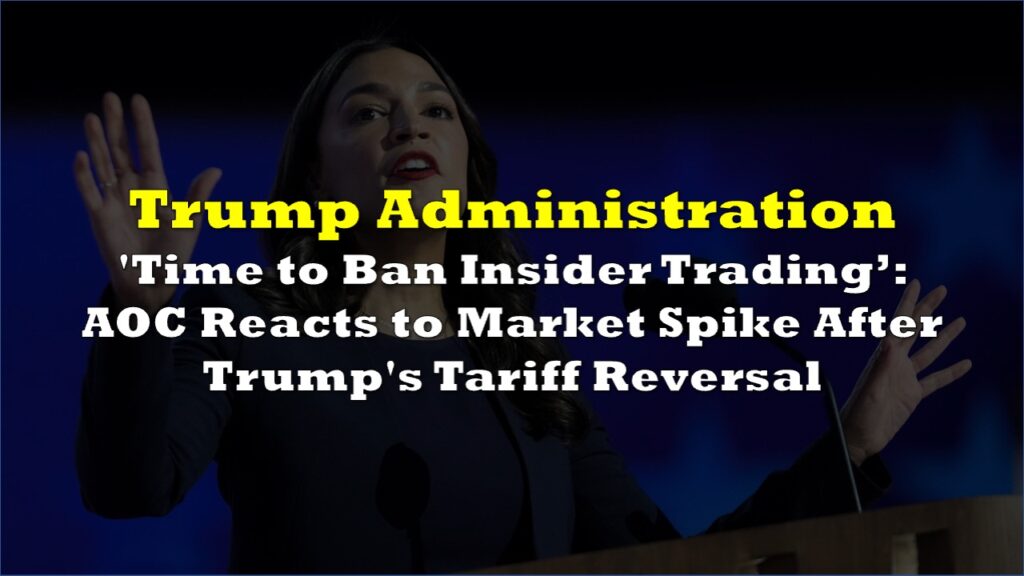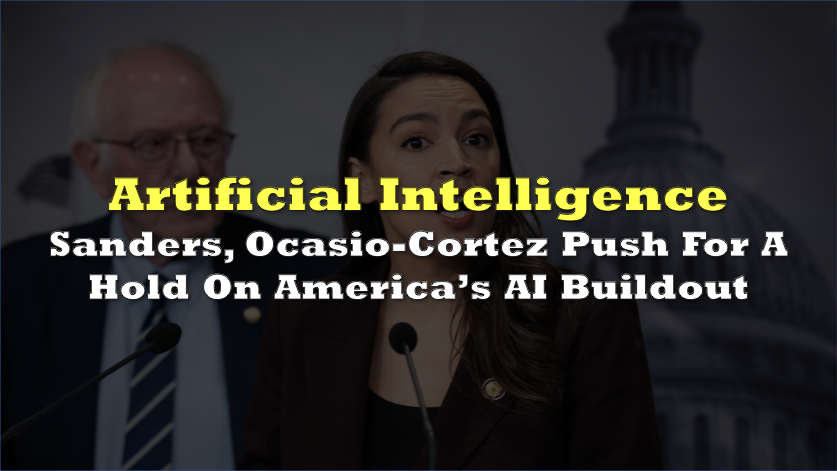

A potential collision between America’s AI infrastructure race and local backlash over resources and subsidies is brewing after Sen. Bernie Sanders and Rep. Alexandria Ocasio-Cortez proposed a halt on new AI data center construction and upgrades until Congress passes broad AI legislation.
What the Democrat duo aims to achieve for the said AI legislation would cover safety, worker protections, electricity costs, environmental impacts, community approval, labor standards, and subsidy restrictions.
The bill, Artificial Intelligence Data Center Moratorium Act, includes restrictions on exporting US-origin advanced AI chips and computing hardware to countries or entities without comparable safeguards.
 Sponsored · Selkirk Copper Mines
Sanders and Ocasio-Cortez argue that AI infrastructure is expanding faster than federal oversight, stating concerns include job displacement, privacy and civil rights, higher utility bills, environmental damage, and local communities being forced to absorb the costs of hyperscale buildouts.
“We must prevent executives in the AI industry from releasing harmful products into the world that threaten the health and well-being of working families, our privacy and civil rights, and the future of humanity,” the draft of the bill said.
The federal bill lands after a wave of state and local fights. Nixon Peabody’s May 2026 analysis says data center siting has shifted from an “energy-first” model to a “power-plus-permission” model, with 300+ bills filed in 30+ states, 12+ moratorium bills proposed, and 140+ local groups blocking or delaying about $60 billion in investment.
The same analysis lists moratorium or ban activity in states including Maryland, Michigan, Minnesota, New Hampshire, New York, Oklahoma, Pennsylvania, South Carolina, South Dakota, Vermont, Virginia, Georgia, and Wisconsin, with broader restrictions emerging elsewhere.
 Sponsored · Cambria Gold Mines
The AI boom is becoming an electricity story. The US Energy Information Administration said in January that it expected the strongest four-year growth in US electricity demand since 2000, fueled by data centers.
The Department of Energy said a Lawrence Berkeley National Laboratory report found US data center load growth had tripled over the prior decade and was projected to double or triple by 2028.
The counterargument is that data centers are now strategic infrastructure. The White House’s March 2026 Ratepayer Protection Pledge said large-scale data center infrastructure is foundational to the internet, cloud computing, AI, economic leadership, and national security, while also saying private companies—not ratepayers—should bear related energy costs.
Amazon, Google, Meta, Microsoft, OpenAI, Oracle, and xAI signed the pledge, according to the White House.
On jobs, Brookings found measurable local employment gains after large data centers arrive, including 4%–5% private employment growth and 2,000 to 4,000 additional jobs in a typical treated county after six years.
But Brookings also found that data centers are relatively low-labor assets compared with their capital cost. Large projects often promise only dozens to a few hundred permanent jobs, while construction jobs are temporary.
The bill puts the future of AI ramp up into the spotlight. It has really now moved towards a test of who controls the physical footprint of AI: Congress, local governments, utilities, ratepayers, or the hyperscalers racing to build before the grid, zoning rules, and public consent catch up.
Information for this story was found via the sources and companies mentioned. The author has no securities or affiliations related to the organizations discussed. Not a recommendation to buy or sell. Always do additional research and consult a professional before purchasing a security. The author holds no licenses.