


Alberta and the federal government of Canada finalized a landmark agreement on Friday in Calgary, establishing a clear timeline for a proposed oil pipeline to the West Coast, with construction potentially starting by September 1, 2027.
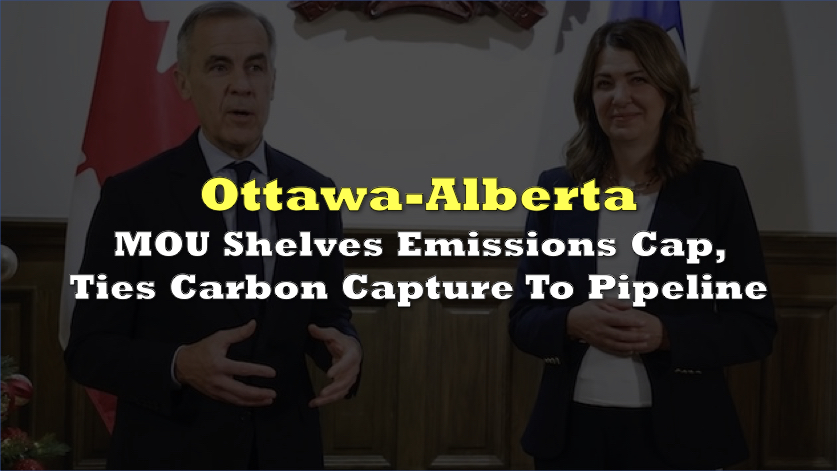
The deal, signed between Alberta Premier Danielle Smith and Prime Minister Mark Carney, marks a pivotal advancement in energy infrastructure collaboration between the province and Ottawa.
Under the terms, Alberta aims to submit a formal proposal for the pipeline to Ottawa’s major projects office by July 1. The federal government then has until October 1 to determine if the project serves the national interest, with a final approval decision slated for no later than September 1, 2027. If all goes as planned, the pipeline could be operational by 2033 or 2034, according to Alberta’s estimates.
RELATED: Alberta and Ottawa Near Deal on Industrial Carbon Price Targeting $130 per Tonne by 2040
 Sponsored · Selkirk Copper Mines
This pact builds on a memorandum of understanding from November 2025 and extends to other critical areas, including a revised carbon pricing framework for Alberta’s industrial sector. The province will maintain its current carbon price of $95 per tonne through the end of this year, with incremental increases to $100 per tonne from 2027 to 2030, and a further rise to an effective price of $130 per tonne by 2040. Additionally, both parties will issue 75 million tonnes of carbon contracts for difference to provide cost certainty for investors.
The agreement also ties the pipeline’s future to the renamed Pathways Project, now called the Oil Sands Alliance, a carbon capture and storage initiative deemed essential by federal officials for any pipeline expansion. Earlier accords this year on methane equivalency and environmental assessments further underscore the comprehensive nature of this partnership.
RELATED: Canada Unveils C$1 Trillion Plan to Double Electricity Grid Capacity by 2050
Premier Danielle Smith framed the deal as a unifying force. “The door is open, and it’s time to turn shared ambition into real projects, jobs and results for Alberta and Canada,” she said.
Echoing the sentiment, Prime Minister Mark Carney, who announced plans earlier this week to double Canada’s electricity grid capacity by 2050, added, “Our agreement with Alberta is about building trust in a Canada that works.”
Canadian Chamber of Commerce CEO Candace Laing also provided commentary on the signing, saying within an emailed statement, “Today’s historic agreement between the Government of Canada and the Government of Alberta puts politics aside for progress. When we feud within the federation, we send the message that investors should pursue business opportunities elsewhere. When we unite, we invite investment back.”
RELATED: Pipeline Race Puts Canada On The Clock As UAE Announces 2027 Build Up
Beyond energy, the deal may carry political weight, with Smith suggesting it could dampen Alberta’s separatist movement, recently weakened by a court ruling against a secession referendum question earlier in the week.
Yet, the pipeline’s path forward is far from certain, as the route remains undecided, consultations with First Nations are pending, and British Columbia continues to voice strong opposition. Moreover, no private sector proponent has stepped forward, leaving Alberta to spearhead the proposal for now.
Information for this story was found via the sources and companies mentioned. The author has no securities or affiliations related to the organizations discussed. Not a recommendation to buy or sell. Always do additional research and consult a professional before purchasing a security. The author holds no licenses.



One Response
Hmmmm…..I do not see the FN agreeing with this in BC, but you never know.