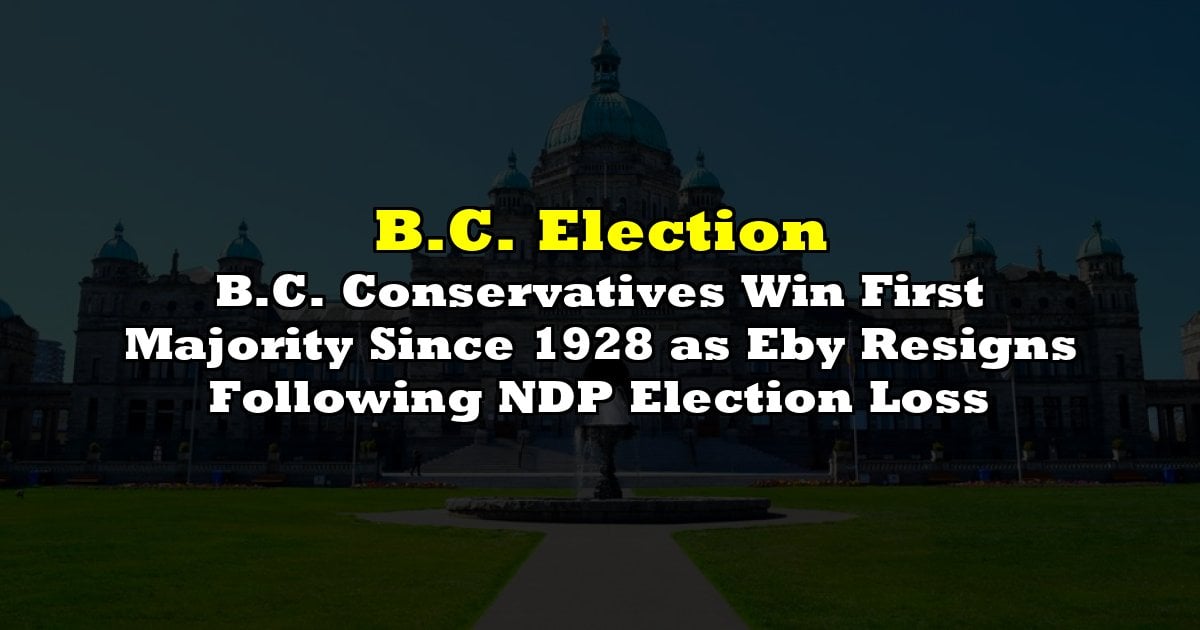

Lorne Doerkson, a former rodeo announcer and newspaper publisher barely known before the campaign, is set to become British Columbia’s premier after his Conservative Party captured a commanding majority in Saturday’s provincial election. The win hands the province its first Conservative government since 1928, unseating the incumbent New Democrats and bringing David Eby’s premiership to an end.
By late Saturday, analysts had the Conservatives at 64 seats to the NDP’s 27, with two seats going to the Green Party. That tally sits well beyond the 47 seats needed to govern and ranks among the most lopsided results the province has seen. Turnout topped 47 per cent, and some ridings reported late as Elections BC tallied election-day ballots by hand.
Defeated on this scale, Eby used his concession speech to step down both as premier and as NDP leader. His decision to trigger the vote two years early on Sept. 22, hoping to lock in a stronger fourth term, proved costly after a campaign plagued by missteps and a lingering sense among voters that the snap call was a cynical grab for power.
 Sponsored · Cambria Gold Mines
“I accept full responsibility for that outcome,” Eby said, telling supporters he remained proud of his record in office.
Metro Vancouver drove the collapse. The Conservatives flipped at least 11 ridings the NDP had held, nearly all of them in the region, with Surrey and the Tri-Cities bleeding seats. Among the six cabinet ministers projected to fall were Jagrup Brar, minister of mining and critical minerals, in Surrey-Fleetwood, and Rick Glumac, minister of state for artificial intelligence and new technologies, in Port Moody-Burquitlam. Jodie Wickens, minister of children and family development, lost Coquitlam-Burke Mountain.
In his own riding of Cariboo-Chilcotin, Doerkson romped home with more than 70 per cent of the vote. “B.C. is definitely blue,” he told a cheering crowd, vowing to rebuild the economy, strengthen public safety and defend private property rights.
He cast the result as a win for the province beyond its cities. “For a very long time, a lot of British Columbians have felt like Victoria forgot about them, like the map maybe stopped at Hope,” he said. “But tonight, the whole map counts for British Columbia.”
Doerkson inherits a province wrestling with growing deficits, high taxes, weak private sector investment and deepening unaffordability. A record 70,000 young people left B.C. last year, pushed out by housing costs and taxes, even as the government partners with Prime Minister Mark Carney on major infrastructure including transmission lines, liquefied natural gas export terminals and critical minerals mines.
The province’s last Conservative government took office in 1928 under Simon Fraser Tolmie. Whether Doerkson can balance social and fiscal demands across the next four years, and hold the premier’s office over the longer run, will shape the mandate voters delivered Saturday.