

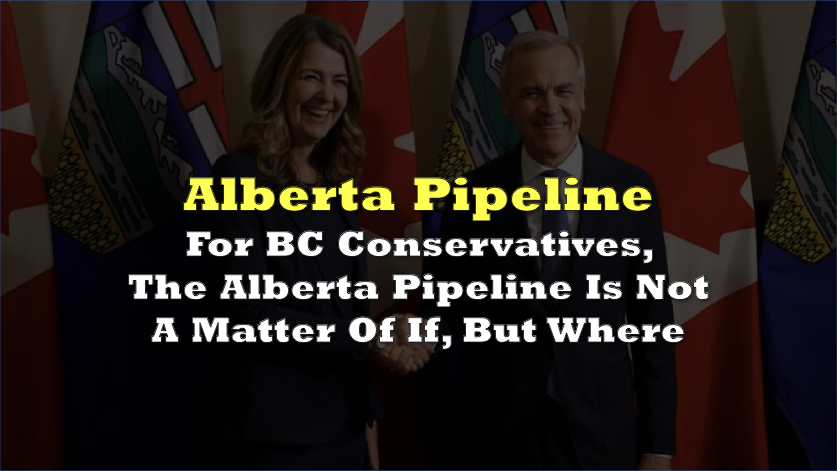

A proposed Alberta-to-Pacific pipeline is exposing a new divide among its supporters, with the BC Conservatives backing expanded energy exports while questioning whether the southern corridor is the right path for the project.
The National Post reported that BC Conservatives criticized the Alberta-Ottawa pipeline plan because of concerns surrounding the southern route through BC, including potential impacts on the Fraser Valley and agricultural land.
The proposed pipeline would run from Alberta to the BC coast, following a corridor similar to the existing Trans Mountain system and ending near Roberts Bank in Delta. Ottawa and Alberta have promoted the project as a way to diversify Canadian oil exports beyond the US and increase access to Asian markets.
 Sponsored · Selkirk Copper Mines
The route choice was partly designed to avoid reopening the debate over northern BC tanker restrictions. Federal officials have emphasized that the project would maintain the existing tanker ban on the northern coast while directing exports through southern infrastructure.
The party’s recent position represents a challenge to a project it broadly supports in principle. For years, the central battle was whether Alberta crude should gain additional access to global markets. The latest fight is increasingly focused on where infrastructure should be built, which communities carry the impacts, and whether provincial interests were adequately considered.
The BC Conservatives have traditionally positioned themselves as advocates for resource development and have criticized the provincial government for what they describe as barriers to energy projects.
After Ottawa and Alberta announced their pipeline agreement, the party criticized Premier David Eby’s government for not being directly involved in negotiations. Conservative representatives argued that British Columbia should have had a stronger voice in shaping a project that would cross the province and create infrastructure within its borders.
 Sponsored · PTX Metals Inc.
The party is now criticizing the proposed southern route because they believe it could threaten valuable agricultural land, particularly in the Fraser Valley and Delta region. They argue that routing major infrastructure through some of BC’s most productive farmland could create long-term land-use challenges, especially with limited opportunities to replace agricultural areas once converted.
The Conservatives say the project should balance Canada’s energy export goals with the protection of local communities, farmland, and provincial priorities.
For Alberta, the pipeline represents a strategic effort to reduce dependence on the US market and create more options for oil producers. Prime Minister Mark Carney and Alberta Premier Danielle Smith have framed the project as part of a broader economic strategy to strengthen Canadian energy exports. The proposal is expected to move through federal review processes and requires additional approvals before construction can begin.
Alberta has also faced questions about the southern route from within its own government. Premier Danielle Smith previously expressed concerns about increased shipping activity through existing coastal infrastructure and whether southern ports could accommodate additional volumes.
The conflict over the southern route also highlights a broader issue facing major infrastructure projects in Canada.
For the BC Conservatives, the challenge is maintaining their pro-development position while responding to concerns from communities directly affected by the route. For Ottawa and Alberta, the challenge is proving that a nationally important energy project can move forward without leaving provincial concerns behind.
The question is no longer only whether Canada should build more energy infrastructure. It is whether supporters can agree on where that infrastructure belongs.
Internal government polling conducted last fall showed 67% of Canadians supported a new or expanded oil pipeline, data that the Prime Minister’s Office was drawing on as it negotiated the framework for a Pacific Coast pipeline with Alberta and BC.







One Response
I agree with the Conservative position. The only reason for the southern route is political. Prince Rupert is a much better choice with a deepwater port with unconstrained access to the open Pacific. Detractors who comment about Hecate Strait are blowing smoke; the tankers go nowhere near it. Prince Rupert is easier to access with a pipeline, and is significantly closer to the customers, making Canadian crude more cost effective. It is also a town needing projects for employment, unlike the over-crowded Metro Vancouver.
Carney, probably wisely, chose not to tackle the environmental zealots and the first nations unjustified veto condition given by Eby and Trudeau at this juncture; fight one battle at a time.