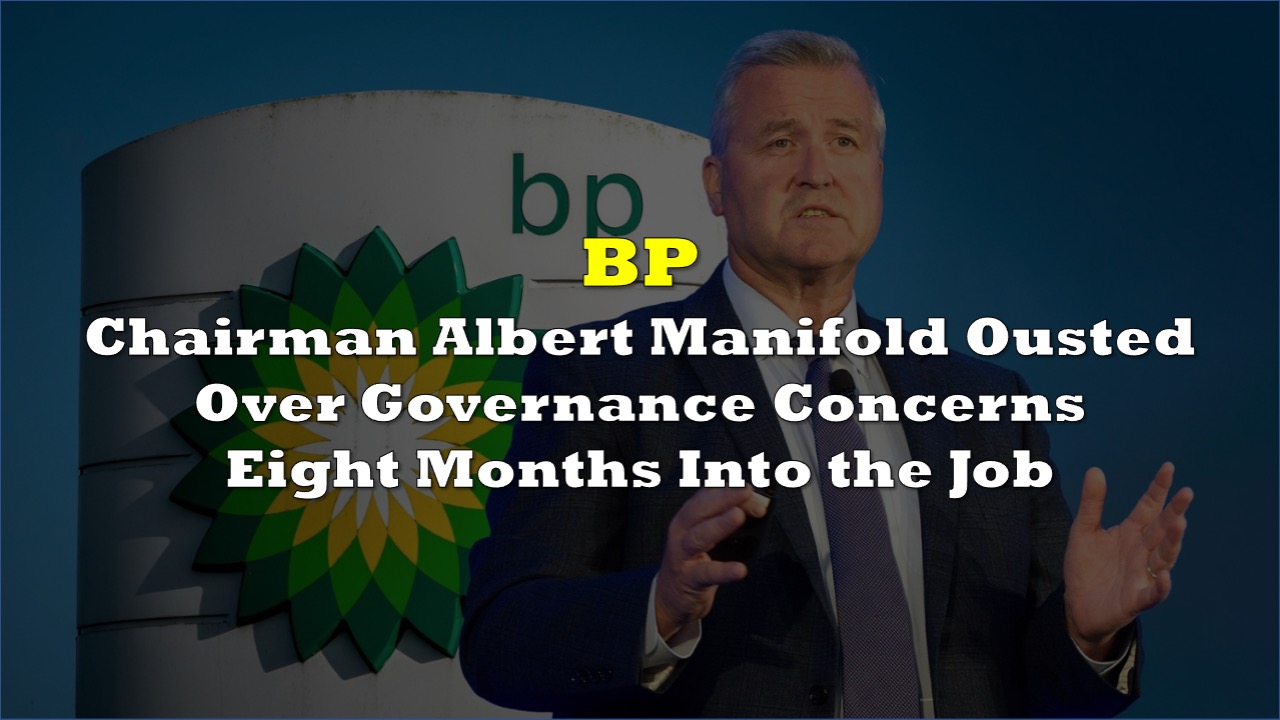

BP (NYSE: BP) fired its chairman, Albert Manifold, on Tuesday, less than eight months after appointing him, following what the board described as “serious concerns raised to the board related to important governance standards, oversight and conduct.”
The dismissal was unanimous. Senior independent director Amanda Blanc said the board had been “surprised and disappointed to learn of governance oversight and conduct issues it deems unacceptable and has taken decisive action.”
BP did not disclose the specific nature of those concerns, and no further details have been made public. Ian Tyler, a non-executive director, former chief executive of British construction group Balfour Beatty, and current chair of Grafton Group, was appointed interim chair with immediate effect. A search for a permanent replacement is underway.
 Sponsored · Selkirk Copper Mines
Manifold, a former long-serving chief executive of Irish building materials group CRH, had been brought in last October to stabilize BP amid pressure from activist investor Elliott Investment Management, which holds roughly a 5% stake in the company. Elliott had backed his appointment. The fund declined to comment on his removal on Tuesday.
“Manifold was seen by the market as having done a good job to turn them around and reset the strategy,” said Robin Mills, chief executive of Qamar Energy.
The departure comes just months CEO Murray Auchincloss stepped down in December — he said he had expressed openness to leave once Manifold became chair and “an appropriate leader” was identified — with Meg O’Neill installed as his replacement.
O’Neill is BP’s fifth chief executive in six years. The company’s net income fell 86% last year. Manifold’s predecessor as chair also departed under Elliott pressure, part of a broader pattern of instability that has shadowed the company since it decided to pivot toward green energy — a strategy it has since reversed.
Manifold had already faced significant shareholder resistance. At BP’s annual general meeting last month, more than 18% of investors voted against his re-election to the board after advisory firm Glass Lewis recommended shareholders oppose it, citing governance concerns. He survived that vote. He did not survive this one.
BP shares fell as much as 9% in early trading before narrowing losses to roughly 5.5% by mid-afternoon in London.
“This is not simply a story about strategy, but about governance, execution and credibility,” said Justine Leigh-Bell, chief executive of the Anthropocene Fixed Income Institute.
This leaves BP with an interim chair, a CEO eight months into the role, and no clear succession timeline — compounding investor uncertainty at a company already navigating a strategic pivot back toward oil and gas after years of costly attempts to reposition itself as a green energy major.
Information for this story was found via the sources and companies mentioned. The author has no securities or affiliations related to the organizations discussed. Not a recommendation to buy or sell. Always do additional research and consult a professional before purchasing a security. The author holds no licenses.