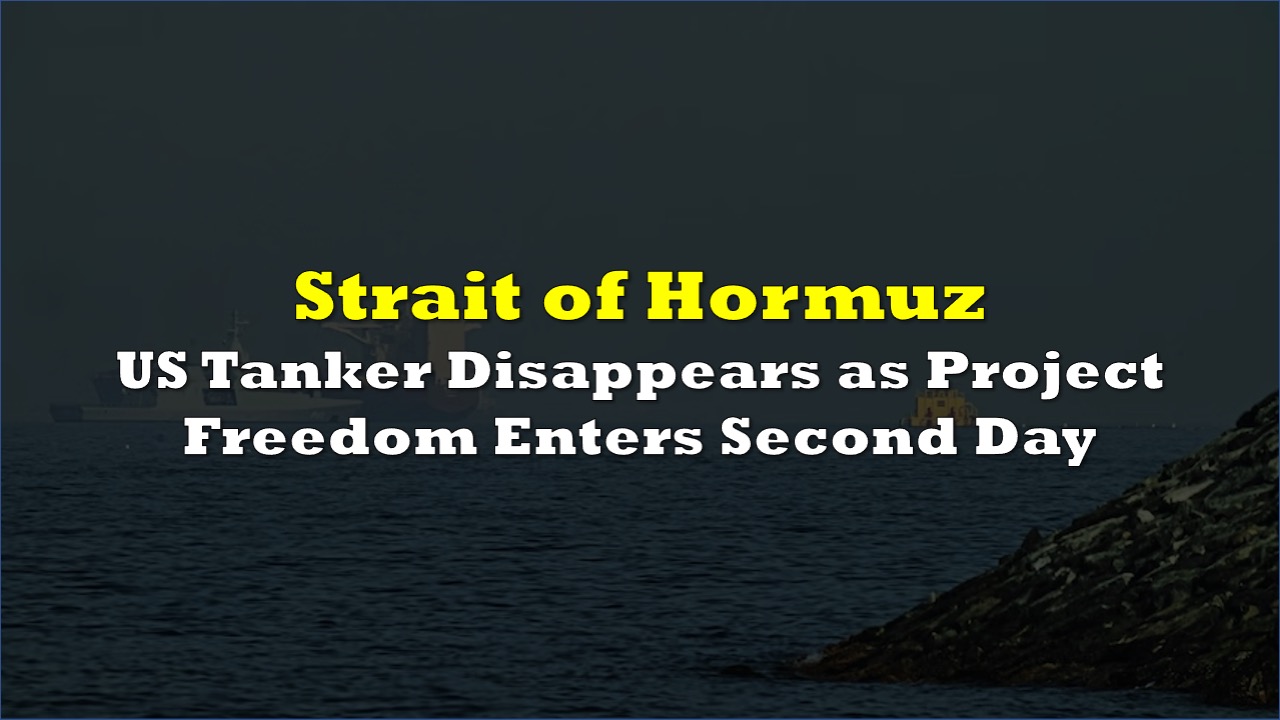

A US Air Force KC-135 refueling tanker disappeared from radar over the Strait of Hormuz on Tuesday after broadcasting a 7700 squawk code — the international general emergency signal — according to open-source flight tracking data and social media reports. Two H125 light utility helicopters lifted off from Al Udeid Air Base in Qatar shortly after, suggesting a search-and-rescue response was underway.
US Central Command had not confirmed the incident as of publication. No cause was immediately established.
The disappearance occurred on the second day of Operation Project Freedom, the US-led guiding mission President Donald Trump launched May 4 to push commercial vessels through the Strait of Hormuz. Iran, which has controlled the waterway since late February, had warned the US one day earlier to stay out of the strait.
The KC-135 Stratotanker is a decades-old aerial refueling aircraft that has operated across the theater since Operation Epic Fury began on February 28. The US military has already lost multiple tankers during the conflict. On March 12, a KC-135 went down over western Iraq following a mid-air collision with a second tanker in friendly airspace; all six crew members died.
Defense experts have repeatedly flagged the KC-135 fleet’s limited battlefield connectivity as a liability in contested zones. As Defense One reported in March, the aircraft largely lacks secure beyond-line-of-sight communications, leaving crews with limited situational awareness of threats in the area.
 Sponsored · Selkirk Copper Mines
Al Udeid Air Base, the US military’s primary air hub in the Gulf region, sits roughly 500 kilometers northwest of the Strait.
Tuesday’s report came hours after Iran denied responsibility for a strike that set Fujairah’s oil port ablaze on Monday, and Iranian Foreign Minister Abbas Araghchi called Project Freedom “Project Deadlock” — warning Washington and Abu Dhabi against being “dragged back into quagmire.”
Read: Iran Denies Fujairah Attack, Points Finger at US Military
The Strait carries roughly 20% of the world’s seaborne oil supply. Commercial traffic through the waterway has collapsed more than 90% since the Iran war began, with prediction markets placing the odds of a full reopening before June at below 40%.
Information for this story was found via the sources and companies mentioned. The author has no securities or affiliations related to the organizations discussed. Not a recommendation to buy or sell. Always do additional research and consult a professional before purchasing a security. The author holds no licenses.