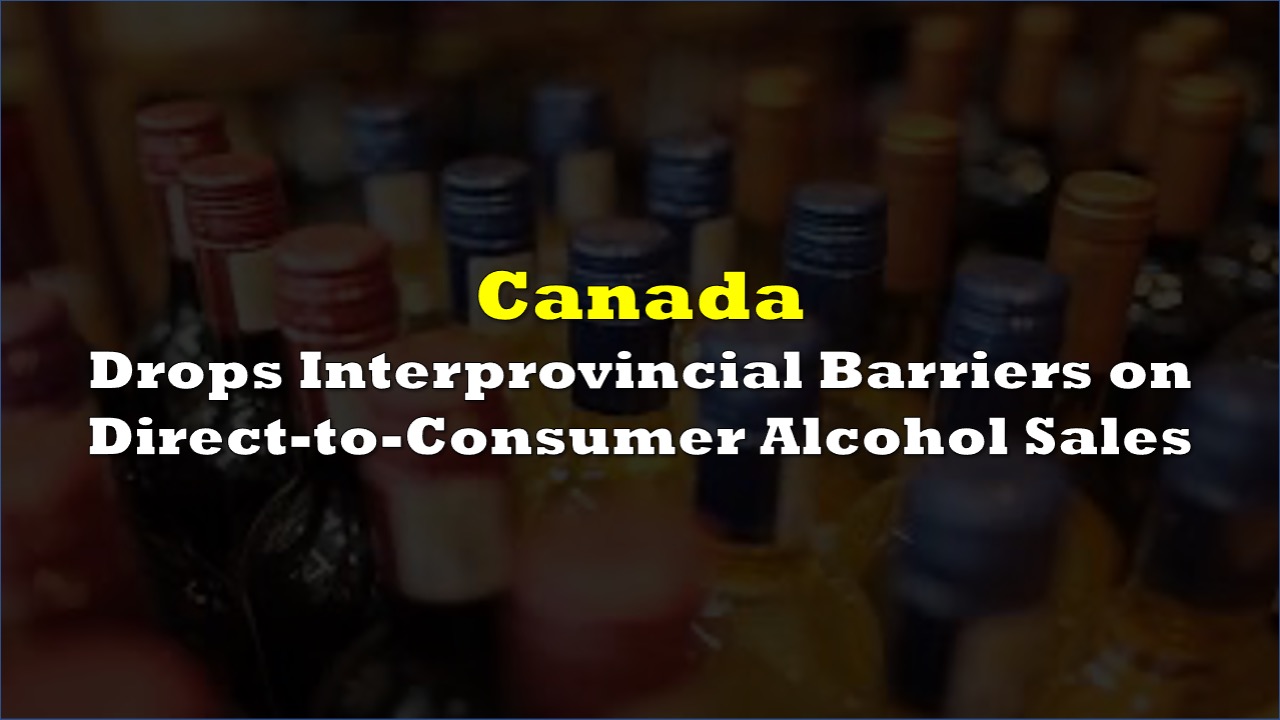

Nine Canadian provinces signed a deal Tuesday allowing wineries, distilleries and breweries to sell alcohol directly to consumers outside their home provinces, part of a broader push to dismantle interprovincial trade barriers.
Alberta, Saskatchewan, Manitoba, Ontario, New Brunswick, Nova Scotia, Prince Edward Island, Newfoundland and Labrador, and British Columbia signed on. New Brunswick and Manitoba had already opened their markets to out-of-province direct sales. Quebec and the Yukon didn’t sign but said they intend to join later; the Northwest Territories and Nunavut declined, citing what a joint statement called the “unique realities” of the territories.
The deal fulfills a commitment 10 provinces and the Yukon made in a July 2025 memorandum to open direct-to-consumer alcohol shipping by May 2026, a deadline the group missed by nearly two months. British Columbia said it would take until February 2027 to implement the change.
 Sponsored · Cambria Gold Mines
Premiers tied the move to a wider push to strengthen Canada’s economy against US trade pressure. The announcement came a day after President Donald Trump threatened 50% tariffs on a wide range of Canadian goods, including alcohol. Several provinces pulled American alcohol from store shelves last year in response to earlier tariffs, and most haven’t restored it.
Read: Trump Invokes 1930 Trade Law for 50% Tariffs on Canadian Goods
Small producers had previously relied on provincial liquor boards to reach shoppers in other provinces, a process that could take months of paperwork to get a single product listed. David Farran, president and founder of Alberta’s Eau Claire Distillery, said accessing other provinces “has been very difficult for Canadian producers.”
Reaction has been mixed so far. Farran and other Alberta distillers welcomed the change, but brewers in Prince Edward Island said high shipping costs would blunt any real revenue gains for smaller operations, even as they applauded the barriers coming down. Craft producers with more capacity to ship stand to benefit most.
The agreement covers direct-to-consumer sales specifically and leaves the more restrictive retail side of the system largely untouched, so it won’t immediately expand what’s available on liquor store shelves nationwide.