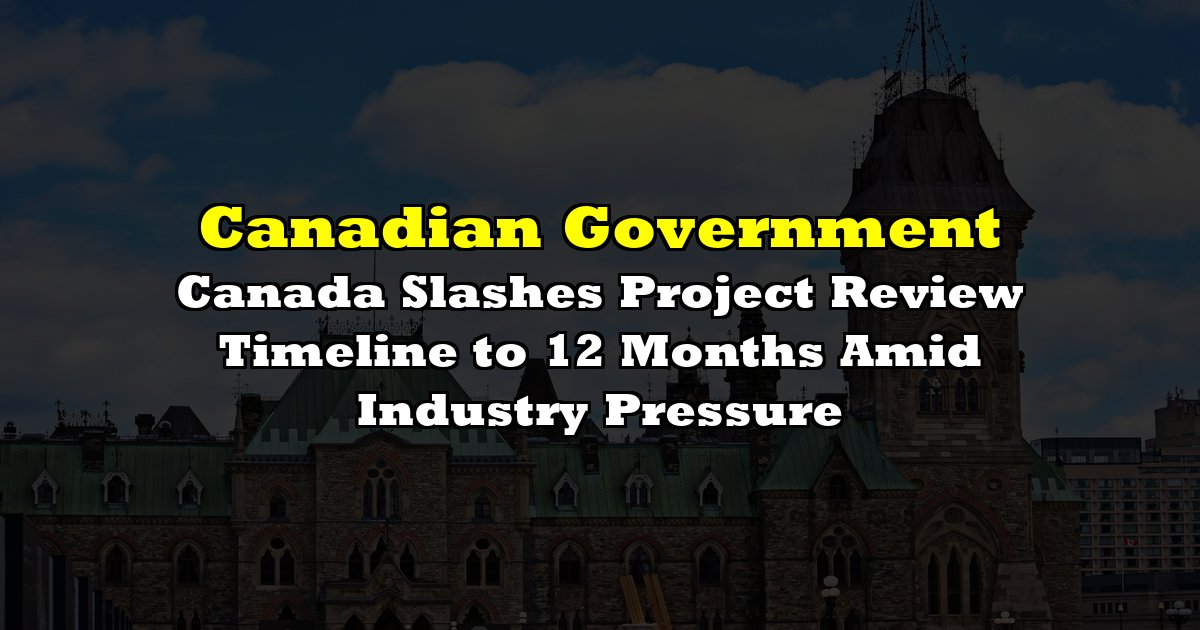

Canada’s federal government, under Prime Minister Mark Carney, has unveiled a bold plan to slash the timeline for approving major projects to just one year, addressing long-standing complaints from businesses that regulatory delays stifle investment. Announced on Friday by Intergovernmental Affairs Minister Dominic LeBlanc and Transport Minister Steven MacKinnon, the initiative aims to streamline a process that has often dragged on for years.
The proposal, which kicks off with a 30-day consultation period, sets a hard cap of 12 months for federal decision-making once all project information is submitted. This marks a significant reduction from the previous two-year timeline introduced last year for proposals handled by the Major Projects Office. Additionally, the government intends to consolidate approvals into a single federal decision, eliminating the need for multiple departmental rulings on the same project.
Carney’s push to cut red tape is part of a broader agenda to make Canada more attractive for investment, particularly in the resource sector. The reforms will apply to all large projects under federal review, with a new consultation hub designed to coordinate input from Indigenous groups into a unified process. Ministers will also gain expanded powers, including the ability for LeBlanc to adjust environmental conditions on projects deemed of national interest.
 Sponsored · Canadian Copper Inc.
“The proposed regulatory and legislative reforms are part of our ambitious plan to build a stronger Canada — helping companies across the country build their projects faster, attracting investment, boosting our competitiveness, and growing Canada’s economy,” LeBlanc said in a statement.
Industry voices have responded with cautious optimism. Bryan Detchou, senior director of natural resources, environment, and sustainability at the Canadian Chamber of Commerce, welcomed the consultation but stressed the need for swift action. He noted a persistent lack of confidence among businesses and investors, many of whom remain on the sidelines due to bureaucratic hurdles.
However, the accelerated timeline has drawn criticism from Indigenous and climate groups, who argue that prioritizing speed risks overlooking community impacts and environmental harm. The tension reflects a balancing act for Carney, whose administration faces pressure to capitalize on global demand for Canadian energy and resources.
The urgency was underscored earlier this week by Fatih Birol, executive director of the International Energy Agency, who warned that Canada cannot afford delays as it sits on a “golden opportunity” to advance energy projects. Cenovus Energy Inc. CEO Jon McKenzie echoed this sentiment, recently highlighting that high costs for new oil sands projects hinge on loosened environmental rules.
Information for this story was found via the sources and companies mentioned. The author has no securities or affiliations related to the organizations discussed. Not a recommendation to buy or sell. Always do additional research and consult a professional before purchasing a security. The author holds no licenses.