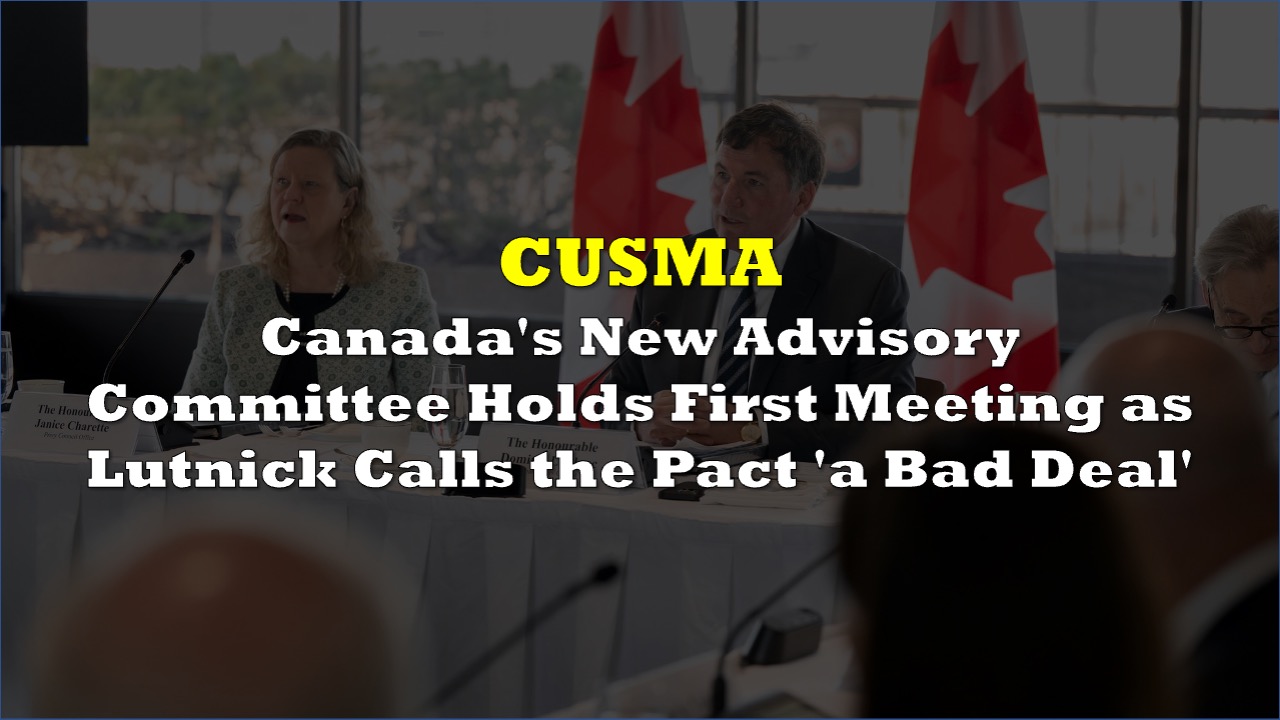

Canada’s newly formed Advisory Committee on Canada-US Economic Relations held its inaugural meeting in Ottawa on April 27, chaired by Minister Dominic LeBlanc, as the country enters the most consequential stretch of trade negotiations since CUSMA came into force in 2020.
The 24-member committee — which Prime Minister Mark Carney assembled from business, labour, investment, and trade sectors — reviewed Canada’s priorities for the upcoming CUSMA joint review. LeBlanc’s office did not disclose what those priorities are. The committee also welcomed a new member: Eliot Pence, founder and CEO of Dominion Dynamics, a Canadian defence technology firm.
Related: Carney reveals Canada-US economic relations council, including conservatives
 Sponsored · Selkirk Copper Mines
The meeting took place against a deteriorating backdrop on the US side. Commerce Secretary Howard Lutnick told the Semafor World Economy Summit in Washington earlier this month that Trump views CUSMA as “a bad deal” that needs to be “reimagined,” and has publicly criticized Canada’s strategy of diversifying its trading relationships.
At a congressional hearing last week, US Trade Representative Jamieson Greer described CUSMA as having “load-bearing pillars” that work but said renegotiation is necessary to address US concerns — and told Congress he had raised the dairy supply management issue with Canadian officials “repeatedly and frequently” without receiving any commitments.
The talks haven’t formally started yet. CBC News reported last week that Washington is demanding an “entry fee” — upfront concessions — before sitting down with Ottawa. Canadian sources told CBC that Canada has twice offered concessions without receiving anything in return.
Carney rejected these claims, saying the US cannot dictate terms. “It’s not a case of the United States dictates the terms. We have a negotiation, we can come to a mutually successful outcome,” he said.
Read: Mark Carney Denies U.S. ‘Entry Fee’ Demand in CUSMA Trade Talks
 Sponsored · Cambria Gold Mines
Canada’s chief trade negotiator, Janice Charette, described the July 1 review date as “a checkpoint — not a cliff,” signalling that Ottawa expects negotiations to continue past that date regardless of whether a framework is reached in time. Greer has similarly acknowledged that resolving all trade issues before July 1 is unlikely.
Canada-US trade has grown more than 27% — or $196 billion — since CUSMA entered into force, with the bilateral relationship now worth roughly $1.2 trillion annually. About 85% of Canadian goods heading into the US remain tariff-free.
Also read: Carney Calls US Tariffs CUSMA Violations as Trump Renews 51st State Push
If the three parties reach no consensus at the July 1 review, the agreement does not automatically lapse. Instead, annual joint reviews continue until an extension is agreed upon or CUSMA expires in 2036.
The committee includes former Conservative leader Erin O’Toole, former Quebec premier Jean Charest, former federal cabinet minister Lisa Raitt, and former Canadian High Commissioner to the UK Ralph Goodale. Carney replaced nearly all members from the prior Trudeau-era advisory council, keeping only four, signalling a strategic reset heading into the most sensitive phase of the trade relationship.
Information for this story was found via the sources and companies mentioned. The author has no securities or affiliations related to the organizations discussed. Not a recommendation to buy or sell. Always do additional research and consult a professional before purchasing a security. The author holds no licenses.