

Canada’s housing market entered the fall with an uncomfortable combination for sellers: fewer transactions, a fresh wave of listings, and borrowing costs beginning to move in the wrong direction again.
Home sales recorded through Canadian MLS systems fell 0.7% in August from July and were 6.9% below August 2025 on an unadjusted basis, according to new data from the Canadian Real Estate Association. Monthly sales have now been largely stagnant since May after the market showed signs of improving earlier in the year.
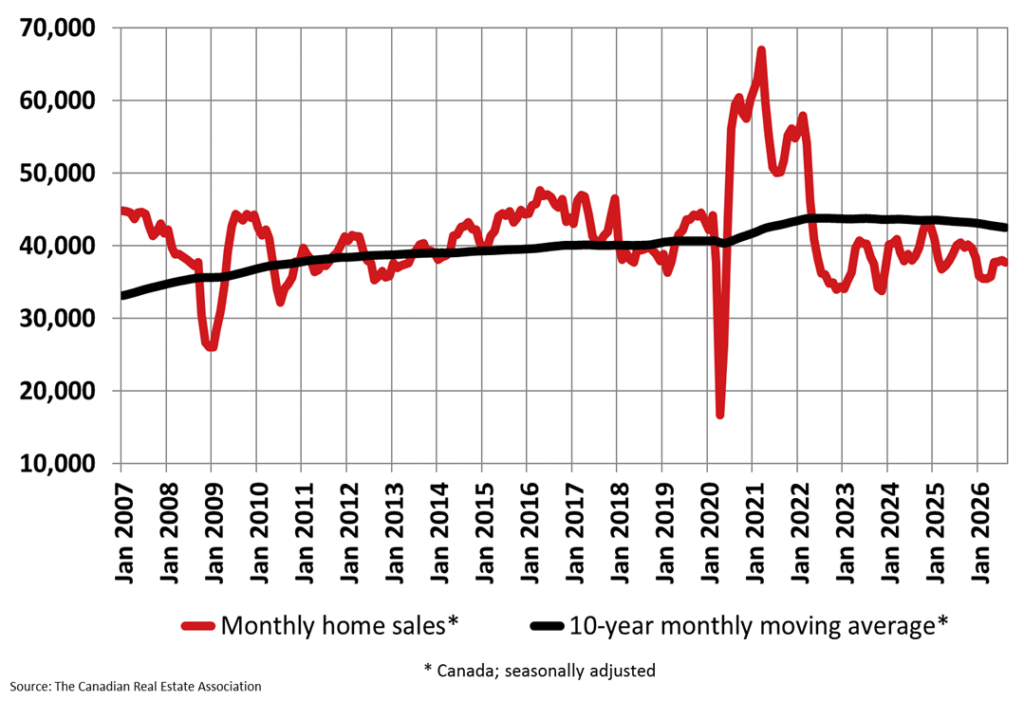
At the same time, new listings rose 3.3% from July, reversing three consecutive monthly declines. The combination pushed the national sales-to-new-listings ratio to 49.1%, down from 51.1% in July and below its long-term average of 54.7%. CREA considers readings roughly between 45% and 65% consistent with balanced conditions.
 Sponsored · Cambria Gold Mines
The increase in listings has not yet produced a major inventory glut. Just under 200,000 properties were listed for sale at the end of August, only 1.4% more than a year earlier. Months of inventory remained at 4.8 for a fourth consecutive month, slightly below the long-term average of five months.
Prices were similarly static on a monthly basis. CREA’s National Composite MLS Home Price Index was unchanged from July and down 3.0% from August 2025, its smallest annual decline since October 2025.
The national average transaction price told a different story, rising 0.6% year over year to $668,219. CREA cautions that average prices can be distorted by changes in the mix of homes and markets where transactions occur.
The bigger change since the summer has come from interest rates. The Bank of Canada held its overnight rate at 2.25% on September 2 but warned that upside risks to inflation had increased amid elevated energy prices and new U.S. tariffs and Canadian countermeasures. The central bank said it would assess the sustainability of Canada’s economic rebound and was prepared to adjust policy if necessary.
 Sponsored · Selkirk Copper Mines
Bond markets have already tightened conditions for fixed-rate borrowers. Ratehub said the five-year Government of Canada bond yield had climbed to around 3.65% by September 11, putting renewed upward pressure on fixed mortgage rates.
“For borrowers, fixed mortgage rates have already increased on higher bond yields,” CREA senior economist Shaun Cathcart said in the association’s August release.
Variable-rate borrowers are facing a separate risk. Reuters reported that money markets were pricing roughly a 60% probability of a Bank of Canada rate increase as soon as its October meeting, with the central bank’s benchmark rate currently at 2.25%. Markets were also pricing about 1.25 percentage points of cumulative tightening through the end of 2027, according to Reuters.
The shift leaves the housing market in a different position from earlier in the year. Buyers have more properties to choose from, but the rate environment that could have helped turn that inventory into stronger sales is becoming less favourable.
Ontario is already showing the weakness more sharply. The province recorded 13,620 MLS sales in August, down 6% from a year earlier and the lowest August total in 25 years. Sales were also 22.6% below the province’s 10-year August average.
CREA’s next national housing report is scheduled for October 16, less than two weeks before the Bank of Canada’s October 28 rate decision.