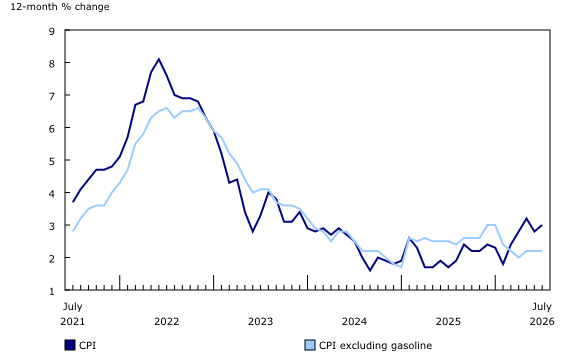
Canada’s annual inflation rate accelerated to 3.0% in July from 2.8% a month earlier, as a sharp run-up in pump prices overwhelmed cooling grocery costs, Statistics Canada said Monday.
On a monthly basis, the consumer price index rose 0.5%. Seasonally adjusted, the increase was 0.3%.
Gasoline drove most of the increases. Prices at the pump were up 25.7% from a year earlier, a step up from June’s 20.5% gain, after conflict in the Middle East, including the blockade of the Strait of Hormuz and the partial closure of Red Sea shipping routes late in the month, squeezed global supply.
 Sponsored · Selkirk Copper Mines
Strip out gasoline and the picture looks considerably calmer. That measure held at 2.2% for a third consecutive month, a sign that the July acceleration was driven by a single volatile component rather than a broad reheating of prices.
Energy costs rippled outward all the same. Transportation prices climbed 7.8% year over year, with air fares up 12.0% after a 9.6% gain in June, which the agency tied to higher jet fuel costs. Travel tours jumped 15.2%, more than double June’s 6.8% pace, as hotels and flights to World Cup host cities in the United States grew more expensive.
Groceries offered the clearest relief. Food purchased from stores rose 3.1%, down from 3.9% in June, helped by cereal products, which fell 1.7%, and fresh or frozen chicken, up just 0.3%. Even so, July marked the 18th straight month that grocery inflation ran ahead of the all-items index. Shelter costs rose 1.3%.
The national figure masked a wide regional spread. Nova Scotia posted the fastest inflation among the provinces at 5.0%, pushed by a 3.3% rise in electricity prices and an 8.7% increase in rent. Ontario sat at the other end of the range, unchanged at 2.0%.