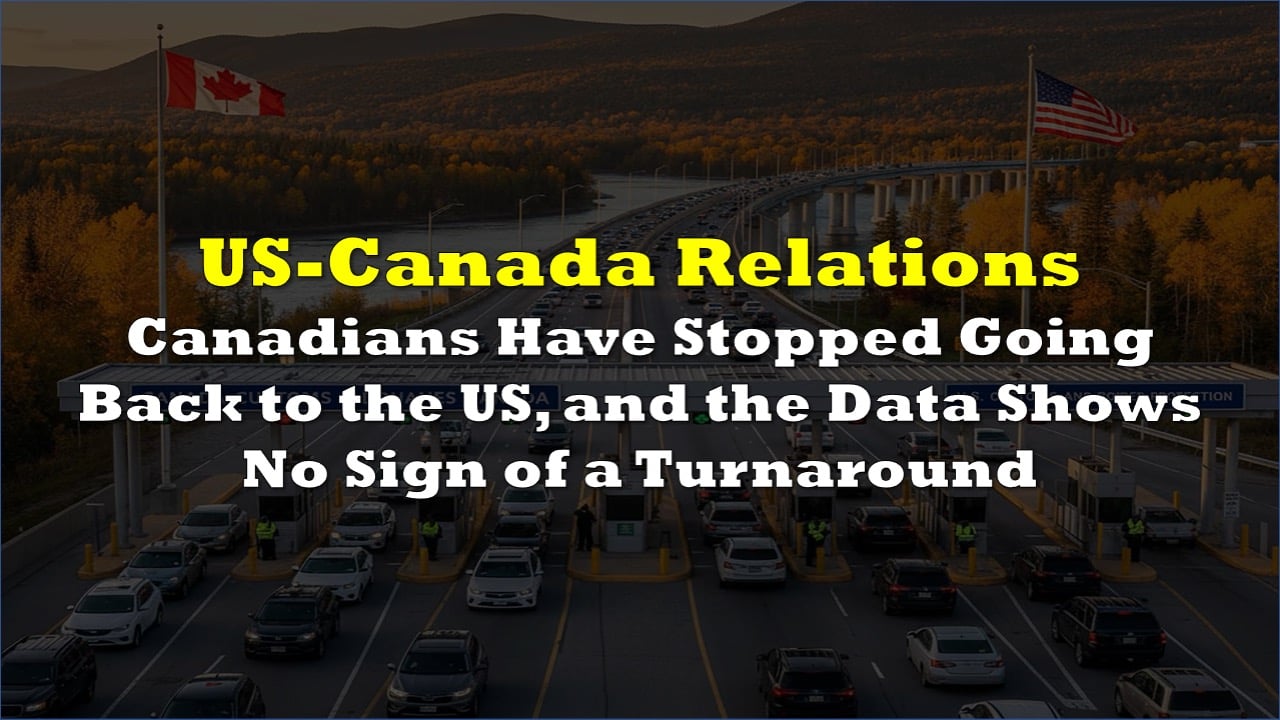

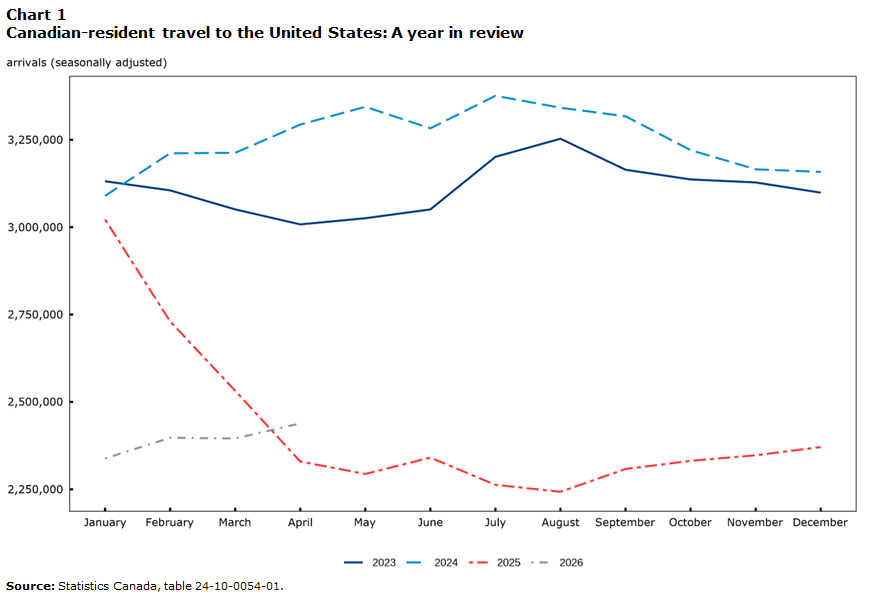
Statistics Canada reported on Wednesday that Canadian return trips from the US fell 25.4% in 2025, an 11-month streak of year-over-year declines the agency calls the deepest and most sustained on record outside the pandemic, dating back to 1972. Canadian spending on US trips dropped by CA$3.3 billion to CA$18.8 billion for the year, with leisure travel accounting for most of the decline.
The slide has outlasted the tariffs that triggered it. A Longwoods International tracking survey fielded in April found 57% of Canadians said US government policies, trade practices and political statements had made them less likely to visit in the next year.
An earlier wave of the same survey found that 76% cited tariffs and economic policy as a negative influence, but 69% instead pointed to political statements from US leaders. Sentiment has tracked the news cycle rather than settling, peaking at 63% in July 2025, falling to 53% that October, then rising back to 59% by February.
 Sponsored · Cambria Gold Mines
A separate Angus Reid Institute survey found two-thirds of Canadians describe new fingerprinting and registration requirements for longer US stays as invasive, with seven in ten saying they’d be uncomfortable traveling to the US last winter. Longwoods’ numbers show the share of Canadians who consider the US “a safe place to visit” falling from the low 40s a year earlier to the mid-30s by spring.
Related: Canada’s Technical Recession: Carney Defends Economy While Trump Posts “51st State”
Of Canadians whose US travel plans have shifted, roughly a third are substituting a domestic Canadian trip, about a quarter are heading to Europe, Mexico or Asia instead, and the rest are cancelling outright.
The US Travel Association estimated the Canadian pullback cost the country $5.7 billion in lost travel spending in 2025 alone, notable given Canada topped every other country as a source of US-bound travelers in 2024, making up close to 28% of all international arrivals.
Land border crossings stayed roughly 20% below 2024 levels through March and April this year even after officials scaled back an earlier round of tariffs in February, and a modest recovery in May still left crossings around 15% below where they stood two years earlier.