

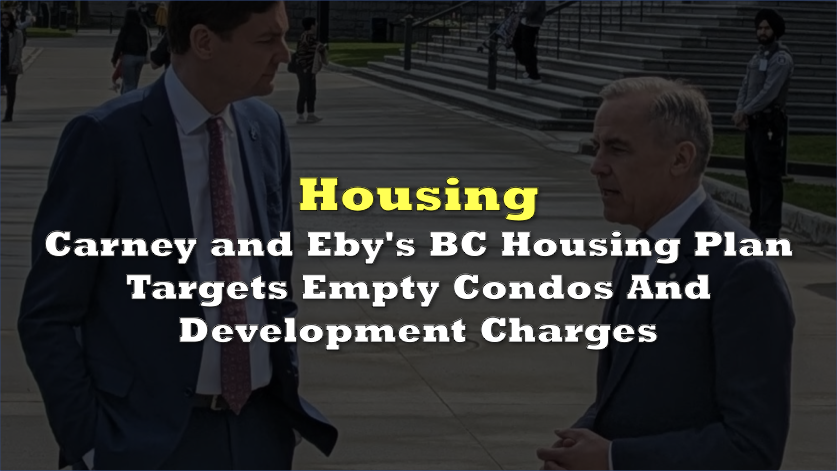

Canada’s newest housing push in British Columbia has a simple promise and a complicated balance sheet. Prime Minister Mark Carney and Premier David Eby are putting up to $3.2 billion behind a plan to lower housing-related development costs, fund local infrastructure, and bring more than 2,200 already-built vacant condos into the affordable-housing system.
The announcement gives Ottawa and Victoria a faster route to visible housing supply. But it also creates a harder question that neither government has fully answered: what must the public receive in exchange for helping move units the private market has not absorbed?
The condo-conversion plan is being advanced through Build Canada Homes and BC Housing. The governments said they will use financing tools to bring vacant condos in priority growth areas into affordable use.
 Sponsored · Silver47 Exploration Inc.
That is the broad outline. The mechanics remain undisclosed.
If governments acquire units below replacement cost and lock them into long-term affordability, the plan could convert a weak condo market into a public housing gain. If the terms preserve developer pricing while affordability rules are thin or temporary, the public may shoulder market risk without getting durable affordability.
That is where the accountability test begins.
Municipal fees to senior governments
The larger funding pool is aimed at development charges, not condo purchases. Ottawa said BC will receive nearly $1.6 billion over 10 years through the Build Communities Strong Fund. The province is also expected to match that amount. The combined package could reduce certain development charges on multi-unit housing by as much as half, with possible savings of up to $40,000 per unit in selected communities.
 Sponsored · Selkirk Copper Mines
Developers have long argued that municipal charges make projects harder to finance and push costs into final home prices. Municipalities counter that those fees pay for growth-related infrastructure, including water, sewer, roads, and other local systems.
The Carney-Eby plan moves part of that pressure to federal and provincial budgets. That may restart projects that no longer pencil out. It may also reduce municipal reliance on fees that have become politically radioactive in high-cost housing markets.
But lower charges do not automatically mean lower prices. The policy only becomes an affordability program if savings are passed through, tracked, and attached to measurable outcomes. Otherwise, it is cost relief first and affordability second.
Vancouver’s inventory problem
The policy is landing in a market where the condo pipeline has already shown stress.
CMHC warned in March that condominium presales had collapsed and that rising unsold inventories suggested the homes being delivered were not matching what prospective buyers needed or could afford. The agency also said Vancouver had the highest unsold condominium inventory at completion among major markets covered in its spring housing supply work.
While that creates an opening for government, it also creates a trap. Unsold inventory is not automatically affordable inventory. Moving those homes into public or non-market channels may help. But the public value depends on the conversion terms, not the press-conference number.
Critics have already described the package as a developer subsidy or bailout. That charge will stick only if the governments fail to publish enough information to prove otherwise.
Without that, the governments are asking the public to accept a housing transaction before showing the receipt.
Information for this story was found via the sources and companies mentioned. The author has no securities or affiliations related to the organizations discussed. Not a recommendation to buy or sell. Always do additional research and consult a professional before purchasing a security. The author holds no licenses.







One Response
2,200 condos for only $3.2 BILLION. That is only $1,454,545.45 for each condo. Only a government that has a massive debt would saddle the taxpayers with more debt. It is not as if any of the developers fund this government. This must be one of the ways to balance a budget or something.