

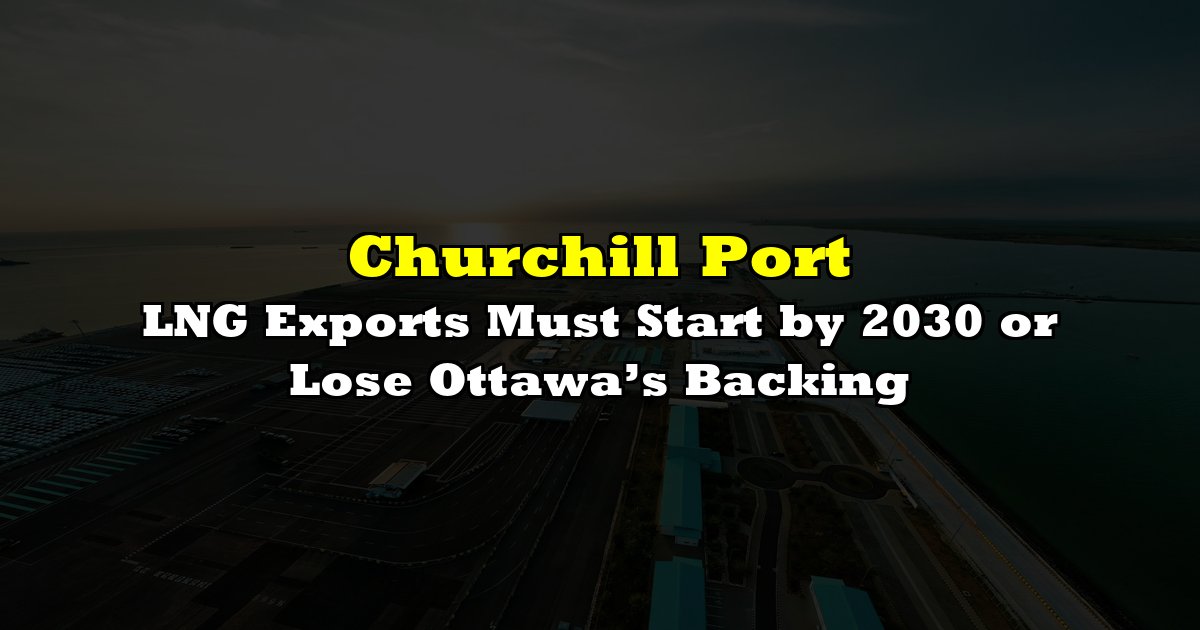

The federal government has imposed a firm 2030 deadline for liquefied natural gas (LNG) exports to commence from the Port of Churchill in Manitoba, with a clear warning that funding for the port’s expansion could be withdrawn if the target is missed. Manitoba Premier Wab Kinew confirmed the ultimatum, signaling a critical push to transform the northern hub into a key energy export gateway.
The Port of Churchill, located on the western shore of Hudson Bay, is poised to play a pivotal role in Canada’s energy strategy, leveraging its strategic position for Arctic shipping routes. Ottawa’s timeline underscores the urgency to capitalize on growing global demand for LNG, particularly as geopolitical tensions heighten the need for secure, non-Russian energy supplies. Failure to meet the 2030 deadline could jeopardize millions in federal investment aimed at upgrading infrastructure and expanding capacity.
Premier Kinew emphasized the economic stakes for Manitoba, noting that the project promises to create hundreds of jobs and bolster northern communities. The port’s development is also seen as a cornerstone for enhancing Canada’s trade links with international markets via the Arctic, a route that has gained attention amid melting ice and shorter shipping distances.
Beyond LNG, the expansion plan includes modernizing rail connections to the port, which have historically been a bottleneck. The federal government has allocated funds for track upgrades and port facilities, but these are contingent on tangible progress. Delays in environmental assessments or Indigenous consultations could further complicate the timeline, adding pressure to stakeholders.
 Sponsored · Selkirk Copper Mines
Local leaders and industry players are now racing to align resources and secure partnerships to meet the ambitious goal. The port’s operator, the Arctic Gateway Group, is expected to finalize key agreements with energy firms in the coming months to ensure a steady supply of LNG for export. Current estimates peg the total cost of the expansion at over $500 million, with federal contributions covering a substantial portion.
As the clock ticks toward 2030, the project’s success hinges on seamless coordination between government, industry, and community partners. The federal funding at stake is reported to be in the range of $200 million, a figure that could make or break the port’s transformation into a northern energy powerhouse.
Information for this story was found via the sources and companies mentioned. The author has no securities or affiliations related to the organizations discussed. Not a recommendation to buy or sell. Always do additional research and consult a professional before purchasing a security. The author holds no licenses.




One Response
Sure hope Canada can pull this together. We have so many failed mega projects (SiteC for example) and governments environmentalists, Indians and participants need to have a good long look in the mirror and see if this country can actually function.
Canada needs a strong northern presence if we are to harness the evolving advantage of a new shipping route, and untold wealth of the arctic. Churchill ought to be built out as a beautiful thriving sub-arctic city, full of opportunities and high quality of life. Existing benchmarks include Stockholm, Oslo, and Helsinki.