
Major Canadian employers are pressing Ottawa to go beyond its proposed overhaul of federal labour law, with an association representing railways, ports, and airlines arguing that the government should be able to intervene in extraordinary labour disputes before workers actually walk off the job.
That authority is not contained in Bill C-39. The Liberal government’s current proposal would instead establish a defined path for intervention after a strike or lockout begins, creating a political and legal dividing line between the government’s proposed safeguards and the broader powers some employers now want.
Introduced September 21, the Building Canada Strong Act would overhaul parts of the Canada Labour Code covering federally regulated industries. Part I of the code covers more than one million employees and 22,000 employers, including transportation, telecommunications, banking, and marine operations.
 Sponsored · Selkirk Copper Mines
The bill would extend the standard conciliation period from 60 to 90 days and create a special mediator process lasting 21 days. A mediator could be appointed no later than day 75 of conciliation and would issue a report outlining unresolved issues, the parties’ positions, and prospects for settlement.
Only after that process, and once a work stoppage has started, could the minister direct the Canada Industrial Relations Board to resume operations, temporarily extend an existing agreement, or impose a binding dispute-resolution mechanism. The minister would first have to conclude that the dispute has a significant adverse national impact.
Federally Regulated Employers — Transportation and Communications CEO Derrick Hynes told Canadian Press he would give the minister, “in extraordinary circumstances, the ability to act proactively before a work stoppage.”
Other business groups are also pushing for stronger protections against disruptions. The National Airlines Council of Canada said it supports enhanced ministerial powers under defined conditions, while Canadian Federation of Independent Business President Dan Kelly said Ottawa should consider essential-service legislation if the proposed framework fails to prevent damaging stoppages.
RBC Capital Markets analyst Walter Spracklin, in a client note reported by Canadian Press, said the framework could reduce operational risk for Canadian National Railway and Canadian Pacific by creating a more structured process for resolving disruptions to critical freight networks.
Labour groups are moving in the opposite direction. Canadian Labour Congress President Bea Bruske said the legislation could weaken bargaining because employers may have less incentive to compromise if they expect eventual government intervention. The CLC supports other provisions in the bill, including measures addressing wage theft, contract flipping, and resources for labour regulators, but wants the Section 107 changes removed.
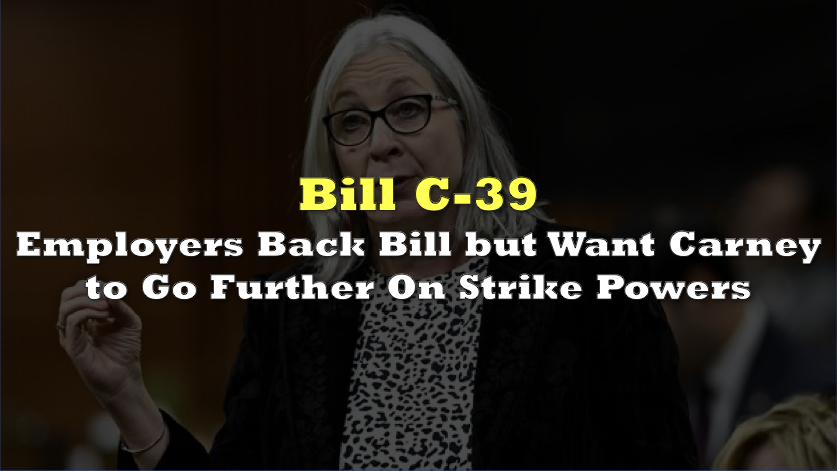
Jobs Minister Patty Hajdu argues the legislation puts a higher threshold around intervention. The current Section 107 contains broad language allowing the minister to take steps considered necessary to maintain industrial peace, wording Ottawa has relied on during several recent disputes.