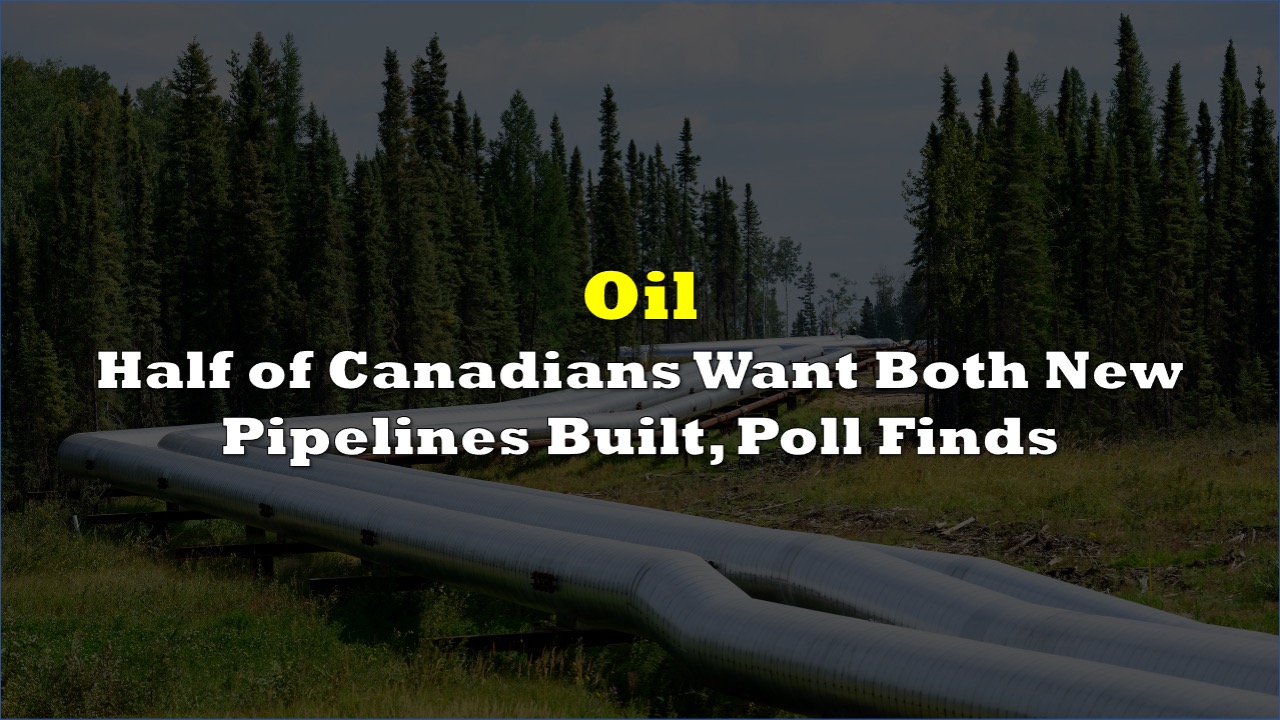

Canadians largely support two newly proposed oil pipelines, according to a survey Abacus Data published July 21, though many respondents worry the projects could set back the country’s climate goals.
The polling firm surveyed 2,705 Canadian adults from July 9 to 15 and found that 62% support a proposed pipeline from Alberta to the British Columbia coast, while 61% back a separate pipeline connecting Alberta to southern Ontario. The margin of error is plus or minus 1.9 percentage points.
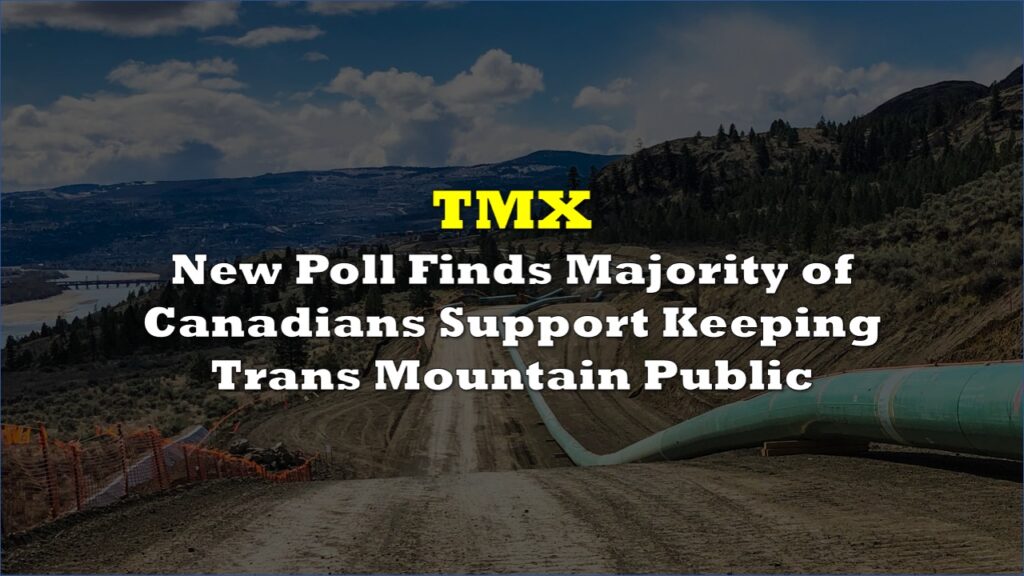
Prime Minister Mark Carney and Alberta Premier Danielle Smith announced the West Coast Oil Pipeline on July 2 in Calgary, a proposed line that would carry crude from the Edmonton region to a new marine terminal in southern British Columbia at a rate of one million barrels a day. The route would largely follow the existing Trans Mountain system and leave the current ban on tanker traffic along BC’s northern coastline in place.
 Sponsored · Selkirk Copper Mines
Four days later, Alberta Premier Danielle Smith and Ontario Premier Doug Ford unveiled the Northern Shield Energy Corridor, a domestic pipeline stretching roughly 3,300 kilometers between Hardisty, Alberta, and Sarnia, Ontario. It would start out carrying about 500,000 barrels a day, with room to scale up to 800,000, and would stay entirely inside Canadian borders rather than crossing into the US.
Asked to choose between the two, 49% said Canada should build both pipelines. Another 12% would build only the Ontario pipeline, and 11% would build only the Pacific pipeline. Just 10% opposed building either, while 18% were unsure.
The support also cuts across party lines. Conservative voters back the Pacific and Ontario pipelines at 75% and 73%; Liberal voters aren’t far behind at 67% and 64%. NDP and Bloc Québécois voters are more divided, though NDP voters favor the Ontario pipeline (42%) over the Pacific one (38%). Regionally, support is strongest in Alberta, Saskatchewan and Manitoba, and remains a majority position even in Quebec and Atlantic Canada, where opposition is highest.
Climate concerns persist alongside that support. Thirty-nine percent of respondents said the Pacific pipeline would set back Canada’s climate efforts, compared with 30% who said it would have no real impact and 14% who said it could help. Asked what matters most to them on the project, 34% prioritized economic benefits, 20% prioritized environmental and climate risks, and 36% said both matter equally.
 Sponsored · Altamira Gold Corp.
“These results suggest the politics of pipelines in Canada have changed considerably,” Abacus Data CEO David Coletto said. He added that the breadth of support gives the Carney government room to pursue a broader energy and infrastructure agenda, though continued backing will depend on how the projects handle cost, environmental protections and Indigenous consultations as they move toward construction.
The federal government has referred the Pacific pipeline to the Major Projects Office, but officials still have to settle its final route, cost and regulatory approvals. Alberta and Ontario haven’t determined the Ontario pipeline’s cost either; Ontario’s feasibility study is due by the end of 2026.
Internal Privy Council Office surveys last fall put pipeline support at 67%, data the Prime Minister’s Office drew on while negotiating the Pacific pipeline framework with Alberta and British Columbia. Ottawa and Alberta finalized that agreement in May, targeting construction as early as September 2027.
BC Conservatives, despite backing the project in principle, have criticized the southern route through the Fraser Valley over concerns about agricultural land and provincial input.
Read: For BC Conservatives, The Alberta Pipeline Is Not A Matter Of If, But Where
Alberta Premier Danielle Smith has also questioned whether existing southern port infrastructure can handle the added volume. The two governments may still face resistance as the project moves from framework to construction.