
A new 50-year power arrangement between Quebec and Newfoundland and Labrador has cleared the way for what Hydro-Quebec is calling the largest renewable energy project in North America. The utility announced Monday it had signed a Definitive Cooperation and Implementation Agreement with Newfoundland and Labrador Hydro, replacing the framework the two sides sketched out in a 2024 memorandum of understanding.
The agreement guarantees reliable supply to Quebec through 2077 at a rate of 6¢/kWh, which Hydro-Quebec says works out to roughly one-third the cost of alternative options and comes in below the terms of the earlier 2024 deal.
Access to Labrador power is the core of the pact. In total, the agreement opens the door to more than 10,000 MW, an amount equivalent to double current production. Firm supply accounts for 6,915 MW of that figure, with a further 3,850 MW tied to projects that remain under study. By comparison, the 2024 memorandum had contemplated a total potential of 7,200 MW.
 Sponsored · Altamira Gold Corp.
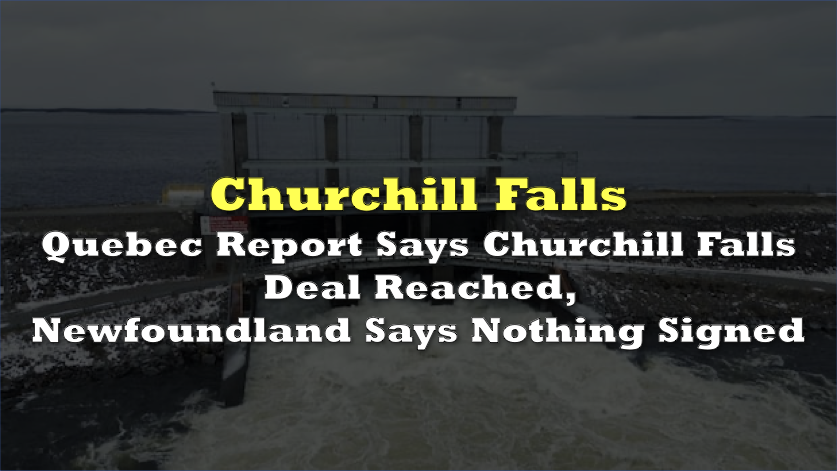
Several commitments sit behind the firm 6,915 MW. Churchill Falls supply is locked in until 2077, with the station’s capacity revised upward. The deal also provides for construction of the Gull Island generating station and the addition of a supplementary generating unit.
As for the 3,850 MW still to be evaluated, the two utilities plan to examine a wind farm in Labrador and a new hydroelectric facility at Churchill Falls.
There is also a surplus mechanism. Hydro-Quebec will be able to buy NL Hydro’s excess electricity under a pricing formula set in advance. The utility noted that generation costs beyond 2035 are projected at roughly 17¢/kWh, which helps explain the value of the fixed rate now in hand.
Financing for the agreement draws on $6.5 billion in existing federal money, extended without governance rights for the Government of Canada.
“With demand for electricity rising rapidly, we have signed an agreement that enables us to secure Québec’s energy future at a competitive cost,” said Claudine Bouchard, President and CEO of Hydro-Quebec. She characterized the deal as a renewed partnership built on a shared vision of long-term energy development that benefits both provinces.
Dialogue with Indigenous and local communities in Quebec and Labrador, first opened in 2024, will continue as the projects take shape, the utility said.
In parallel, Hydro-Quebec plans to carry on with its Action Plan 2035 in Quebec, which includes $10 billion in energy efficiency investments by 2035.