
The head of the International Energy Agency has now told Canadian officials twice that the country has a rare window to become a major energy exporter and needs to move fast. Six weeks after his first warning, the West Coast pipeline meant to anchor that ambition is still missing several of the pieces it needs before a single shovel goes into the ground.
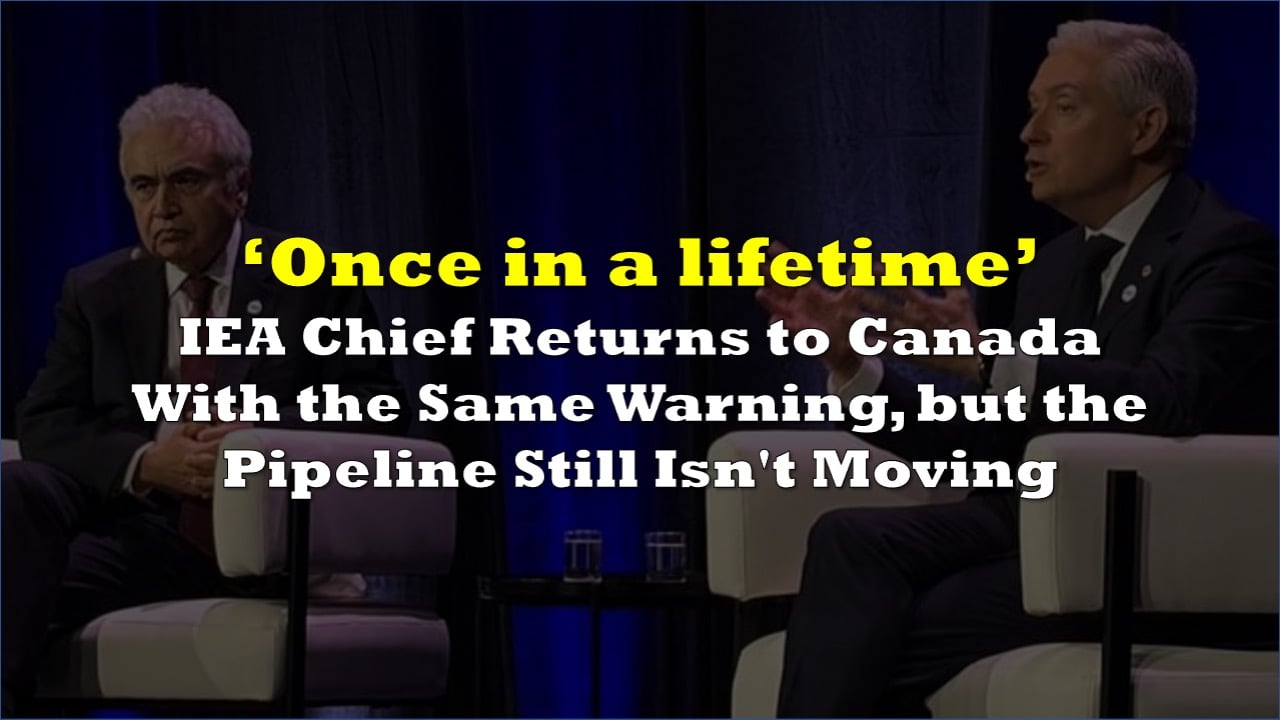
Fatih Birol, the IEA’s executive director, reiterated in Montreal on June 29, this time to Finance Minister François-Philippe Champagne, that Canada has a “once in a lifetime opportunity” to become a major energy exporter, with countries increasingly willing to pay more for supply that carries no geopolitical risk as the Strait of Hormuz disruption unsettles global oil and gas markets.
He told Prime Minister Mark Carney and Natural Resources Minister Tim Hodgson nearly the same thing during a May visit to Ottawa, where the discussion centered on the same disruptions and their implications for global oil, gas, and critical minerals supply chains.
At the time of that May visit, Alberta and Ottawa had resolved only two of four provisions in their November energy memorandum, having finalized commitments on streamlining environmental impact assessments and cutting methane emissions while leaving carbon pricing and Pathways carbon capture financing outstanding.
 Sponsored · Selkirk Copper Mines
Birol argued Canada’s task went well beyond a single pipeline, telling reporters it was “everything,” including nuclear development, critical mineral supply chains, and uranium production.
Related: Canada Still Second in G7 Growth, OECD Says—With Iran War as an Unlikely Tailwind
A week later, Carney and Alberta Premier Danielle Smith signed what officials called a landmark implementation agreement on the long-discussed West Coast oil pipeline, which would carry more than 1 million barrels of oil a day to Asian markets alongside the existing Trans Mountain line’s 890,000-barrel-a-day capacity.
Read: Alberta and Ottawa Ink Deal for West Coast Oil Pipeline with 2027 Construction Target
The agreement also settled the carbon pricing dispute, holding the industrial price at $95 a tonne through 2026 before rising to $130 a tonne by 2035. Alberta is set to submit a formal pipeline proposal to the federal Major Projects Office by July 1, with a target of national-interest designation by October 1 and construction potentially starting as early as September 2027.
CBC reported that CIBC World Markets analysts described it as an optimistic, best-of-circumstances target, citing multiple unresolved obstacles. Carbon pricing got settled, but the companies actually expected to pay for Pathways, the five major oil sands producers behind the project, still haven’t reached their own three-way cost-sharing deal with the two governments.
That deal missed an April 1 deadline and remained unresolved as of early June.
British Columbia, whose coastline the pipeline would cross, isn’t a signatory to the federal-Alberta agreement, and a provincial ban on oil tanker loading along the northern coast remains in place. Indigenous consultation, typically the slowest-moving piece of any major Canadian infrastructure project, also hasn’t been completed.
No private company has stepped forward to build or finance the line; Alberta is acting as the project’s proponent for now, funding early planning work in hopes a backer emerges once the regulatory path clears.
Much of the conversation in Montreal instead focused on levers Canada could pull faster than a pipeline, including nuclear power and electricity exports tied to AI infrastructure. Canada expects to be the first G7 country to deploy small modular reactors.
Birol said a medium-sized data center alone draws as much power as a town of 100,000 households, a demand that will accelerate interest in Canadian nuclear capacity regardless of how quickly the pipeline itself advances.