
The United States and Indonesia announced a Major Defense Cooperation Partnership on Monday, the same day a US naval blockade of Iranian ports took effect — a pairing that puts both of China’s most critical oil chokepoints under tightening American influence on a single day.
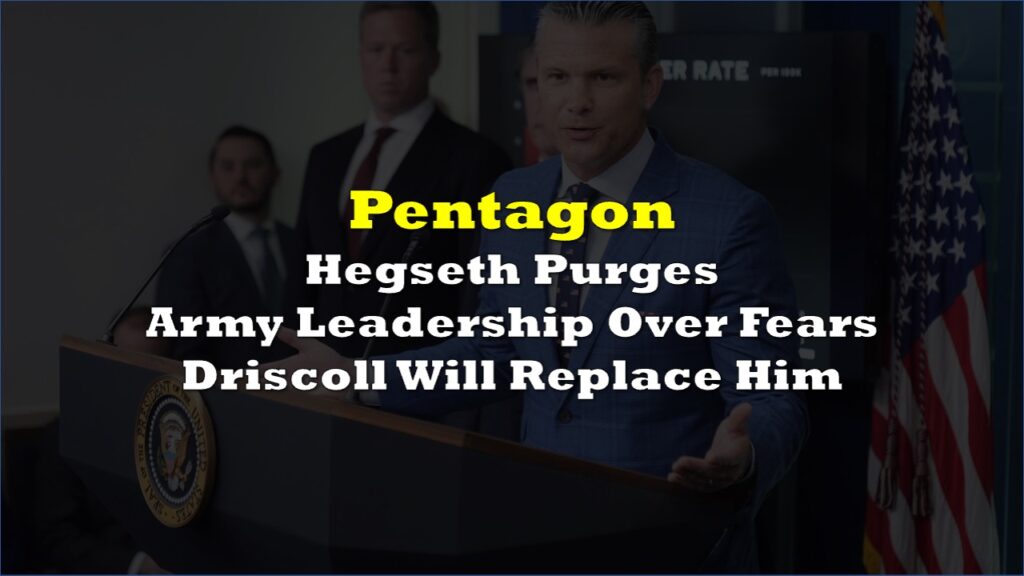
Secretary of War Pete Hegseth and Indonesian Defense Minister Sjafrie Sjamsoeddin signed the MDCP at the Pentagon on April 13, built on three pillars: military modernization and capacity building, training and professional military education, and exercises and operational cooperation.
The agreement covers joint development of asymmetric capabilities and next-generation technologies in the maritime, subsurface, and autonomous systems domains, along with expanded joint special forces training. Hegseth noted that the two countries already run more than 170 military exercises together annually.
 Sponsored · McLaren Resources Inc.
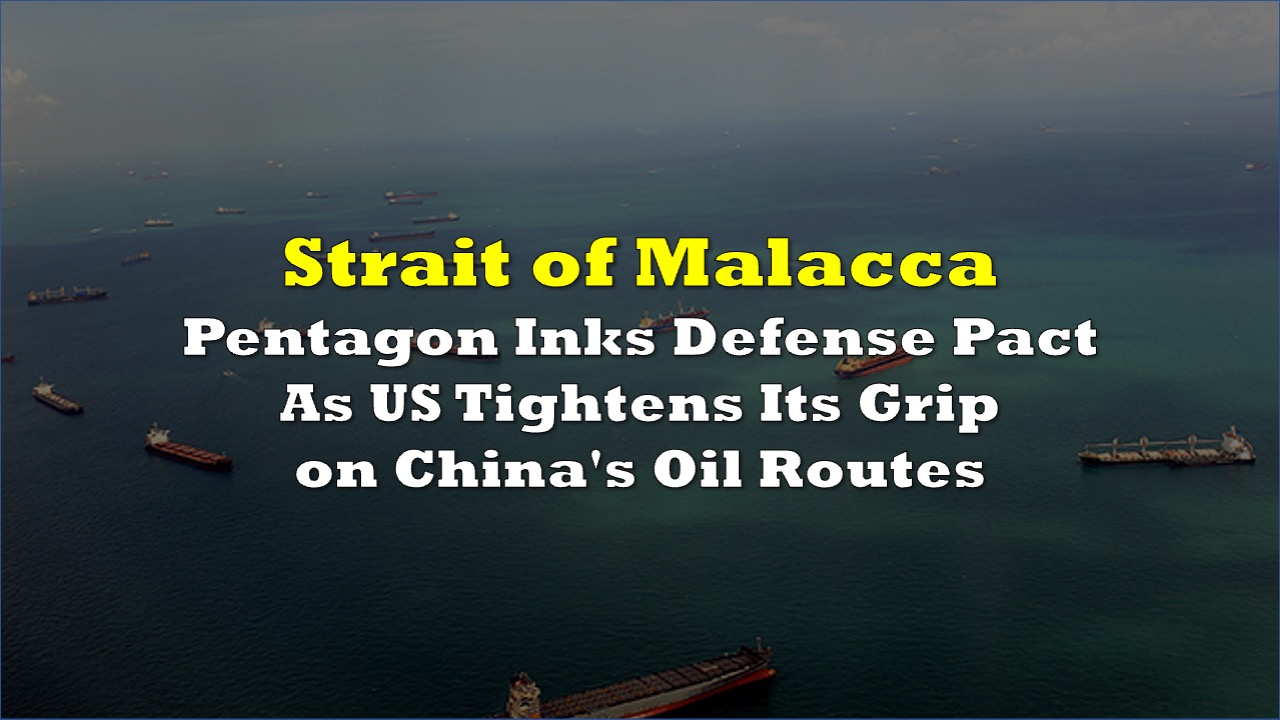
Indonesia’s Sumatra island forms the western wall of the Strait of Malacca — which moves more oil by volume than any other chokepoint on Earth, handling 23.2 million barrels per day in the first half of 2025, ahead of Hormuz’s 20.9 million. China drives nearly half that traffic, accounting for 48% of import volumes passing through the strait.
In 2003, then-President Hu Jintao coined the “Malacca dilemma” to describe a structural vulnerability: roughly 80% of China’s imported crude passes through a strait flanked by Indonesia, Malaysia and Singapore that other powers could, in a crisis, choose to close. Two decades of Chinese investment in overland pipelines through Central Asia, Russia and Myanmar has managed that vulnerability without resolving it — the bulk of China’s energy still arrives by tanker through Malacca.
The MDCP’s focus on maritime domain awareness, subsurface systems, and autonomous technologies covers precisely the capabilities needed to monitor, track, and — in a crisis — interdict that flow.
Washington also sought blanket overflight access for US military aircraft through Indonesian airspace, replacing the current case-by-case approval process. Multiple outlets reported President Prabowo Subianto approved the proposal in principle during a February meeting with Trump in Washington.
Indonesia’s Defense Ministry pushed back the same day. Brigadier General Rico Ricardo Sirait described the circulating document as a preliminary draft still under internal discussion.
 Sponsored · Selkirk Copper Mines
“It does not have legal binding power and cannot be used as the basis for official government policy,” he said. A parliamentary defense commissioner added there was “no legal basis” to grant unrestricted airspace access and called for careful consideration of the geopolitical implications.
Sjamsoeddin kept to Jakarta’s non-alignment line. “We’re working on behalf of mutual respect and mutual benefit to enhance the value of our national interests,” he said.
US intelligence reported last week that China is preparing to deliver shoulder-fired anti-air missile systems to Iran, a move that, if confirmed, would sharpen Washington’s incentive to press further on both fronts.
Related: China Challenges US Hormuz Blockade, Vows to Keep Its Ships Moving
Trump plans to meet Chinese President Xi Jinping in Beijing in May, and simultaneous pressure on Hormuz and Malacca gives Washington significant leverage heading into that summit.
Information for this story was found via the sources and companies mentioned. The author has no securities or affiliations related to the organizations discussed. Not a recommendation to buy or sell. Always do additional research and consult a professional before purchasing a security. The author holds no licenses.