
Satellite imagery and fire-detection readings are fueling speculation that Houthi forces hit Saudi Arabia’s East-West oil pipeline this week, the strategically vital route that lets Saudi crude bypass the Strait of Hormuz entirely.
The claim surfaced amid a wave of Houthi missile and drone attacks on Saudi Arabia Tuesday, an assault that left at least 73 people injured and set oil facilities ablaze across the kingdom’s south, including a 400,000-barrel-a-day refinery in Jazan.
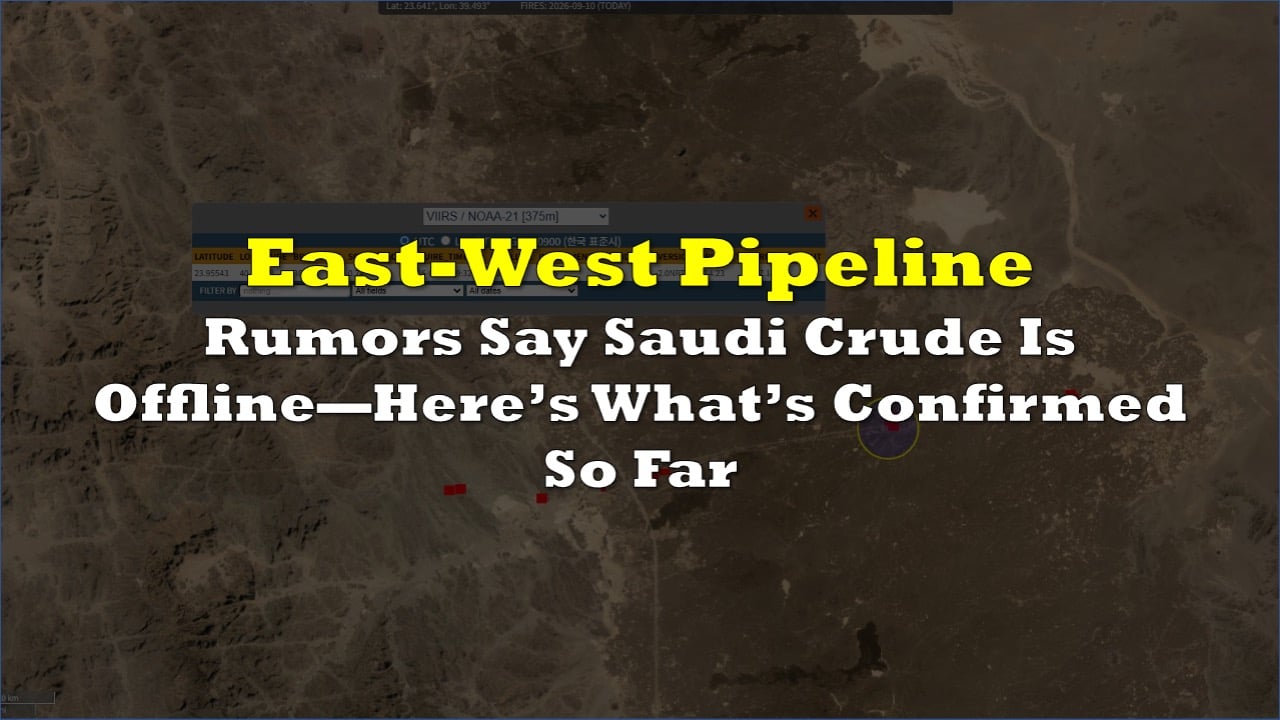
Gulf News reported sightings of a substantial smoke plume in the desert southeast of Medina, tracing roughly along where the pipeline runs, with thermal anomalies clustered in the same area on NASA’s FIRMS satellite system. A separate account posted imagery it described as showing a smoke plume nearly 100 kilometers long stretching across the pipeline’s route.
The imagery surfaced alongside Tuesday’s confirmed attacks, in which Houthi military spokesman Yahya Saree said his forces launched dozens of ballistic missiles and drones against oil sites, economic facilities and a military air base, part of what Saudi officials called a “serious escalation.”
 Sponsored · Cambria Gold Mines
A Financial Times report has separately flagged fresh strikes on Aramco’s Jazan site, a claim Reuters says it hasn’t been able to confirm independently, with Aramco again offering no comment.
None is confirmed as of this writing. Aramco has stayed silent on whether any damage occurred, and there’s no independent verification the pipeline itself was hit — FIRMS data alone can flag heat but can’t identify what’s burning or who’s responsible. Some anonymous accounts have claimed that the pipeline suffered damage in multiple locations, or that Saudi crude production is effectively offline.
The market is already pricing in real disruption regardless. Brent crude has pushed up toward $108 a barrel, with WTI near $103, putting both benchmarks on course for their sharpest weekly rise in months. Real-world shipping data backs up the market unease — vessel traffic through Bab-el-Mandeb has plunged by roughly 60% amid the broader Houthi campaign, and only seven ships passed through Hormuz on Wednesday, well below the recent 10-day average of 14.
Read: Brent Vaults Past $107 as Middle East Tensions Deepen
If the pipeline strike is eventually confirmed, it wouldn’t be unprecedented — Houthi drones struck the same pipeline in 2019, an attack Aramco confirmed at the time caused a small fire and briefly halted the line, with no casualties reported. The stakes would be higher this time, though — the claim comes as Iran-backed forces are separately reported to be working toward closing the Bab-el-Mandeb Strait, a second major shipping route, which would mean both of Saudi Arabia’s main alternatives to the already-disrupted Strait of Hormuz facing pressure at once.