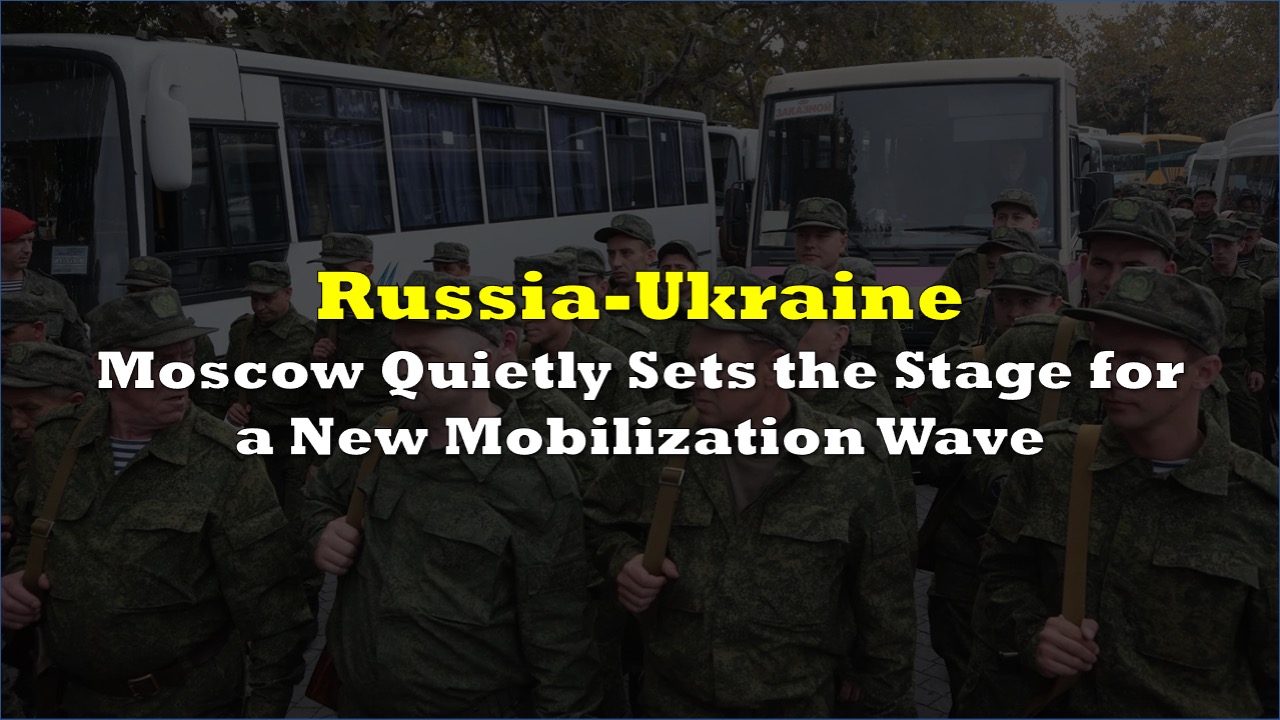

The Kremlin is quietly building the legal and security architecture for a new mobilization wave while preparing to manage the domestic backlash that could follow, according to an assessment from the Institute for the Study of War.
On July 22, Russia’s parliament expanded who can enlist, adding people with standing convictions for crimes like drug trafficking and gang activity, but only once the Kremlin declares formal mobilization. Deputy Defense Minister Viktor Goremykin called the change a way to widen the recruitment pool for Russia’s 2026 war effort in Ukraine.
A day earlier, Russia’s Rosgvardia national guard floated rules that would let it respond to unspecified threats to the public if mobilization, martial law, or wartime conditions arrive. ISW reads the pairing as telling — a security agency angling for broader powers just as recruitment rules loosen suggests officials are bracing for unrest, not simply for manpower shortfalls.
Both measures build on the groundwork ISW says the Kremlin began laying in October 2025, when the government approved allowing reservists to deploy abroad, including to Ukraine’s Sumy and Kharkiv regions, without declaring war or mobilizing.
 Sponsored · Altamira Gold Corp.
Putin followed with a decree in November enabling year-round conscription, then another in December authorizing a compulsory call-up of reservists for “military assemblies” in 2026. ISW attributed the shift to Russia’s paid-volunteer recruitment system hitting diminishing returns, pushing the Kremlin toward cheaper, rolling call-ups rather than a single large-scale mobilization, the same pattern now shaping July’s moves.
Russia’s last full mobilization, announced in September 2022, drafted roughly 300,000 reservists, triggered domestic backlash, and drove an estimated 700,000 to 900,000 Russians to leave the country.
Flashback: Russian Enlistment Offices Are Being Torched Amid Mobilization
That episode appears to be shaping the current approach of staging call-ups quietly while expanding the security apparatus meant to contain any repeat unrest. ISW notes that mobilization is Putin’s call alone, shaped by how he privately reads the war’s trajectory and his own government’s footing, and that nothing yet indicates when, or in what form, that decision might come.
Ukraine’s Center for Countering Disinformation has estimated Russia could aim to mobilize as many as 500,000 people this fall, with some conscripts sent to the front within two weeks and others trained for about a month first. Ukraine’s military intelligence agency, the GUR, has separately reported that Russia is covertly preparing a broader mobilization while avoiding public statements about it, given how unpopular the prospect remains.
The mobilization groundwork comes as Russia’s wartime economy shows increasing strain, which ISW argues undercuts Putin’s public optimism.
Putin told officials that GDP grew 0.3% in May and 0.2% over the first five months of 2026, and that the federal budget posted a roughly $2.5 billion surplus in June, but there appears to be a starkly different picture on the ground, with persistent fuel shortages, rising inflation, a declining stock market, falling agricultural exports, capital flight, and labor shortages.
Related: Russia Halts Diesel Exports After Refinery Strikes Deepen Moscow’s Fuel Crisis
Russia’s food producers’ association, Rusprodsoyuz, reported this week that the cost of a minimum monthly food basket has climbed 7.9% since the start of 2026, and Kommersant, citing the analytics firm Platts, reported that refineries are fulfilling less than 19% of gasoline purchase requests even as some damaged facilities come back online.
Related: Ukrainian Drone Strikes on Black Sea Tankers Threaten Europe’s Kazakh Oil Lifeline
Sustained Ukrainian drone strikes on refineries have knocked out an estimated 25% or more of Russia’s refining capacity, producing fuel rationing in more than half the country’s regions. Putin himself acknowledged the shortages this month, describing the problem as temporary even while admitting stations still face shortages.