
Russia is more than doubling the share of compulsory military instruction in its national school curriculum for sixth through eleventh graders, education officials announced, as the Kremlin faces warnings from Western leaders that it could be preparing for a wider conflict with NATO.
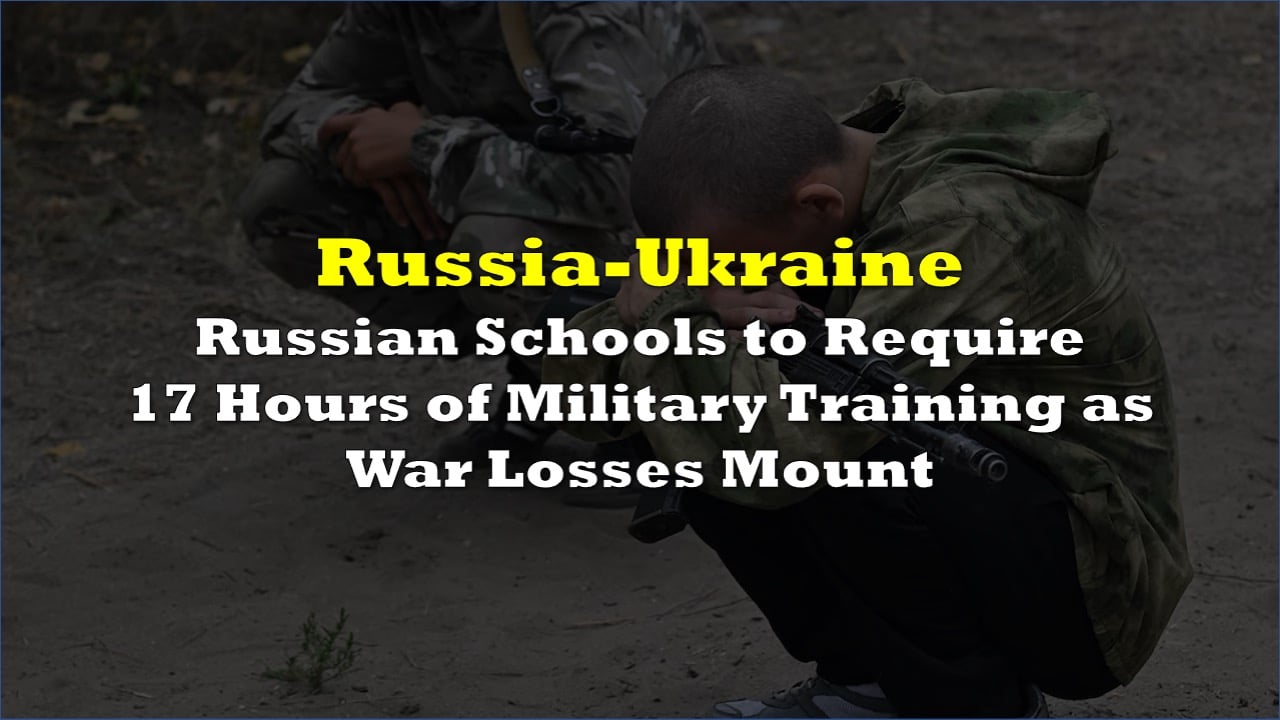
Education Minister Sergei Kravtsov announced on June 25 that basic military training will rise from 20% to 50% of instructional time within the course “Fundamentals of Safety and Defense of the Homeland,” effective September 1. Since the course runs 34 hours per school year, the change means students will now receive at least 17 hours of military instruction annually.
The Education Ministry’s press service said the expanded curriculum includes the study of drones alongside training exercises.
 Sponsored · Cambria Gold Mines
The class traces back to the Soviet-era Initial Military Training program, which combined drill instruction, first aid, rifle handling, and field camps for older students before being abolished in 1993. Moscow began reviving elements of it after launching its full-scale invasion of Ukraine in 2022, adding a basic military training component to school safety classes in 2023 that taught tenth and eleventh graders to fire a Kalashnikov rifle, use hand grenades, and provide combat first aid. That course was folded into the current “Fundamentals of Safety and Defense of the Homeland” subject in 2024.
Russian authorities have spent more than 50 billion rubles over the past five years creating and operating military-patriotic centers where schoolchildren attend mandatory training camps, and independent outlet Verstka has reported that prosecutors filed more than 200 lawsuits against schools in 2024 alone for failing to install required military training facilities, including shooting ranges.
The curriculum expansion is fundamentally about sustaining a war Russia itself chose to start, one that has cost its own military dearly. NATO Secretary General Mark Rutte said in January that Russia was losing 20,000 to 25,000 soldiers killed every month, figures he noted exceed the Soviet Union’s total losses over its entire decade-long war in Afghanistan, and NATO’s estimate has since climbed higher, with Rutte citing more than 30,000 Russian casualties a month by May.
Kremlin officials have nonetheless cast the war, and the school curriculum built to sustain it, in defensive terms. The announcement follows warnings from UK Prime Minister Keir Starmer and Rutte himself that Russia could be prepared to launch a large-scale attack on Europe by 2030, warnings some Russian officials have since invoked to justify pushing military training even further down the school system.
Also read: Russia’s Fuel Crisis Deepens as Putin Admits ‘Certain Deficit’ for the First Time
Viktor Vodolatsky, first deputy chairman of the State Duma’s CIS Affairs Committee, said on June 22 that students should begin war-relevant classes after fifth grade in light of the NATO statements, telling local media that Russian children should be prepared for war with NATO and the European Union immediately after primary school.