
Vladimir Putin acknowledged Sunday for the first time that Russia faces a domestic fuel shortage — while Ukrainian drones set fire to a major southern refinery and Kyiv claimed a second strike hundreds of miles to the north.
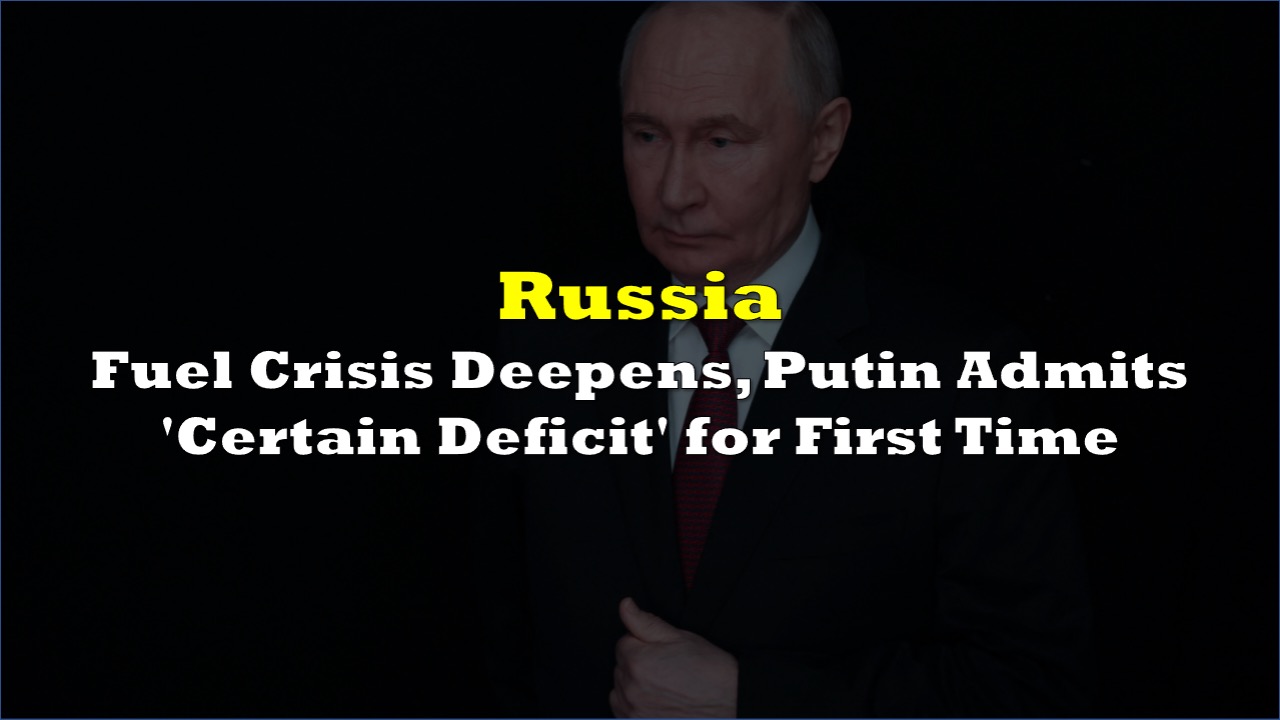
Putin chaired a Kremlin meeting on domestic fuel supplies on June 28 and conceded that Russia was experiencing a “certain deficit,” vowing to strengthen the protection of energy facilities and increase output.
He also disclosed, for the first time, that Ukraine had privately proposed a halt on deep strikes against Russian territory — arguing Kyiv made the offer because Russian long-range strikes are more powerful and devastating. He said Kyiv additionally proposed limiting the conflict to the four regions Russia annexed but never fully captured — Donetsk, Luhansk, Kherson, and Zaporizhzhia.
 Sponsored · Selkirk Copper Mines
Putin rejected the premise that the drone campaign was working. Speaking to a Russian state television reporter, he dismissed the offensive as an attempt to fracture Russian society ahead of negotiations. “We will not give them that chance,” he said, insisting the campaign has had no impact on Russian battlefield operations.
Overnight into Sunday, drone debris sparked a blaze at the refinery in Slavyansk-na-Kubani, in Russia’s Krasnodar region, east of occupied Crimea. Processing nearly 4 million tons of crude per year, the facility supplies fuel oil, naphtha, and marine fuel to Russia’s Black Sea ports.
One person died, and another was wounded when debris came down in and around Sloviansk. Zelenskyy separately claimed a strike on a refinery in the Yaroslavl region, some 700 kilometers from the Ukrainian border. Russian authorities did not confirm it, though Gov. Mikhail Evraev reported roads between Moscow and the regional capital had been temporarily closed following a drone attack.
Fuel rationing was already in place across at least 56 of Russia’s 83 federal regions as of late last week, with residents reporting long lines, closed stations, and per-vehicle purchase caps as low as 20 liters.
 Sponsored · Cambria Gold Mines
In Moscow and surrounding areas, major chains, including Lukoil and Gazprom‘s filling stations, capped individual purchases at 100 to 150 liters. Ukrainian drones struck the Kapotnya refinery — the Moscow region’s largest fuel supplier — twice in June; it is expected to remain offline through at least the end of the year.
RFE/RL and the International Energy Agency reported that more than 20% of Russia’s total refining capacity has been knocked offline — a scale of disruption the IEA called “unprecedented in the history of the Russia-Ukraine conflict.” Ukraine has struck more than two dozen refineries since March, including eight of the country’s ten largest.
Western analysts say the offensive has also slowed Russian battlefield operations, adding pressure on Moscow to negotiate.
Russia answered overnight with 142 drones and eight missiles aimed at Ukraine. The Ukrainian air force intercepted 125 drones and seven missiles.