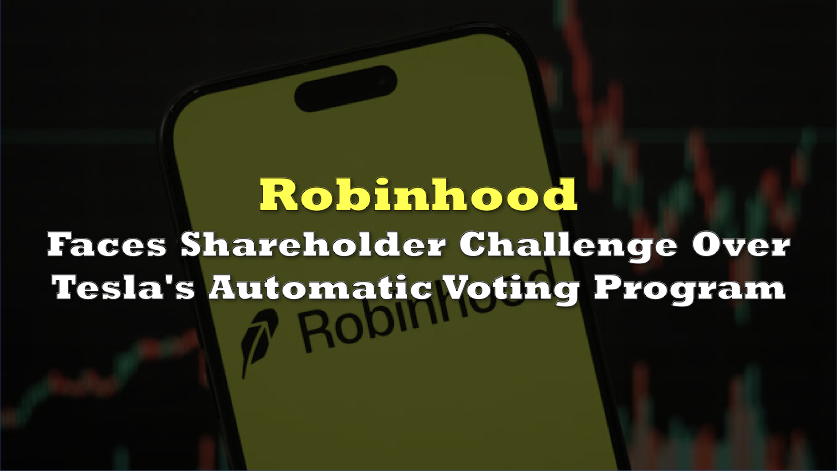

Robinhood Markets is being challenged over shareholder voting access by a nonprofit that itself offers automated voting guidance, exposing a question larger than Tesla’s management-aligned ballot program: whether investors can set standing instructions using independent policies without relying on a brokerage’s preferred voting system.
As You Sow has asked Robinhood to examine whether customers should be able to use independent proxy-voting services, according to a shareholder resolution reviewed by Reuters.
The nonprofit already operates AS YOU VOTE, a rules-based service developed with Proxy Impact. Individual investors can access its guidelines through iconik, which automatically processes emailed ballot notices and applies the selected voting policy.
 Sponsored · Cambria Gold Mines
That creates an unresolved technology question. Iconik advertises that its service works with any brokerage that emails election notices. Robinhood’s support materials say eligible shareholders receive voting emails and cast ballots through Say Technologies, a wholly owned subsidiary.
Robinhood’s role in Tesla’s voluntary retail voting program gives the proposal wider significance. The arrangement allows participating investors to supply standing instructions for future Tesla meetings rather than manually vote every ballot.
Tesla offers two defaults. One follows its board’s recommendations on every matter. The other follows those recommendations except in contested director elections and certain shareholder-approved transactions.
Investors can still vote on individual proposals, override their instructions, or leave the program at no charge. Enrollment after casting a ballot for Tesla’s December 3, 2026, annual meeting affects future meetings, not that meeting itself.
Tesla said retail investors voted 28% of their shares during the 2025 proxy season, compared with 76.6% for institutional investors, citing the participation gap as justification for easier voting.
The SEC’s September 29 no-action letter said staff would not recommend enforcement against Tesla if it followed the described safeguards.
As You Sow argues that requiring retail investors to navigate individual ballots instead of choosing external voting services creates legal and reputational risks for Robinhood.
The dispute arrives as the SEC considers rescinding Rule 14a-8, which governs the inclusion of eligible shareholder proposals in corporate proxy materials. Public comments are due November 20.