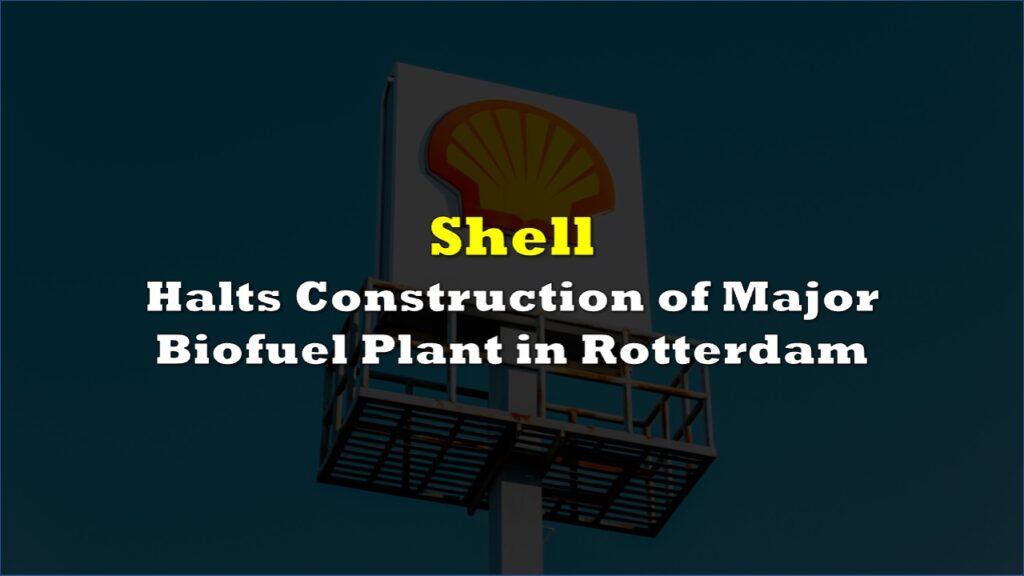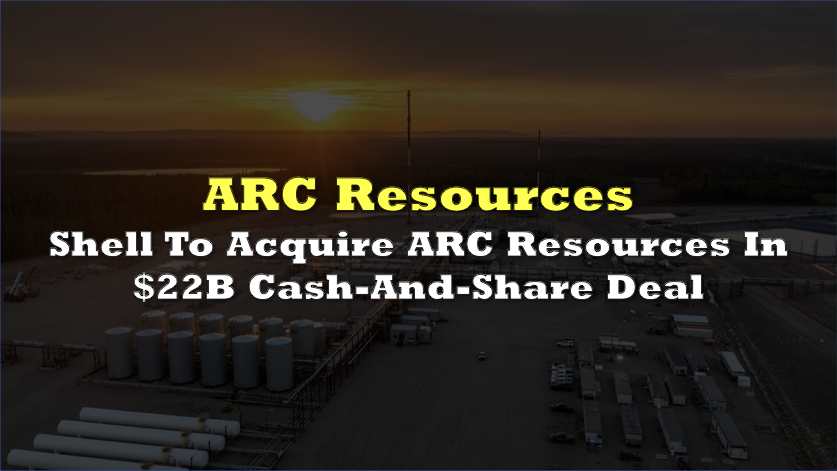

Shell agreed to acquire ARC Resources in a cash-and-share transaction that values the Canadian producer at about US$13.6 billion in equity and US$16.4 billion including net debt and leases, giving the British oil major a larger foothold in Canada’s Montney formation as it tries to rebuild long-term oil and gas production.
Under the agreement, ARC shareholders will receive $8.20 in cash and 0.40247 Shell ordinary shares for each ARC share, equal to $32.80 per ARC share based on Shell’s April 24 closing price of £33.08. The consideration is structured as roughly 25% cash and 75% Shell shares.
The offer represents a 20% premium to ARC’s 30-day volume-weighted average price and a 27% premium to ARC’s April 24 closing price on the Toronto Stock Exchange.
 Sponsored · Selkirk Copper Mines
ARC said the total transaction value is approximately $22.0 billion, including assumed net debt.
For Shell, the deal adds a major Canadian production base. ARC produced a record 374,000 barrels of oil equivalent per day on average in 2025 before royalties, with 59% coming from natural gas and 41% from crude oil and liquids. ARC’s assets also sit near its existing Groundbirch asset in British Columbia and Gold Creek project in Alberta, both strategically relevant to Shell’s Canadian gas footprint.
Shell said the acquisition adds more than 1.5 million net acres from ARC to Shell’s roughly 440,000 net acres in the Montney formation and contributes about 2.0 billion barrels of oil equivalent of proved plus probable reserves as of the end of 2025. Shell also said ARC’s proved plus probable gas reserves could support its LNG growth in Canada, including assets tied to LNG Canada, where Shell holds a 40% stake.
The deal also changes Shell’s production outlook. The acquisition, according to the company, increases its production compound annual growth rate from the 1% outlined at its 2025 Capital Markets Day to 4% compared with 2025, while supporting its goal to sustain material liquids production of roughly 1.4 million barrels per day toward 2030 and beyond.
 Sponsored · Altamira Gold Corp.
Reuters reported that Shell’s oil and gas production was 2.8 million boe/d at the end of 2025.
The financial pitch is that Shell can absorb ARC without blowing up its spending framework. Shell said it will fund the US$13.6 billion equity value through US$3.4 billion in cash and US$10.2 billion in Shell shares, issuing about 228 million ordinary shares. Shell expects annualized synergies of around US$250.0 million within one year of closing and said its US$20.0 billion to US$22.0 billion cash capex range for 2027 to 2028 remains unchanged.
The company further said its policy remains to distribute 40% to 50% of cash flow from operations through the cycle via 4% progressive annual dividend growth and buybacks, with the next buyback tranche to be announced alongside first-quarter results, subject to board approval.
ARC’s board unanimously approved the arrangement and recommends shareholders vote in favor at a special meeting expected in July 2026. The deal requires approval by 66 2/3% of votes cast by ARC shareholders present or represented by proxy, approval from the Court of King’s Bench of Alberta, and regulatory approvals. Closing is expected in the second half of 2026.
The agreement includes a non-solicitation covenant, Shell’s right to match any superior proposal, customary fiduciary-out provisions, and a $600.0 million termination fee payable by ARC in certain circumstances.
ARC is expected to keep paying its regular $0.21 quarterly eligible dividend until closing, subject to board approval, with the next dividend expected on July 15, 2026. Shareholders receiving Shell stock would also gain exposure to Shell’s quarterly dividend of US$0.372 per share, making the transaction part cash-out, part roll-up into a larger global energy platform.
Information for this story was found via Bloomberg and the sources and companies mentioned. The author has no securities or affiliations related to the organizations discussed. Not a recommendation to buy or sell. Always do additional research and consult a professional before purchasing a security. The author holds no licenses.