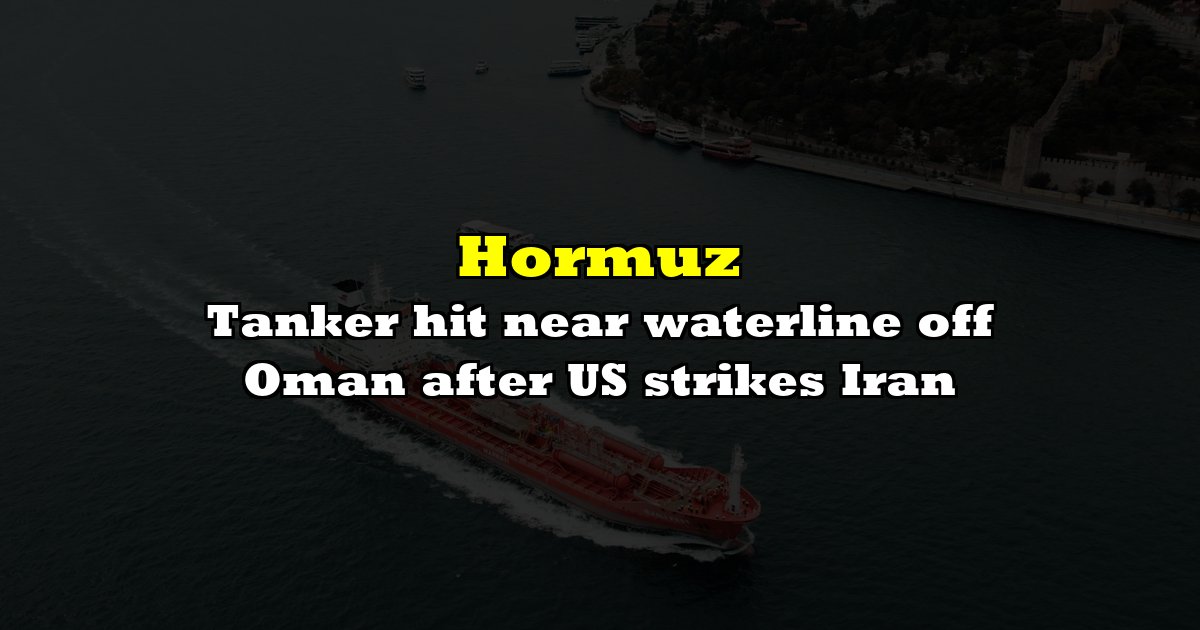

A tanker took an external explosion to its waterline in the Gulf of Oman on May 26, roughly 60 nautical miles east of Muscat — the latest direct hit on a commercial vessel in a shipping corridor that has been under sustained assault for months.
The blast struck the port side aft at around 09:45 UTC. UK Maritime Trade Operations, the Royal Navy-affiliated maritime security agency, confirmed the explosion originated outside the hull. “The crew and vessel are safe, although the master reports some bunker fuel has discharged into the sea,” it said.
Investigators are now working to establish the mechanism.
US forces launched overnight strikes on missile sites in Iran hours before the blast, and also hit boats they said were attempting to lay mines in Gulf waters — a direct counter to Tehran’s campaign to close the Strait of Hormuz, the chokepoint through which roughly one-fifth of global oil production moves. Whether Monday’s explosion traces to a mine or some other device is the core question investigators face, and the answer will carry weight for how insurers and operators price the route going forward.
 Sponsored · Selkirk Copper Mines
For now, traffic through Hormuz has not stopped. Ship-tracking data from Monday showed tankers pushing ahead regardless: three liquefied natural gas carriers transited in recent days bound for Pakistan, China, and India, and a supertanker hauling Iraqi crude for China passed through after sitting stranded for nearly three months.
Information for this story was found via the sources and companies mentioned. The author has no securities or affiliations related to the organizations discussed. Not a recommendation to buy or sell. Always do additional research and consult a professional before purchasing a security. The author holds no licenses.