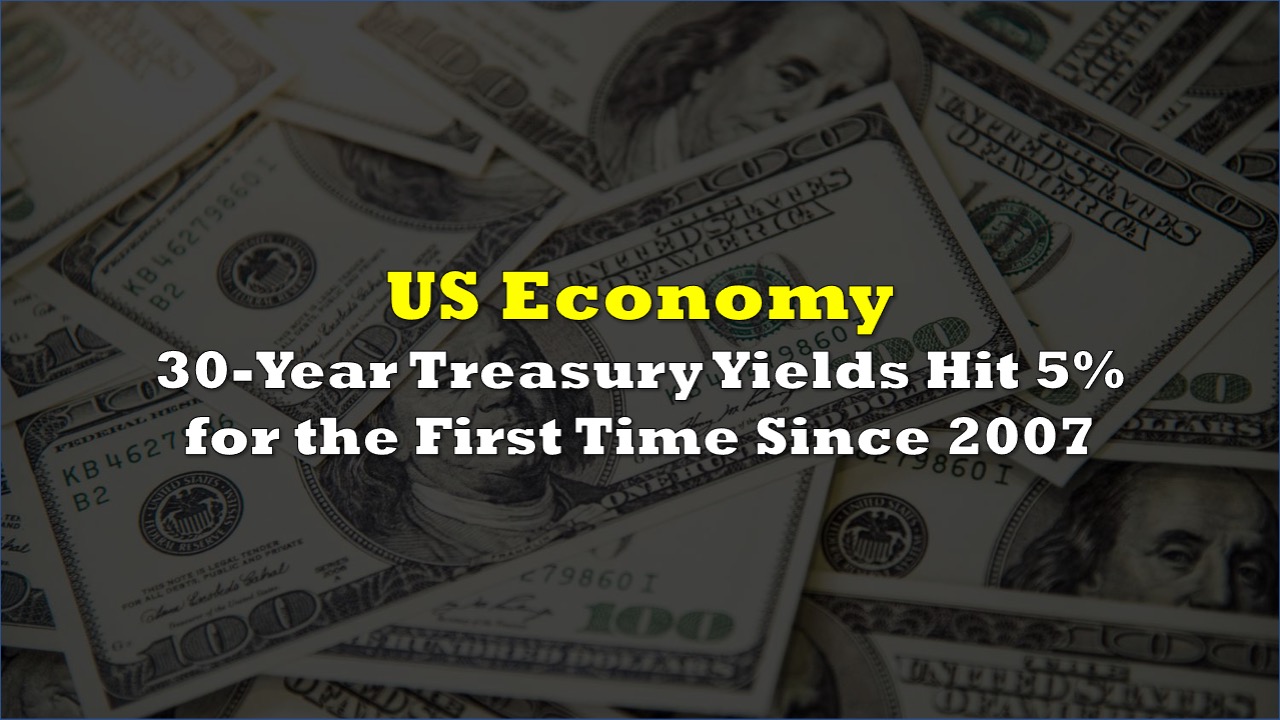

The US government borrowed long-term money on Wednesday at a cost it hasn’t paid since before the global financial crisis, as two consecutive weeks of hotter-than-expected inflation — driven by the energy shock from the Iran war — pushed 30-year Treasury yields above 5% for the first time since 2007.
The Treasury sold $25 billion of new 30-year bonds at 5.046%, in an auction Bloomberg described as showing middling demand. The 10-year benchmark reached 4.49%. The 2-year yield eased to 3.98% — a divergence signaling markets believe the inflation shock is structural, not transient.
April wholesale inflation rose 1.4% month-on-month — nearly three times the 0.5% consensus forecast and the largest monthly gain since March 2022 — with PPI hitting 6% annualized, the highest since December 2022.
 Sponsored · Selkirk Copper Mines
“Wednesday’s PPI was strikingly elevated as producers are feeling the ripple effects of $100 per barrel oil, which is raising the cost of production across the board,” said Clark Bellin, president and CIO of Bellwether Wealth. Tuesday’s CPI had already shown consumer prices rising to 3.8% annualized in April — the highest since May 2023.
Since the US-Israeli strikes on Iran launched on February 28, oil has traded above $100 per barrel continuously. Energy costs flow into gasoline, diesel, transportation, food manufacturing, and industrial inputs — every link of the PPI chain. The shock is not an isolated spike; it is a sustained price floor repricing inflation expectations across the entire yield curve.
CME FedWatch now prices in essentially zero probability of rate cuts through end of 2027, with the probability of at least one hike by year-end rising to approximately 50% — up from 37% the day before the PPI release.
“I expect investor demand to start emerging at the 5% long-term US Treasury yield level,” said Steven Zeng, senior interest rate strategist at Deutsche Bank. “Typically at this level, 30-year US Treasuries become attractive to insurance companies and pension funds.”
The US is simultaneously running a large fiscal deficit, funding an active military campaign, and refinancing pandemic-era debt at rates it hasn’t seen in two decades. Treasury issuance is expanding as buyers demand more compensation for that risk.
A 30-year bond sold at 5% locks in that cost for three decades. The cumulative interest bill on new issuance at these rates, compounded over years of deficit spending, is the Iran war’s least-discussed cost.
Newly confirmed Federal Reserve chair Kevin Warsh has not indicated whether the FOMC will move to hike at its June 16-17 meeting. Rate futures give that outcome roughly even odds — a position that would have been unthinkable six months ago.
Information for this story was found via Bloomberg, and the sources and companies mentioned. The author has no securities or affiliations related to the organizations discussed. Not a recommendation to buy or sell. Always do additional research and consult a professional before purchasing a security. The author holds no licenses.