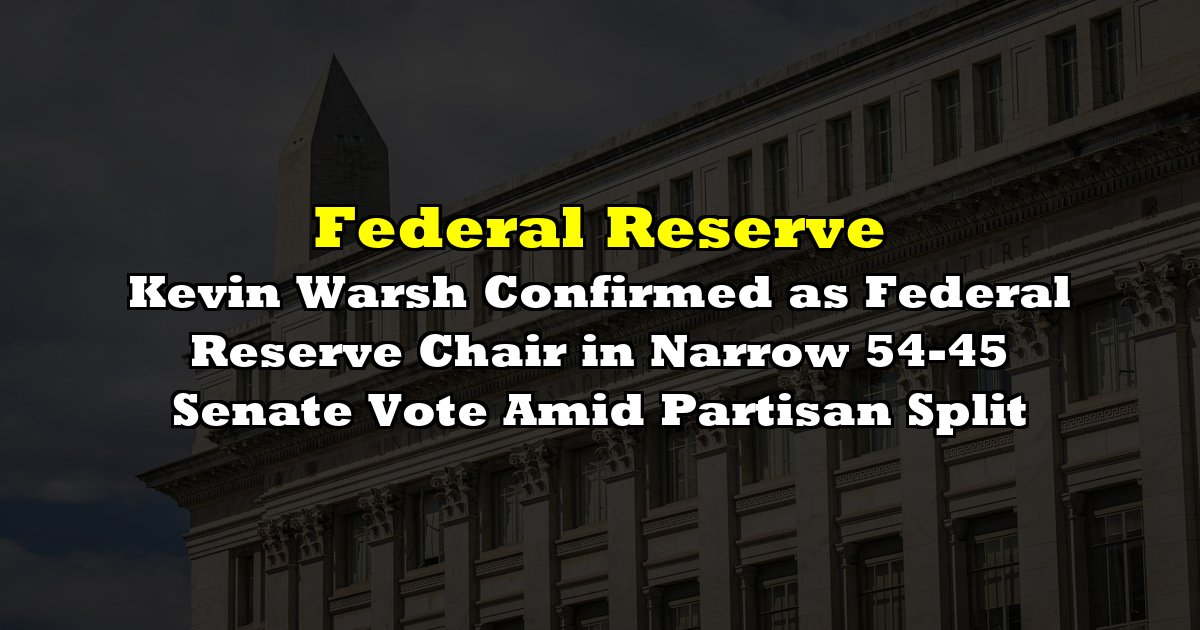

Kevin Warsh secured confirmation as the next Federal Reserve chair on May 13 with a Senate vote of 54-45, marking one of the closest and most polarized outcomes for the position in modern history. The vote saw only one Democrat, Sen. John Fetterman of Pennsylvania, cross party lines to join Republicans in support of the 56 year old incoming chair.
Warsh steps into the role as Jerome Powell’s term expires on Friday, inheriting an economy grappling with inflation at a three year high as of last month. Consumer prices have surged beyond the Fed’s 2% target, driven in part by geopolitical tensions including the ongoing US-Israeli conflict with Iran, while pipeline pressures stand at their most intense in over three years. Market hopes for rate cuts have faded, with some traders now bracing for a potential hike later this year.
The confirmation caps a contentious months long selection process that began in the summer of 2025, evaluating nearly a dozen candidates, including Federal Reserve Governors Christopher Waller and Michelle Bowman.
 Sponsored · Selkirk Copper Mines
Warsh, who previously served at the Fed from 2006 to 2011 during the subprime mortgage crisis, has openly criticized past monetary strategies like quantitative easing. In a 2025 CNBC interview, he advocated for a fundamental shift in the central bank’s approach, signaling his intent to steer policy in a new direction.
Warsh’s agenda includes slashing the Fed’s $6.7 trillion balance sheet to minimize its market influence and refocusing on conventional interest rate mechanisms. He has also floated plans to scale back policy meetings from eight to as few as four per year, cut down on news conferences, trim Washington-based staff, and limit forward guidance on rate expectations. Additionally, he aims to deepen coordination with the Treasury Department on managing the balance sheet.
Warsh’s personal wealth, exceeding $100 million, makes him the richest Fed chair in history, requiring significant divestitures under new ethics rules following past concerns over trading practices among Fed officials. As he prepares for his first Federal Open Market Committee meeting on June 16-17, his proposed reforms and the backdrop of persistent inflation set the stage for a transformative tenure.
Powell meanwhile has said he will remain as a governor, with his term having two years remaining.
Information for this story was found via the sources and companies mentioned. The author has no securities or affiliations related to the organizations discussed. Not a recommendation to buy or sell. Always do additional research and consult a professional before purchasing a security. The author holds no licenses.