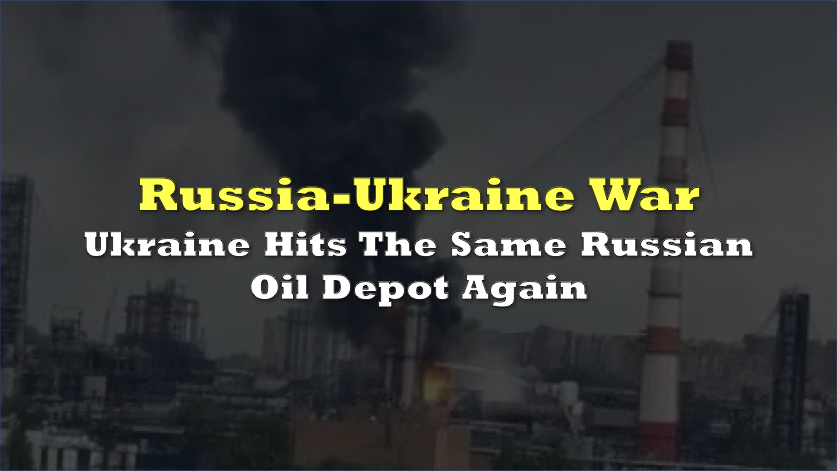

A fuel depot in Russia’s Krasnodar Krai was reported burning again, putting a southern distribution node back in the spotlight barely more than a week after an earlier strike.
The reported target was the Poltavskaya oil depot in Krasnodar Krai. Videos posted by local residents appeared to show flames at the site, while Alexander Kharlitonov, head of the Krasnoarmeysky district, attributed the fire to falling drone debris, according to Kyiv Independent. The outlet said it could not independently verify the claims and noted that Ukraine’s military had not commented at the time.
Russian officials often describe drone-related fires as the result of intercepted debris, while Ukrainian and open-source accounts usually frame them as successful hits
 Sponsored · Selkirk Copper Mines
The June 25 incident followed a June 16 fire at the same Poltavskaya depot. The Moscow Times, citing the local crisis response center, reported that a drone crash sparked a fire at the depot, that the facility supplies regional gas stations, that the blaze was extinguished after seven hours, and that no injuries were reported. Russia’s Defense Ministry said it intercepted 172 Ukrainian drones across 14 regions and occupied Crimea during that earlier overnight wave.
The repeated focus on Krasnodar is strategically legible. The region sits near occupied Crimea and the Black Sea supply corridor, making fuel movement there more sensitive than a standard civilian distribution issue. A depot does not need to be a refinery to become useful military pressure. Storage, transfer, road access, and local replenishment all become choke points when hit repeatedly.
The broader campaign is already stretching Russia’s energy system. Reuters reported that President Volodymyr Zelenskyy said Ukraine would conduct preemptive attacks against facilities Russia uses to expand its war effort. In the same report, Reuters said Russia’s petroleum products and coke output fell 13.5% year over year in May, based on rare official data.
The pressure is not confined to Krasnodar. Reuters separately reported that Moscow’s oil refinery, operated by Gazprom Neft, is expected to remain offline for at least six months after drone damage, according to two industry sources. The refinery processed 11.6 million metric tons of oil in 2024 and produced 2.9 million tons of gasoline and 3.2 million tons of diesel, making its outage a material fuel-market problem rather than just another wartime fire.
Russia’s policy response shows the strain. Deputy Prime Minister Alexander Novak said Moscow was considering a diesel export ban. Vedomosti, cited by Reuters, reported that fuel imports were also under discussion, especially as Crimea faced gasoline restrictions.
Ukraine’s drone campaign has also widened beyond fuel. AP reported that Ukrainian forces said they struck the Orenburg Gas Processing Plant and two satellite communications centers in Russia. AP also reported that Russian officials said 323 Ukrainian drones were shot down overnight, while Ukraine said Russia launched 101 long-range attack drones.
The Poltavskaya strike is therefore part of a larger contest over depth. Russia is trying to keep fuel, power, and military communications functioning across a large geography. Ukraine is trying to make that geography expensive to defend.