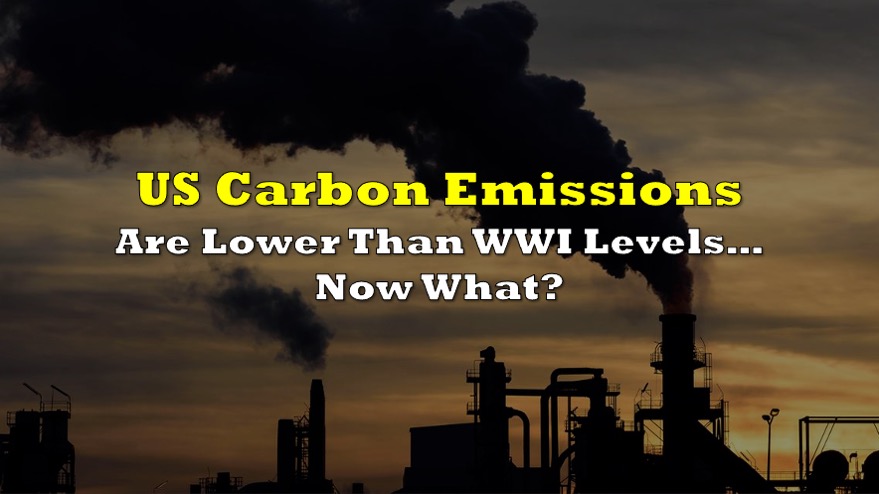

Carbon emissions remain a critical factor in the accelerating climate change crisis, but the narrative of these emissions is often misunderstood.
As pointed out by scientific journalist Charles Mann, US per-capita CO2 emissions have dropped below World War II levels. However, the idea that America has made no progress in reducing carbon emissions is pervasive, feeding a sense of despair and inertia that obstructs further necessary action.
On one hand, some might argue that these emissions have simply been displaced. With light industries moving overseas to places such as China and India, the perception might be that the US has merely outsourced its carbon problem. However, this is a simplification; much of the heavy industry— with steel being a possible exception, still operates within America’s borders, which means that consumption-based emissions are not significantly different from production-based ones.
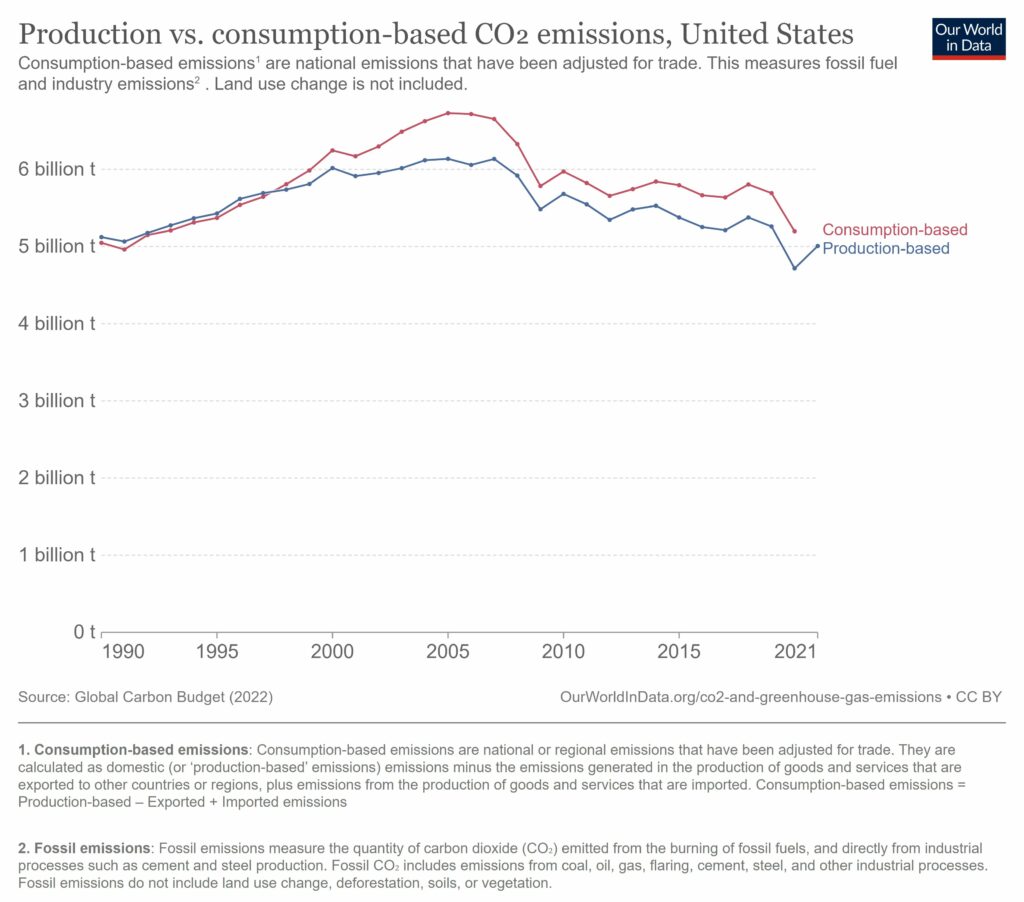
In measuring emissions in this particular context, it’s important to recognize that all fossil fuel use is accounted for, including transportation and those embodied in manufacturing. These figures exclude emissions attributed to land use changes, deforestation, soils, or vegetation.
 Sponsored · Cambria Gold Mines
Furthermore, it’s essential to consider that most agricultural CO2 emissions originate from fossil fuel use in machinery and processing facilities, not from the land use itself. In the US, CO2 emissions from land-use changes are relatively small in comparison to those from fossil fuels.
In the grand scheme, while there’s much work to be done, Mann postulates that the narrative that ‘we’ve done nothing’ to address carbon emissions is far from the truth.
Information for this briefing was found via OurWorldInData and the sources mentioned. The author has no securities or affiliations related to this organization. Not a recommendation to buy or sell. Always do additional research and consult a professional before purchasing a security. The author holds no licenses.