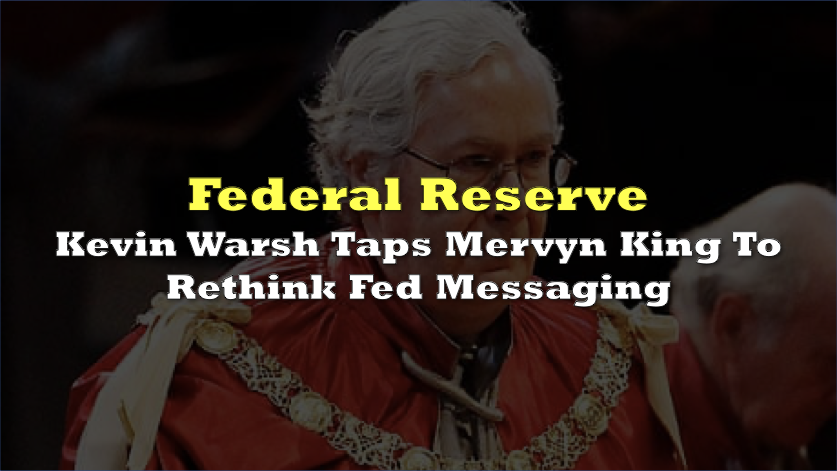

Federal Reserve Chair Kevin Warsh is bringing in former Bank of England Governor Mervyn King into a new communications task force, part of a broader Warsh reset at the Fed, where five reviews are being organized around communications, the balance sheet, data use, inflation frameworks, productivity, and employment.
Morningstar reported that Warsh announced the initiative after his first policy meeting as chair in June, while Reuters separately reported that the task forces are meant to study Fed operations and core policy functions.
Warsh made that posture explicit at the European Central Bank’s annual forum in Sintra, Portugal, where he declined to signal whether the Fed would raise rates at its next meeting. Reuters reported that Warsh said policymakers would decide only when they “shut the door” at the meeting, reinforcing his resistance to forward guidance.
 Sponsored · Selkirk Copper Mines
That is the real consequence of the King appointment, if confirmed. King is not merely a former central banker with crisis-era credentials. He ran the Bank of England from 2003 to 2013, covering the global financial crisis and its aftermath, after earlier serving as deputy governor and chief economist.
King’s relevance is philosophical, coming from a tradition in which central bank credibility depends on explaining decisions and objectives, not spoon-feeding the next move to traders.
The timing is combustible. AP reported that Warsh used his Sintra appearance to reaffirm the Fed’s 2% inflation target and emphasize political independence even as President Donald Trump continued pressing for lower rates. This comes after inflation hit 4.2% in May, driven partly by the Iran war’s impact on gasoline prices, before easing energy pressures shifted market expectations.
The risk is volatility. AP, in a separate analysis carried by KING 5, framed Warsh’s quieter Fed approach as a gamble that could produce more volatile markets and higher rates. The logic is direct: when investors receive fewer signals from policymakers, they may demand a bigger risk premium to hold rate-sensitive assets.
The possible reward is policy flexibility. Warsh has argued that forward guidance can trap central banks into validating market expectations instead of responding cleanly to fresh data. MarketWatch reported that he told investors to focus more on economic data and less on Fed hints, while also noting his alignment with ECB President Christine Lagarde’s concerns about being boxed in by earlier guidance.
That tension matters more than the task-force label suggests. A communications overhaul could touch the Fed’s policy statement, press conference conventions, the Summary of Economic Projections, the dot plot, speeches by regional Fed presidents, and the choreography of pre-meeting market expectations.
The King role fits that architecture almost too neatly.