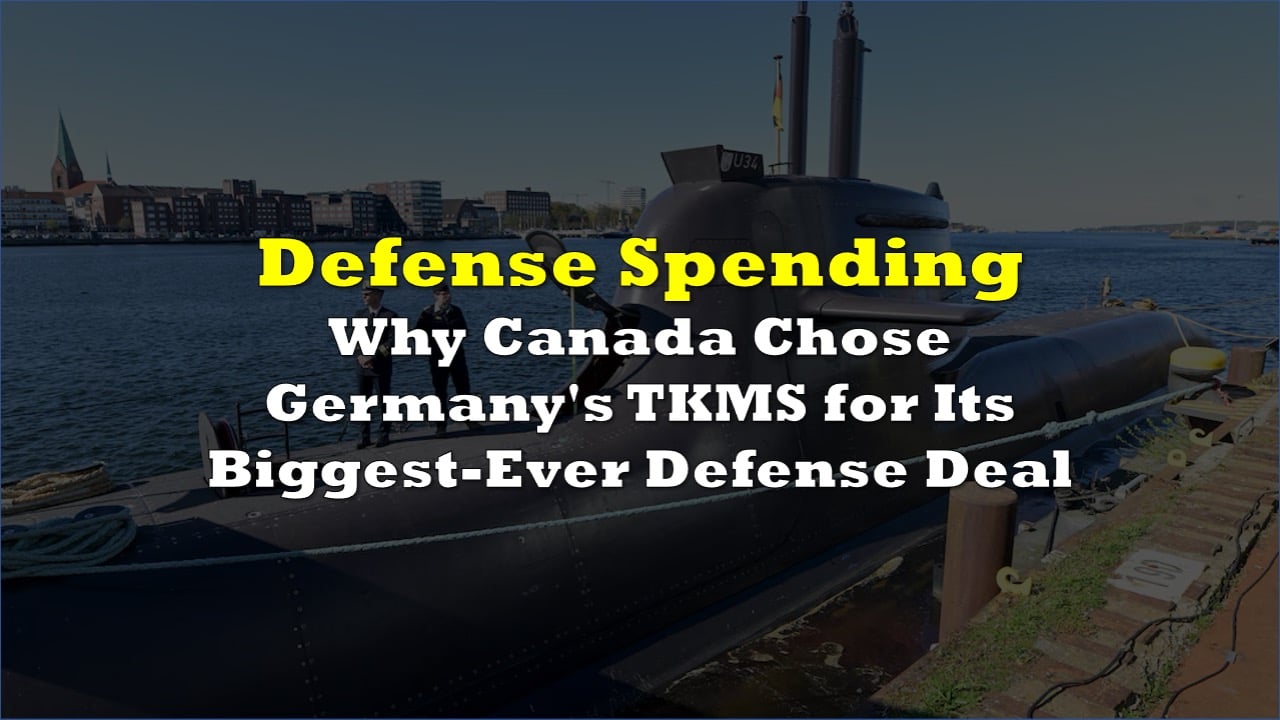

Canada has ended a nearly year-long, closely watched competition over its next submarine fleet, choosing Germany’s ThyssenKrupp Marine Systems over South Korea’s Hanwha Ocean in what Prime Minister Mark Carney called the largest defense procurement in the country’s history.
Carney made the announcement dockside in Halifax on Monday, just hours before departing for the NATO summit in Ankara, Turkey.
The government will now enter contract negotiations with the German-Norwegian consortium to procure up to 12 Type 212CD submarines, a process Carney said would not be conducted publicly to preserve Canada’s negotiating position.
 Sponsored · Selkirk Copper Mines
No final price has been disclosed, though the submarines themselves are expected to cost $20 billion to $30 billion, with an additional $40 billion to $50 billion for decades of operations, maintenance and upgrades. Hanwha Ocean has been named the reserve supplier and would become the default choice if TKMS negotiations collapse.
The decision resolves a competition Ottawa had spent months trying to leverage for industrial gain, requesting steel and manufacturing commitments from both bidders as part of its broader Canada-first industrial strategy.
Related: Canada Leverages Submarine Deal for Auto Manufacturing Guarantees
TKMS said Monday its winning bid will generate $167 billion in total economic activity, an $86 billion boost to Canada’s GDP, and more than 650,000 job-years of employment over the project’s lifetime, while Carney separately said the deal would “directly create and sustain an ecosystem of well over 100,000 well-paying jobs.” One condition of the deal, Carney said, is that the full value of the government’s investment must be matched in economic benefits to Canada.
 Sponsored · Cambria Gold Mines
Hanwha’s bid had included a $345 million commitment to Algoma Steel for a structural steel beam mill in Sault Ste. Marie, Ontario, a deal that could have rehired roughly 500 of the 1,000 steelworkers laid off there earlier this year. Hanwha Canada CEO Glenn Copeland called Monday’s decision “disappointing” but said the competition had shown Canadians what the company, the world’s fourth-largest defense exporter, has to offer.
Related: Two Fleets, Two Allies: Canada Considers Dividing Submarine Contract Between Germany and South Korea
Timing was a decisive factor. TKMS offered to reallocate submarines originally slated for Germany and Norway’s own navies, allowing Canada to receive its first vessel by 2034, a year earlier than its original bid and matching what Hanwha had offered from the outset. Canada’s four existing Victoria-class submarines, purchased secondhand from Britain in 1998, are aging out, with only one currently considered fully operational.
Notably, the 212CD’s hull requires a specialized non-magnetic steel Canada doesn’t currently produce at scale, and unlike Hanwha’s pledge to source that steel domestically, TKMS plans to draw on the Canadian branch of Valbruna, an Italian steelmaker, along with a separate, unspecified agreement with Algoma Steel.
“This was a difficult, close decision between two highly qualified suppliers,” Carney said, adding that he’d had a “long conversation” with South Korean President Lee Jae Myung over the weekend and that Canada remains committed to deepening its broader relationship with Seoul.
German Ambassador to Canada Tjorven Bellmann struck a celebratory tone instead, saying the joint fleet would mean Canada, Germany and Norway operating together with fully interchangeable crews.