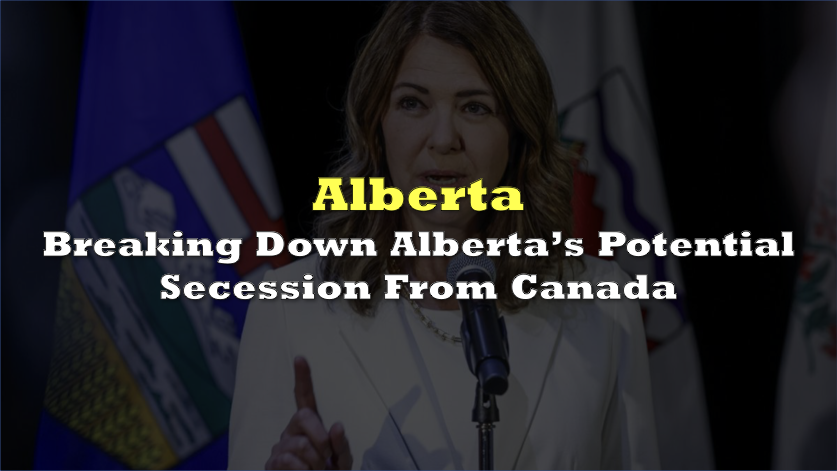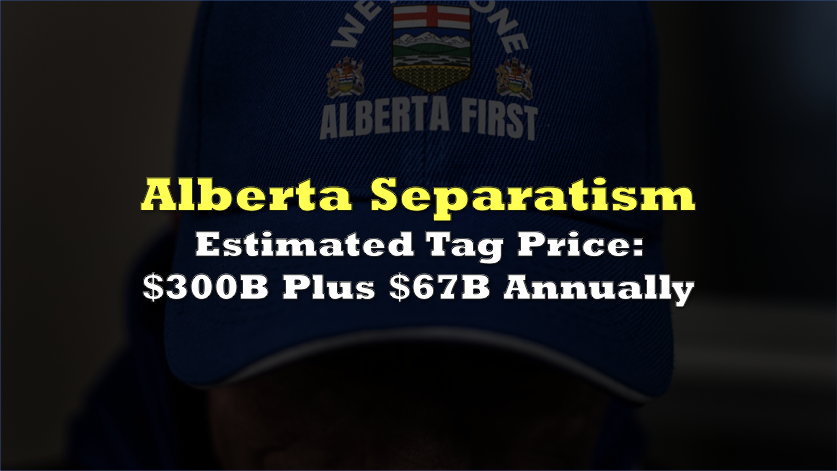

Former Alberta finance senior manager Lennie Kaplan calculates the price of independence at $299.4 billion in transition and start-up costs, plus $67.3 billion in annual expenses.
The estimate lands four months before Alberta’s scheduled October 19, 2026 referendum. The vote would not immediately trigger separation, but would ask whether Alberta should start the legal process needed for a later binding independence referendum.
Kaplan’s calculation reframes the fiscal question around continuity. If Alberta left Canada, the province would not only need to collect revenue now routed through Ottawa. It would also need to keep benefit payments, program transfers, trade access, debt obligations and security commitments functioning without interruption.
That is where the annual bill becomes politically sensitive. Kaplan estimates Alberta would need to replace $13.8 billion in federal transfers tied to major program areas, including health, child care, labour-market support, agriculture and social services.
 Sponsored · Altamira Gold Corp.
On federal benefit programs, Kaplan computes an independent Alberta would need to cover $7.7 billion in Canada Pension Plan payments, $7.1 billion in Old Age Security, $3.8 billion in Canada Child Benefit payments and $2.8 billion in Employment Insurance.
The one-time balance-sheet challenge is larger. Kaplan assigns $174.2 billion to Alberta’s assumed share of Canada’s national net debt, based on Alberta holding about 12.5% of the national population against nearly $1.4 trillion in federal net debt. He then estimates annual debt-servicing costs at $10.2 billion, using a 5.88% carrying cost.
Kaplan also prices the task of rebuilding trade arrangements at $93.5 billion, based on a 17.5% cost applied to about $535 billion in estimated Alberta trade by 2028. That figure covers the friction he assigns to replacing Alberta’s current access to Canadian internal trade and treaty-covered international commerce, including North American trade under CUSMA.
Defence adds another large assumption. Kaplan estimates $27.2 billion in transition or setup costs for an Alberta defence framework, using 5% of projected 2028 nominal GDP of $543 billion as the benchmark.
READ: Breaking Down Alberta’s Potential Secession From Canada
The numbers sharply diverge from the Alberta Prosperity Project, the pro-independence group arguing that separation would unlock major fiscal gains. APP’s draft fiscal plan estimates one-time setup costs at $2.8 billion to $5.7 billion and annual federal-service replacement costs at $22.7 billion to $31.6 billion. It also projects total revenues of $142.1 billion to $149.1 billion against expenditures of $98 billion to $106.9 billion.
While APP’s model emphasizes federal taxes that Alberta could retain and argues that the province could replace Ottawa’s services at manageable cost, Kaplan’s model puts more weight on liabilities, program continuity, trade renegotiation and the machinery of running functions now handled by a federal government.
Premier Danielle Smith has also reportedly cited a much higher transition figure of about $400 billion, but the province has not yet released a detailed public cost breakdown matching that number. Kaplan has called for Alberta to publish a comprehensive and independent analysis by August 15, 2026, giving voters roughly two months to assess the fiscal case before the referendum.
Reuters reported in February that Alberta projected a $9.4 billion deficit for 2026-27 after lower oil prices reduced expected resource revenue. A separation debate layered on top of weaker oil-linked revenue could raise sharper questions about borrowing, credit risk and service guarantees.
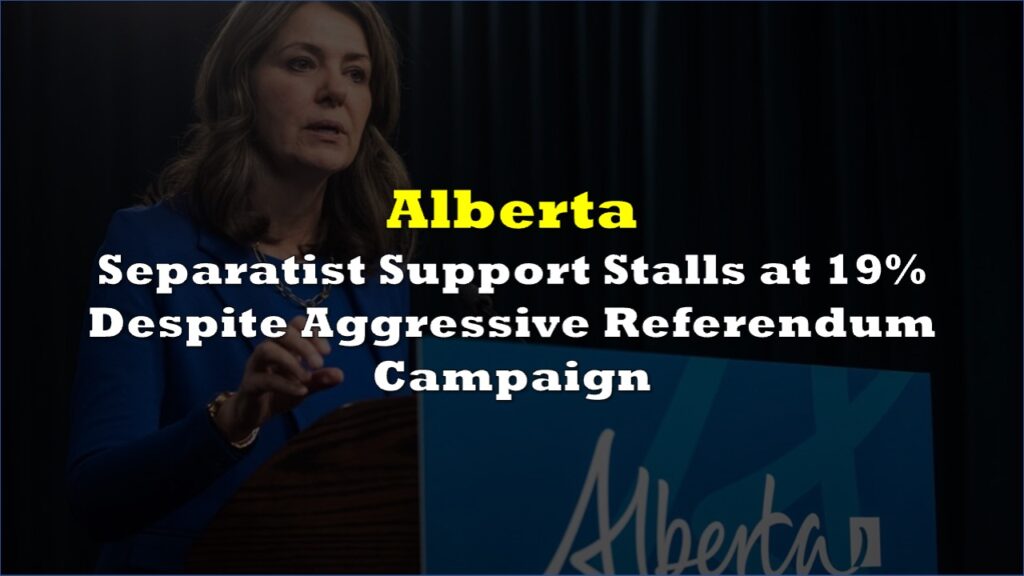
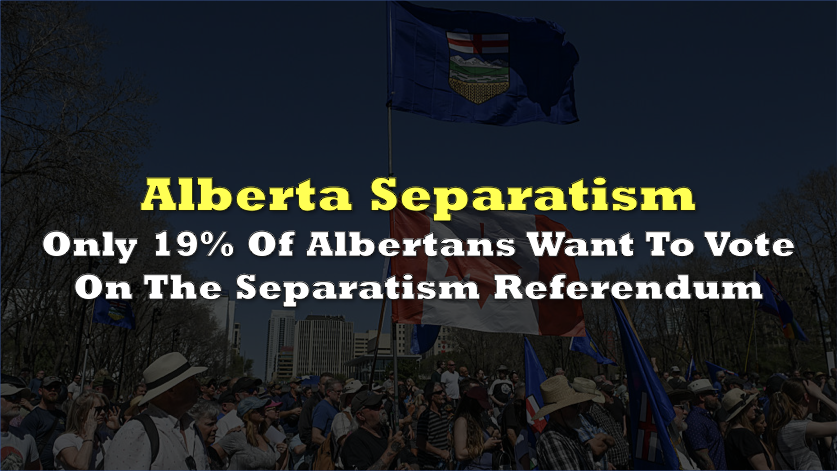
The latest Ipsos poll shows shows 19% Albertans say they would vote for the option to hold a future binding referendum on separation. 72% supports the referendum option to stay in Canada and 10% are undecided, will not vote or prefer not to answer.
Information for this story was found via the sources and companies mentioned. The author has no securities or affiliations related to the organizations discussed. Not a recommendation to buy or sell. Always do additional research and consult a professional before purchasing a security. The author holds no licenses.