
As the Strait of Hormuz closure drives oil prices past $100 a barrel and forces Asian nations to ration fuel, China has largely insulated itself from the crisis — drawing on a massive oil stockpile assembled over the years from sanctioned crude purchased at below-market prices from Iran, Russia, and Venezuela.
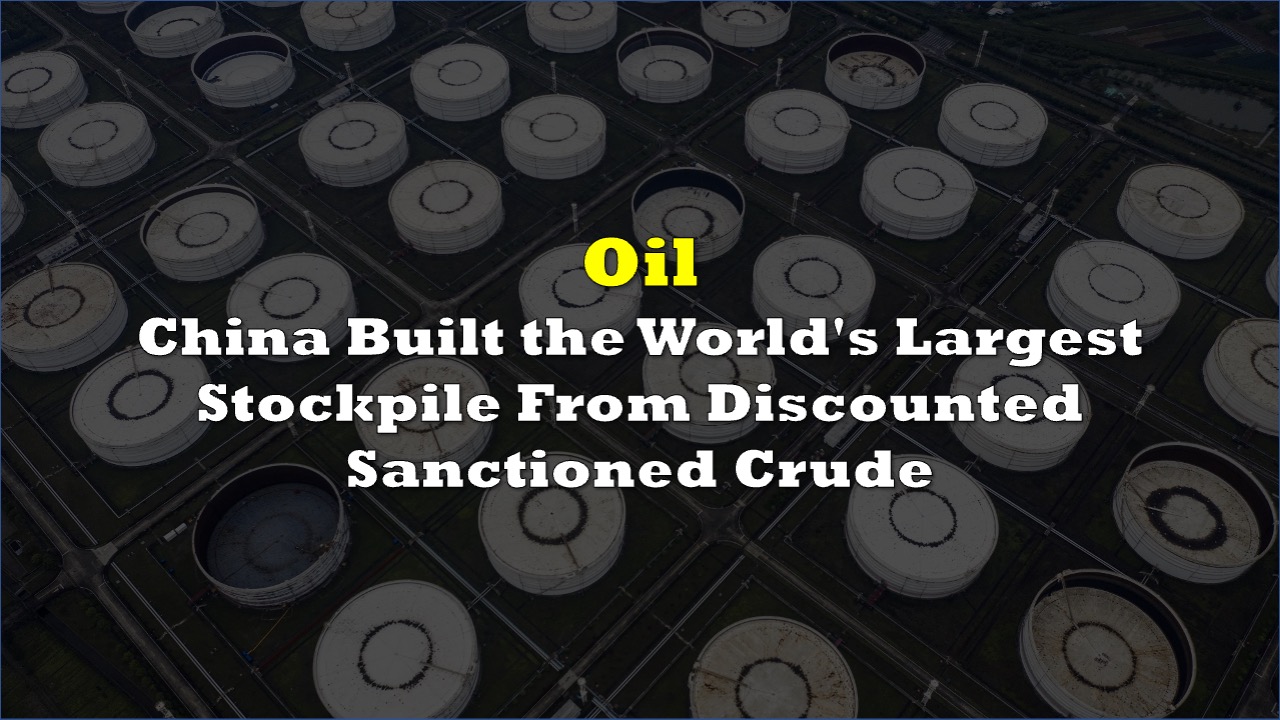
New data from the US Energy Information Administration shows China held an estimated 1.4 billion barrels of strategic crude oil inventories as of December 2025 — more than the combined reserves of the United States, Japan, and OECD Europe. Crude imports jumped 16% in the first two months of 2026, adding 1.24 million barrels a day to storage, as Operation Epic Fury launched on February 28.
A 2025 Energy Law that took effect in January placed legal responsibility for stockpiling on state oil companies, requiring them to hold government-supervised reserves alongside commercial stockpiles.
 Sponsored · Selkirk Copper Mines
State refiners — including independent “teapot” facilities that exploited Western sanctions to acquire cheap barrels from Iran, Russia, and Venezuela that other buyers could not legally or politically purchase — built up a stockpile the House Select Committee on China described in March as “roughly 1.2 billion barrels by early 2026, equal to approximately 109 days of seaborne import cover — at well below market cost from the very barrels Western sanctions were designed to strand.”
While nations across Asia rationed fuel and drew down emergency reserves, China grew its GDP 5% year-on-year in the first quarter of 2026, beating market expectations — with its oil stockpile credited as a key buffer. Beijing also secured preferential access at the chokepoint: on March 4, Tehran declared passage open to Chinese-flagged vessels only, and has continued to ship crude to China — at least 11.7 million barrels since the war began.
On March 11, IEA member nations released up to 400 million barrels in the largest coordinated emergency draw in the agency’s history. As a non-member, China had no obligation to participate — and didn’t, holding its stockpile intact while allies burned through theirs.
As Axios reported on Thursday, the Iran war has been “the stress test that Beijing’s energy strategy was designed for.”
Information for this story was found via the sources and companies mentioned. The author has no securities or affiliations related to the organizations discussed. Not a recommendation to buy or sell. Always do additional research and consult a professional before purchasing a security. The author holds no licenses.