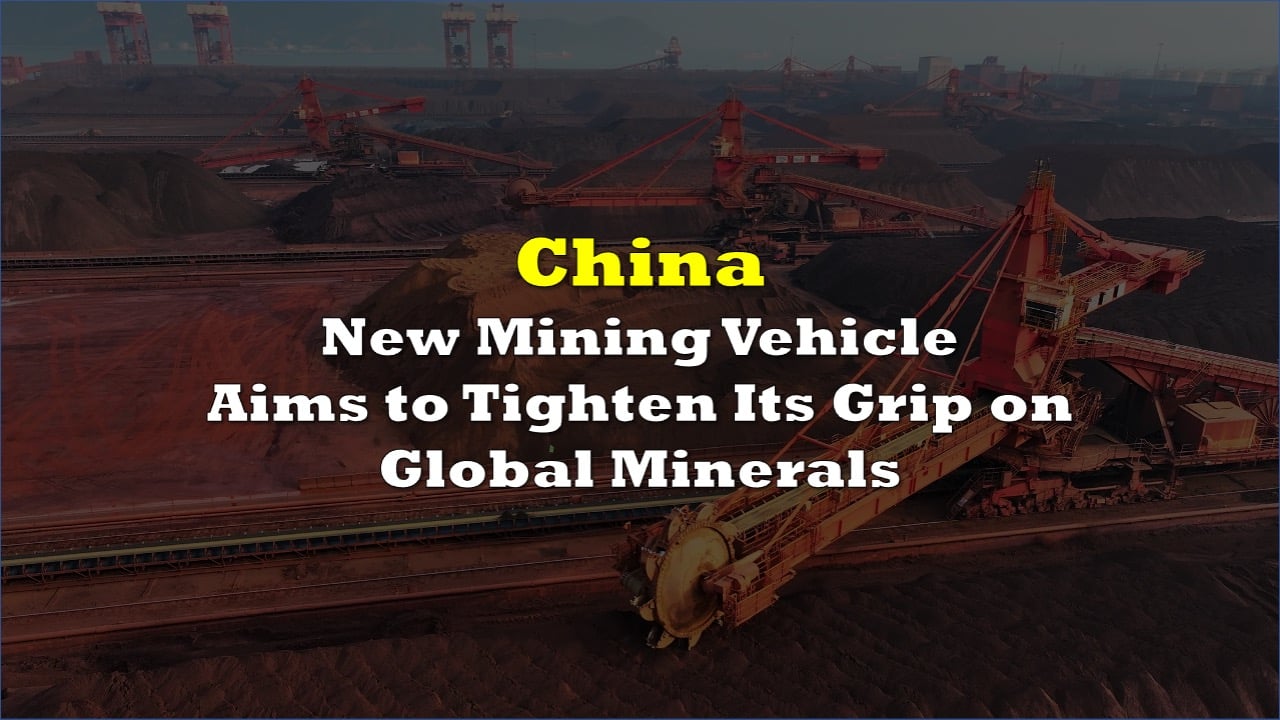

China has set up a new state-backed investment company to coordinate its overseas mining deals, Bloomberg News reported, citing people familiar with the matter, as Beijing seeks tighter control over global mineral supply chains.
Guangyan International Investment Co., also known as Vast Rock International Investment Co., will operate under China’s National Development and Reform Commission and is expected to offer Chinese miners direct equity stakes alongside compliance guidance, risk management, and market analysis for deals pursued abroad.
The new firm formalizes what’s been a two-decade pattern of Chinese state and private capital buying into overseas deposits, from copper and cobalt mines in Congo to nickel processing in Indonesia, spending that Bain & Co. estimates has topped $100 billion in outbound mining acquisitions since the early 2000s.
Producer nations are pushing back harder than they used to. Guinea, the world’s largest bauxite producer, has discussed capping shipments of the ore used to make alumina. Zimbabwe has told lithium producers to invest in domestic refining or face an export ban on raw concentrate. In response to that kind of pressure, China’s embassy in Harare has told its own companies to tighten their risk management.
 Sponsored · Selkirk Copper Mines
Guangyan appears designed to help Chinese firms navigate exactly this shift, pushing them toward joint ventures and shared risk rather than the outright buyouts that made China’s earlier mineral acquisitions easier targets for political backlash.
The new entity also folds into a wider standardization effort already underway in other sectors. In iron ore, China Mineral Resources Group has spent recent years centralizing the country’s purchasing power to strengthen its steel industry’s leverage over global suppliers, an approach Guangyan appears built to replicate for a broader set of minerals.
China currently controls roughly 70% of the world’s processing capacity for critical minerals overall, a dominance built as much on decades of investment in domestic refining as on the mine acquisitions themselves.
Related: US-EU critical minerals plan targets China supply chain reliance
Whether Guangyan succeeds may depend on cooperation that Beijing can’t simply mandate. Working with the new firm isn’t compulsory, and larger, already-established Chinese mining companies may resist sharing deal information or deferring to its risk assessments, the same resistance China Mineral Resources Group has run into while trying to coordinate iron ore purchasing.
Job postings on Chinese social media suggest Guangyan has been quietly staffing up since February, a sign Beijing is committing real resources to the effort even as how much authority the new firm will actually carry remains unclear.